



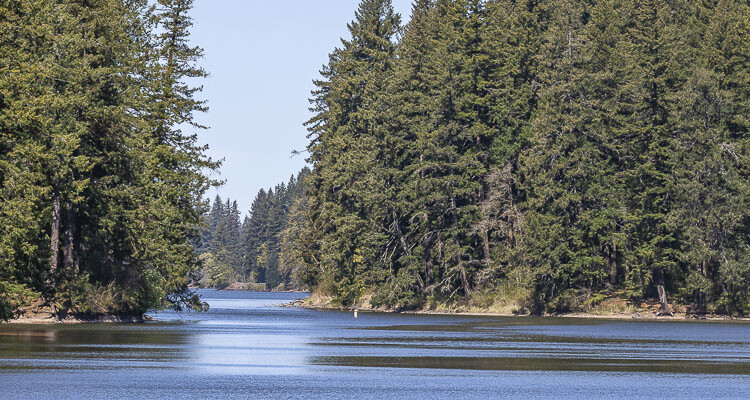
Results from water samples taken on Wednesday revealed cyanotoxins above the threshold level recommended by the Washington Department of Health
VANCOUVER – Clark County Public Health has issued a warning advisory for Lacamas Lake due to elevated levels of cyanotoxins from harmful algae.
Results from water samples taken from Lacamas Lake on Wednesday, July 5 revealed cyanotoxins above the threshold level recommended by the Washington Department of Health. Warning signs are being placed at public access points at the lake.
Cyanotoxins can be harmful to people, especially young children, and deadly for small pets that drink the water. When a warning advisory is in place, health officials recommend:
- No swimming or water skiing.
- No water contact for animals.
- Avoiding areas of scum when using motorized boats, paddle boarding, kayaking or canoeing.
- No drinking lake water.
- Cleaning fish well and discarding organs.
Public Health will continue to monitor Lacamas Lake and, while blooms are present, take weekly water samples to test toxin levels. Signs will be updated as conditions change.
Algal blooms are also present at Vancouver Lake and Round Lake in Camas, but results from water samples collected this week show toxin levels are below state threshold levels. Public Health will continue to monitor Vancouver and Round lakes and take weekly water samples to test toxin levels as long as the blooms are present.
Harmful algal blooms can pose a significant health risk if the cyanobacteria or toxins are ingested, inhaled or contact skin. Inhaled bacteria or toxins could cause wheezing, coughing, chest tightness and shortness of breath. Skin contact could lead to rash, itching, blisters and eye irritation.
If water with cyanotoxins is accidentally swallowed, symptoms could include abdominal pain, diarrhea, vomiting, numbness of the lips, tingling in fingers and toes, and dizziness.
Additional information about harmful algal blooms and current advisories are posted on the Public Health public beach website. To report algal blooms in other bodies of water, visit the Public Health website.
Information provided by Clark Co. WA Communications.
Also read:
- WA and OR scale back I-5 Bridge ambitions as cost balloons
 A $14.4 billion price tag prompts Washington and Oregon leaders to delay portions of the I-5 bridge project and prioritize just the main spans.
 - Opinion: Washington passed an income tax to fund education, then the same majority cut education — and left $700+ million on the table
 State officials passed a new income tax to fund education, then approved over $1 billion in cuts—while forgoing $700 million in annual federal scholarships students could have received.
 - Letter: In defense of Joe Kent, a war hero
 Ozzie Gonzalez shares a firsthand account of his time working for Joe Kent, emphasizing Kent’s military background and principled stance on foreign policy controversies.
 - Opinion: ‘Washington’s majority party is panicking’
 Nancy Churchill argues that controversial state policies, including new taxes, law enforcement changes, and agency power grabs, are generating a wave of backlash in communities across Washington.
 - Letter: ‘Now we have Engineer Bob telling us the I-5 Bridge needs replacing because it is built on shifting sand with wooden structures’
 Amboy resident Thomas Schenk critiques Democrat leadership, tax policies, and the addition of light rail to the I-5 Bridge, while urging Republican voters to participate more in midterm elections.
 - Clark County Baseball presents Baseballism Kickoff this week with action all over the region
 Thirty-six teams from across the Northwest, including two state champs, are competing in free high school baseball tournaments at local turf fields in Vancouver, Camas, and Ridgefield.
 - The I-5 Bridge is vulnerable to collapse, but apparently not that vulnerable
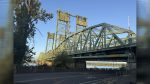 State leaders and Vancouver’s mayor warn about bridge safety, but insist it’s safe enough for daily use as they focus on moving forward with a costly replacement including light rail—despite decades of public resistance.
 wpDiscuz
