



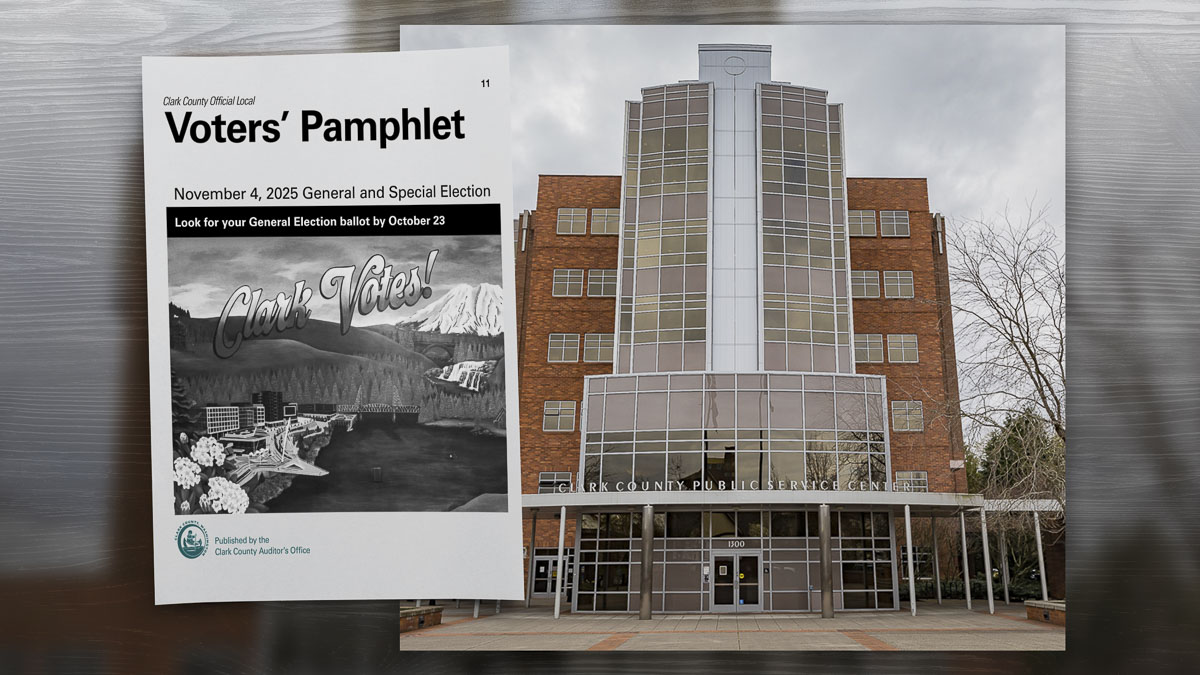
Charter Review Commission candidates offer their views on the powers of initiative and referendum currently in the County Charter approved by voters in 2014
Ken Vance, editor
Clark County Today
As Clark County Today continues its series of stories on the views of the candidates running for positions on the Charter Review Commission in the Nov. 4 general election, the focus turns to the powers of initiative and referendum.

When voters passed the Clark County Charter in 2014, it included initiative and referendum powers to give citizens the ability to hold elected officials and county government accountable. However, in the time since the charter was adopted, the process has proven to be largely inaccessible to citizens.
Among the questions Clark County Today offered Charter Review Commission candidates was this:
Initiative and referendum powers are part of the charter. How do you view these tools of direct democracy — should they be expanded, adjusted, or kept as is?
Overwhelmingly, the candidates who responded to Clark County Today expressed the need for change to this area of the charter.

“The initiative process was touted as one of the grand reasons for charter adoption,’’ said Peter Silliman (District 5, Position 3). “More access for citizens to provide direct input to their county government. The fact is that it has proven too inaccessible to be used even once in the last ten years. There are several things that can be looked at, Signature thresholds, timelines, government control, and conversion to a mini-initiative.’’

“Clark County has one of the most challenging sets of requirements in the state for qualifying initiatives and referendums,’’ said Kirk VanGelder (District 4, Position 3). “In fact, I believe that there has never been an initiative or referendum that met those standards since the charter was adopted. I believe that since ‘All political power resides in the People,’ initiatives and referendums need to be easier to qualify … but not so easy that we get inundated with them.’’
Candidate Ann Donnelly (District 1, Position 2) has personal experience with initiative and referendum process.

“I believe initiatives and referenda are among the most important tools of direct democracy as underlies our Republican form of government,’’ Donnelly said. “In our Republic, direct democracy is not unfettered. To the very opposite, the Founding Fathers made clear that they did not favor that, and they went to extraordinary and historic efforts to create a unique structure of divided powers. However, initiatives and referenda are essential under the genius governance they created, as checks and balances against non-responsive state and federal governments.
“Soon after I came to the state of Washington in the late 1980s, I was among a handful of initial supporters, under the leadership of State Representative, then State Senator, Linda Smith, to conceptualize, finance, and pass Initiative 601, to control growth of Washington’s state budget to an annual percentage of the addition of population plus inflation,’’ Donnelly said. “It also established a rainy day fund to retain excess tax receipts for needed years. Widely popular, as I learned when gathering signatures, the initiative passed without paid signature gatherers. I consider the passage of I-601 one of my most valued achievements. The weakness of the initiative process was then revealed when I-601 was essentially gutted by subsequent Democrat-controlled legislators.
“To the extent possible and reasonable (a matter of discussion), such powers should be expanded, so that it is easier to bring important measures before the voters,’’ Donnelly concluded.
How should those powers be adjusted?
“One of the most significant benefits of the Charter is the power of initiative and Referendum,’’ said Brandon Erickson (District 2, Position 1). “These powers should remain in place but be adjusted so they can actually be used by residents. I support modestly reducing the signature threshold from 10% to 8% of voters in the last gubernatorial election and allowing more time to gather signatures so the process is accessible but still responsible.
“For citizen-proposed charter amendments, the current requirement of signatures from 20% of voters in the last gubernatorial election is far too high and makes the process unrealistic,’’ Erickson added. “Lowering that threshold to a more achievable level would strengthen citizen involvement while keeping it higher than the requirement for initiative and referendum to reflect the significance of amending the charter.’’
“The initiative process should be improved by lowering the required percentage to at least 8% and setting the signature gathering period at a minimum of 180 days (matching the state’s initiative-gathering period),’’ said Liz Cline (District 4, Position 1). “Adding a signature-curing provision would let gatherers address issues flagged by the Elections Department within an established, reasonable timeframe. No initiatives have reached the ballot due to current restrictive rules; these changes would give citizen initiatives and referendums a fair chance.’’
Candidate Jill Ross (District 3, Position 1) says changes to the initiative and referendum process aligns with her focus on community-driven governance.

“I propose increasing the signature collection period and reducing the signature requirement percentage to make participation easier,’’ Ross said. “I also support a rollover option for mini-initiatives, as in Whatcom (Section 5.42) and San Juan (Section 6.31) Charters, allowing initiatives meeting the 3% threshold to proceed for County Council review if full requirements fall short. This ensures community voices aren’t silenced by technicalities, fostering transparency and accountability while aligning with Clark County’s priorities.’’
Candidate Cathie Garber (District 2, Position 2) agrees the current process is largely not achievable for citizens, therefore, changes are needed.

“Since the County Charter was implemented in 2014, there has never been a successful initiative to make it to the ballot by the initiative petition process. We need to make this something that is achievable,’’ Garber stated. “I propose lowering the required valid signatures for a petition to qualify as a ballot measure from 10% to 8%. We could allow petitioners to have more days to collect signatures, while keeping the timeline needed to qualify measures for the ballot. The state initiative and referendum process allows for statistical sampling to review a random sampling of signatures to determine if there are enough valid signatures to accept a petition. A change to this section of the charter should be considered to allow Clark County elections staff to use this process. Statistical sampling may not, however, be used as the sole determination to reject the petition. I would also consider and invite discussion about having a financial impact statement written by both the chief petitioner and the county on the petition and on the ballot question for fairness and Information.’’
“I believe the initiative and referendum powers for the citizens are a great check and balance on County Government and a good example of direct democracy,’’ said Bob Runnells (District 2, Position 2). “Most petition signature and filing time thresholds are reasonable as compared to other Home Rule county charters in the state, except our Referenda filing timeline is too short. However, these powers have been underutilized thus far. Therefore, I think all thresholds need to be reviewed to remove any barriers to the people being able to exercise their voices.’’
Candidate John Jay (District 3, Position 3) echoed those thoughts.

“Initiative and referendum powers are important tools of direct democracy, giving citizens a direct voice in county governance,’’ Jay said. “Initiatives and referenda were the driving force behind the adoption of the Home Rule Charter in 2014, yet no subsequent effort has successfully met the requirements to get on the ballot. Something should be done to ensure this process works as intended, whether by increasing the time allowed to gather signatures or lowering the percentage threshold.’’
Brad Benton (District 5, Position 1) focused on lowering the threshold for signature requirements.
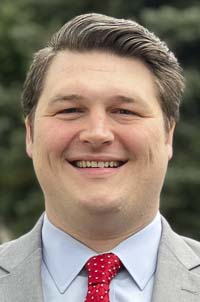
“Initiative and referendum powers are crucial tools that give the people a voice in their government,’’ Benton said. “I would like to see amendments that lower the threshold for signature requirements.’’
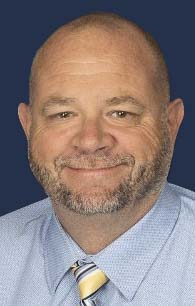
Duncan Hoss (District 5, Position 2) was the only candidate who did not have any proposed changes for the charter’s initiative and referendum process.
“Initiative and referendum powers give citizens direct influence and should remain in the Charter,’’ Hoss said. “These tools are essential checks on government, though safeguards should remain to prevent misuse or overreach. I would not expand them beyond their current scope but would preserve them as is.’’

Also read:
- High-value WA home listings increase by 65% after income tax passage
 After lawmakers approved an income tax targeting millionaires, listings for homes priced at $2 million or more jumped 65 percent compared to last year, with experts urging caution about interpreting the spike.
 - 18th District lawmakers to host town hall meeting on Saturday, March 28, in Battle Ground
 Stephanie McClintock and John Ley will meet with Battle Ground constituents to answer questions, review the new income tax, and discuss the effects of the $80 billion budget.
 - Opinion: The legislature has committed $2.4 billion to recurring pension increases since 2018
 Six legislative COLAs have raised public employer costs by $2.38 billion since 2018, driving up unfunded pension liabilities and increasing burdens on county and city budgets.
 - Opinion: ‘Just because they got away with it doesn’t mean they weren’t wrong’
 A Skamania County deputy’s report found violations of county rules and the Open Public Meetings Act, but no prosecutor acted on the findings.
 - More drama at Clark County Council in regard to its representatives on the C-TRAN Board
 Councilors debated whether C-TRAN board representatives must follow group mandates, with Michelle Belkot refusing to commit to new voting rules and Glen Yung opposing her nomination.
 wpDiscuz
