



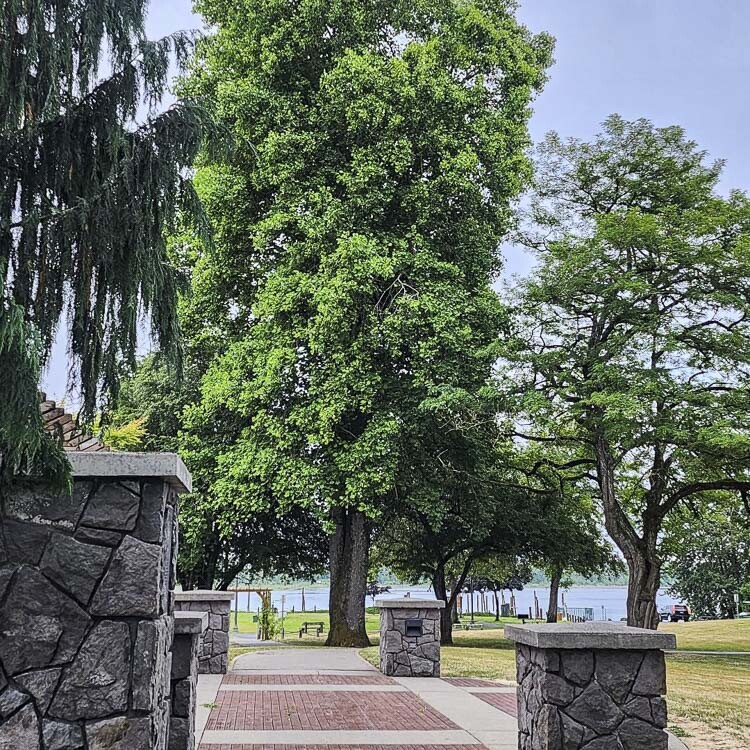
Last year, an apple grove, cherry tree, and walnut tree at the Parker’s Landing Historical Park were nominated and accepted as Heritage Trees of Clark County
A tulip tree at Parker’s Landing Historical Park has been nominated for Clark County heritage status with anticipation of a decision in November. Last year, an apple grove, cherry tree, and walnut tree there were nominated and accepted as Heritage Trees of Clark County.
Master Gardener Erika Johnson coordinates the Heritage Tree nominations. This Washington State University Extension Master Gardener Heritage Tree program keeps a list of significant trees in unincorporated Clark County. Bi-annual deadlines for tree nominations are in April and October. Johnson coordinated with Jessica George, an ISA Certified Arborist and Outreach Coordinator for Urban Forestry, to find a volunteer to take the required measurements on the nomination papers for the park’s tulip tree.
The program seeks long-lived and large trees that serve as living markers of times gone by or in notable places. The trees to be considered may be associated with historic people or events or be unusual by their presence in this part of the world.
In 2023, a WSU Master Gardener booth was added to the annual Parkersville Day held on the first Saturday of June at the park. The booth included an arborist to give tours of the park trees at the event and will return in 2024.
The tulip tree at Parker’s Landing Historical Park has significant height and a significant story. The park houses the Parkersville national, state and county registered historic, heritage, and archeological site. David C. Parker, the first permanent settler in the state of Washington, settled at this location with his family in January 1845. At the time, the British still held Fort Vancouver and claimed the land north of the Columbia River. A dock called Parker’s Landing, ferry service to Lady Island, and the town of Parkersville, platted by Parker on May 1, 1854, were significant “firsts” at this site.
Tulip trees grow in the eastern United States and on the Pacific Coast. Their massive trunks are cut for their valuable soft wood. Pioneers hollowed out a single log to make a long, lightweight canoe.
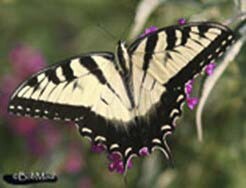
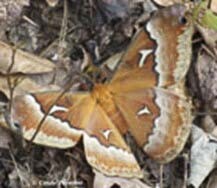
The tulip tree is also a favorite nesting tree for birds. Its flowers attract hummingbirds and have special value to honeybees. Indigenous people used the inner bark medicinally for worming medicine, antiarthritic, cough syrup and cholera remedy. It is the larval host to the tulip tree silkmoth and Eastern Tiger Swallowtail.
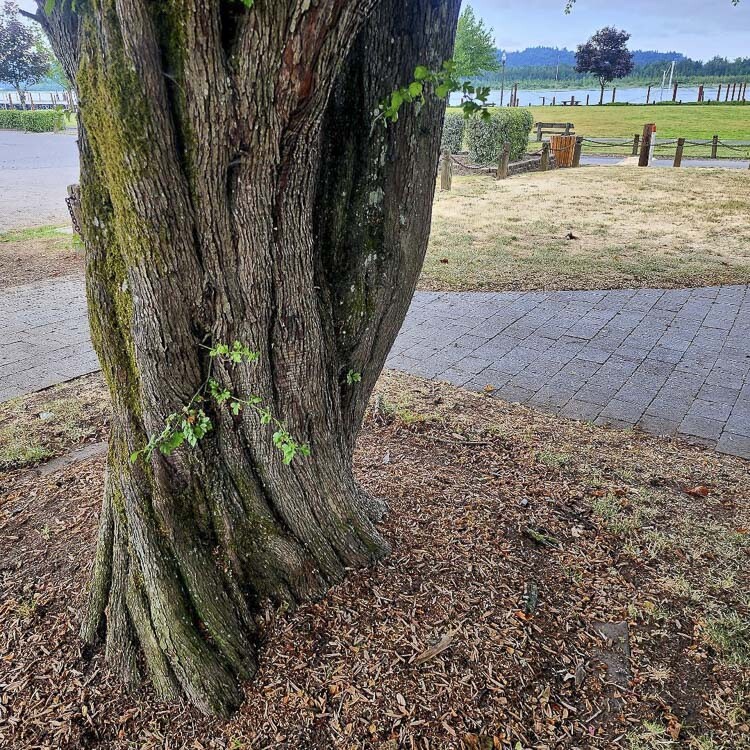
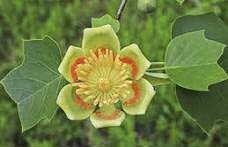
A shade-intolerant species, the Liriodendron tulipifera is known by the common names Tulip Tree, Tulip Poplar, and Yellow Poplar, and is in the Magnolia Family. The deciduous tulip tree’s long, straight trunk supports a medium to narrow crown that spreads with age. The tree grows 150 feet or taller and has distinctive, star-shaped foliage. The leaves are waxy and smooth, and dependably turn bright gold in fall. The showy, yellow-orange, tulip-like flowers are often missed because they are up 50 ft. or higher in the tops of trees. The cone-shaped seed heads remain after the leaves have fallen.
The Parkersville National Historic Site Advisory Committee which works with the Camas-Washougal Port nominated the tulip tree for Clark County heritage status to bring more public attention to the beautiful, significant trees at Parker’s Landing Historical Park.
For more information, follow the tree nomination on Facebook at https://www.facebook.com/ParkersLandingHistoricalPark
Also read:
- Opinion: California’s $20 fast food minimum wage creates less jobs and lower income
 Study data show California fast food workers now face fewer shifts, higher menu prices, and widespread automation after the $20 wage hike.
 - Gov. Ferguson signs law to undo WA estate tax increase enacted last year
 Washington rolls back its estate tax hike, restoring previous rates and prompting uncertainty around $340 million in expected revenue for education.
 - Vancouver house fire displaces residents
 Crews from Vancouver Fire Department stopped a living room blaze from spreading, but five residents were forced out due to lingering smoke.
 - VIDEO: Vote-by-mail rules in WA at risk in SCOTUS election law case
 More than 127,000 Washington ballots postmarked by Election Day but received after could be disqualified under a possible Supreme Court ruling, prompting debate from both parties.
 - Rounding out debate, Gov. Ferguson signs bill addressing retailers’ penny problem
 A new Washington law lets merchants round cash purchases to the nearest 5 cents, aiming to manage change as shortages of pennies affect both businesses and customers.
 - Opinion: State is rightly emphasizing experience and skills, not degrees
 Elizabeth New explains how a new state policy removes unnecessary advanced degree requirements, supporting skills-based employment and broadening opportunities for capable workers.
 - Opinion: The wealth migration is real – which states are benefiting?
 IRS data shows Idaho, Montana, and Wyoming attracted significant wealth from new residents, while Washington state saw a loss of $500 million as its new capital gains tax took effect.
