


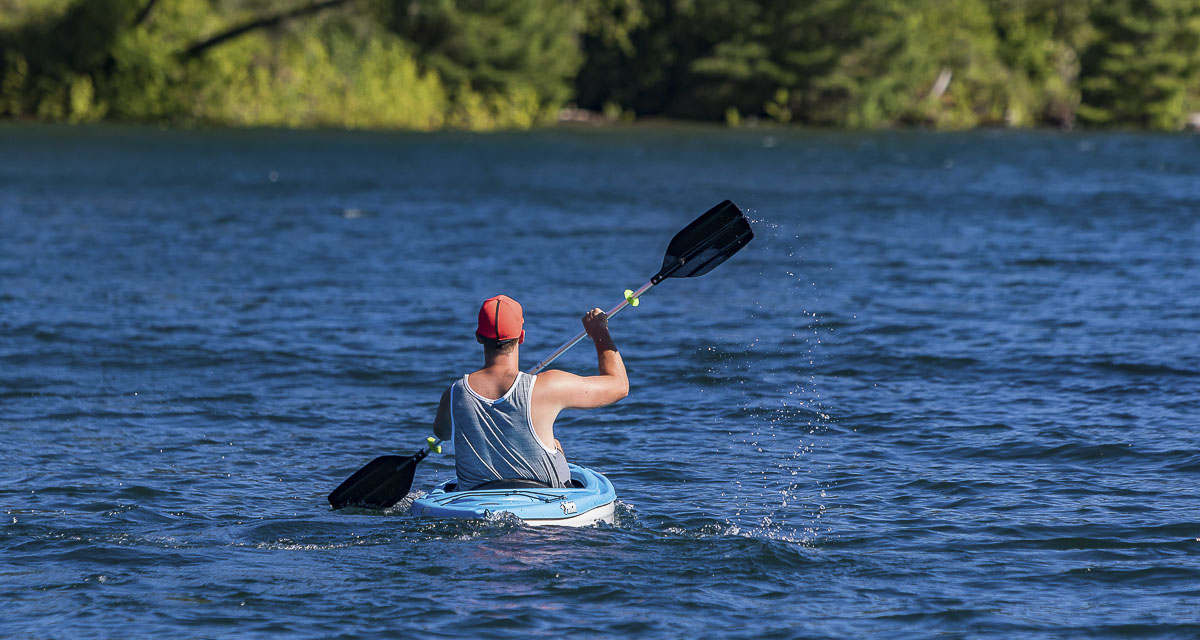
The essential safety practices that go along with paddlesports could someday save your life
Preparing for a day on the water isn’t just about grabbing a paddle and some sunscreen. The essential safety practices that go along with paddlesports could someday save your life.
From July 22-28, the Washington State Parks Recreational Boating Safety Program is supporting Paddle Safe Week, a statewide effort to create a culture of safety around paddle sports. The campaign recognizes that paddlesports, while a fun way to spend the summer outside, are not without risk.
Washington’s diverse waterways require different skills, preparation and safety equipment. During Paddle Safe Week, paddlers are asked to take a moment to review safety tips — and encourage others in your community to do the same!
The single, most important way to paddle safely is to always wear a life jacket on the water.
State law requires all vessels, including canoes, kayaks and stand-up paddleboards to have at least one properly fitted Coast Guard-approved life jacket for each person on board. Participants under the age of 12 are required to wear the life jacket at all times, but paddlers of all ages — even those with strong swimming skills — are encouraged to wear a life jacket due to the unpredictable nature of the sport.
The program also recommends the following safety practices:
- Get Educated – Find classes through local clubs and outfitters, city and county parks and recreation departments, and online.
- Know and Use Proper Equipment – For stand-up paddleboarding, leash recommendations change depending on the type of water you paddleboard on. Make sure you are correctly using the proper leash type for your adventure.
- Carry Essential Gear – Carry the essentials for safety, emergency communications and comfort.
- Check and Understand the Weather – Check the weather frequently before and during each trip, keeping an eye on current conditions and forecasts.
- Protect Against Cold Water Shock – Avoid the biggest risk, which is not hypothermia but cold-water shock. Cold water shock occurs in the first stage of immersion (from an unplanned fall overboard). Be prepared. Wear a life jacket.
- File a Float Plan – Before heading out, study the intended route, and let someone know the plan.
- Paddle with a Group – Go out with at least three people and stay close enough for visual or verbal contact.
- Avoid Alcohol and Drugs – Stay alert and maintain situational awareness. These are key for safety on the water.
- Learn how to self-rescue – Know how to get back in or on the craft. Paddlecraft are typically safe, but there’s a higher risk of going overboard and becoming a swimmer.
- Label your Paddlecraft – Use a sticker or some other means to provide contact information for privately owned paddlecraft. When empty paddlecraft are found adrift, it’s assumed someone is in danger.
- Be Visible to Other Boaters – Paddle to be seen. Wear bright neon and contrasting colors, put highly reflective tape on paddles, use a flagpole and carry a bright light.
To find more information, check out the Washington State Parks Recreational Boating Safety Program’s collection of free digital safety resources and information for paddlers.
Be a voice for boating safety
Help spread the word by sharing safety tips with your community. The Washington State Parks Recreational Boating Safety Program maintains a library of resources and social media content for participants to share. Through repeated exposure to safety messaging, we can promote boating safety practices with the intention of reducing fatal boating incidents in the state.
Want to help shape the future of paddlesports safety campaigns? The program is also running a survey, which is open to all Washington residents, to better understand the safety habits of recreators while out on the water. The survey takes approximately five minutes to complete, and the data will help inform education and safety efforts by the program in years to come.
Also read:
- Opinion: Were Republican voters just sleeping during the August primary election?
 CCRP Chairman Matt Bumala says 60% of primary no-shows in the 17th and 18th districts were Republicans.
 - High school football: New coach prepares for long-term success at Prairie High School
 James Young-Lewis, a Clark County native who graduated from Evergreen in 2009, became Prairie’s head coach in May after working as an assistant coach across various programs since 2015, joining Prairie’s staff in 2024.
 - Cost to battle 20 wildfires in WA has topped $200M
 Twenty wildfires have cost Washington $207M in one month, more than two-thirds of what DNR spent all last fiscal year.
 - Opinion: WA Cares’ launch showcased care WA Cares did not provide
 Gov. Ferguson showcased a caregiving arrangement at the WA Cares launch that the program had not paid for a single day of.
 - Former State Rep. Liz Pike provides update on husband Neil Cahoon
 Neil Cahoon, a Camas resident, has undergone multiple surgeries including five on Aug. 15 after the Aug. 10 crash near La Center’s Daybreak Airport.
 - Opinion: Portland’s War on Cars Part 4 – A smarter automobile strategy to end gridlock
 O’Toole argues fuel wasted in Portland-area congestion has sextupled since 1982, generating 250,000 tons of extra greenhouse gases annually.
 - $1,000 first prize for Camas Plein Air Art Event honoring Marquita Call on Sept. 26
 Plein air artists compete Sept. 26 in Camas for $1,000 first prize honoring gallery founder Marquita Call.