


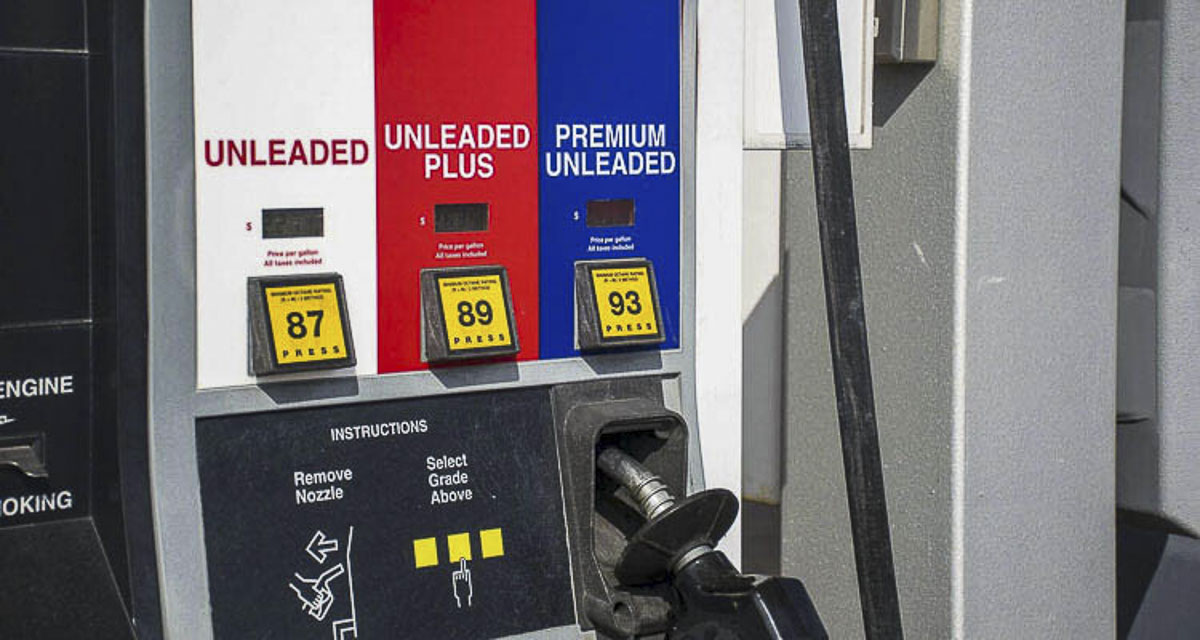
The Evergreen State has seen gasoline prices, among the highest in the nation, increasing over the last several weeks
Brett Davis
The Center Square Washington
Washington state motorists could feel more pain at the pump than usual this summer as a combination of supply issues, global tensions and state polices drive up fuel costs.
Gasoline prices typically increase in summer due to demand and the switch to a more expensive blend of gasoline formulated to reduce emissions during warmer months.
The Evergreen State has seen gasoline prices, among the highest in the nation, increasing over the last several weeks.
“You are literally the only state that is above where it was one year ago,” Patrick De Haan, head of petroleum analysis at GasBuddy, said of fuel prices in Washington.
According to AAA, on June 18, 2024, the average price for regular unleaded gasoline in Washington was almost $4.35 per gallon. On Wednesday (June 18, 2025), it was nearly $4.41 per gallon.
“Washington’s really been impacted by some events that have been kind of out of your state,” De Haan said, referring to a number of gasoline refinery problems in California that are contributing to rising gasoline prices and concerns about future fuel supply stability. “Refinery issues are probably why you’re higher than a year ago.”
California has the most modern refineries on the West Coast, and disruptions there have a ripple effect on other markets, including Washington.
Two major California refineries are scheduled for closure: Phillips 66 is closing its Los Angeles refinery by October, and Valero is closing its Benicia refinery by April 2026. These closures represent a significant portion of the state’s refining capacity and are projected to lead to a gasoline supply shortfall.
After a February refinery fire at the Martinez Refining Company in California, Washington gas prices went up 21 cents a gallon. Martinez is a city about 30 miles northeast of San Francisco.
“The basis for what you’re seeing right now is refining challenges,” De Haan reiterated.
Complicating matters further are escalating tensions in the Middle East. Israel has carried out multiple waves of strikes targeting Iranian nuclear sites, missile bases and other military installations as part of “Operation Rising Lion.” Iran has responded with aerial attacks, launching ballistic missiles and drones at Israeli cities, including Tel Aviv.
“The Middle East is going to become a more active factor in why prices are going up,” De Haan said. “Washington is up 6 cents from a week ago, up 12 cents in the last month.”
As one of the world’s top oil producers, any disruption in Iran’s output could send international prices soaring, impacting what Washingtonians pay at the pump.
“Oil prices have jumped almost $10 a barrel in the last week,” De Haan observed.
Other factors closer to home also impact gasoline prices in Washington, including the state’s cap-and-trade program and an upcoming state gasoline tax increase.
Under the Climate Commitment Act, the state aims to reduce greenhouse gas emissions by setting a cap on the total amount of pollution allowed in the state and requiring covered businesses to obtain allowances equal to their emissions. These allowances can be acquired through quarterly auctions run by the Washington State Department of Ecology.
Ecology is gradually reducing the number of available allowances each year, creating a shrinking supply and increasing prices.
The cap-and-trade program has raised more than $3 billion so far. The money goes to projects that reduce greenhouse gas emissions and promote clean energy initiatives.
Washington’s gasoline tax is scheduled to increase by 6 cents per gallon on July 1, as part of a broader transportation revenue package approved by the Legislature this session.
The tax on diesel fuel will increase by 3 cents per gallon on July 1, and then increase by another 3 cents per gallon starting July 1, 2027.
Both gasoline and diesel taxes will be indexed to inflation, increasing by 2% annually starting in 2026 for gasoline and 2028 for diesel.
“It’s not looking terrific for summer,” De Haan said.
The broader outlook, according to him, isn’t any better.
“The long road is worrisome as well,” De Haan said. “Not only are we dealing with these short-term issues now in Washington, but long term, if there’s not enough refining capacity to meet demand, this is a story that’s going to continue to actually worsen, not improve.”
He concluded, “The trend is not great for Washington state.”
The first day of summer is Friday (June 20).
This report was first published by The Center Square Washington.
Also read:
- Opinion: Portland’s War on Cars Part 4 – A smarter automobile strategy to end gridlock
 O’Toole argues fuel wasted in Portland-area congestion has sextupled since 1982, generating 250,000 tons of extra greenhouse gases annually.
 - Opinion: Transit ridership trends are dismal but regional plans are oblivious
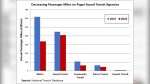 Puget Sound transit passenger-miles fell 31% from 2015 to 2024 despite a half-million-resident population increase.
 - Interstate Bridge Replacement Program seeks qualified firms for bridge replacement contract
 The CRBR project is backed by $5.7 billion from state funds, federal grants, and future tolling.
 - Opinion: Bankrupt – A $3.5 billion Rose Quarter Freeway widening project
 Joe Cortright argues ODOT’s Rose Quarter project has grown from a $450M approval to a $3.5B estimate, with a $2B funding gap.
 - Opinion: Portland’s War on Cars 3 – Ending the war on automobiles
 O’Toole argues Portland should add toll lanes, fix safety hazards, and redesign TriMet routes to end its anti-auto policies.