


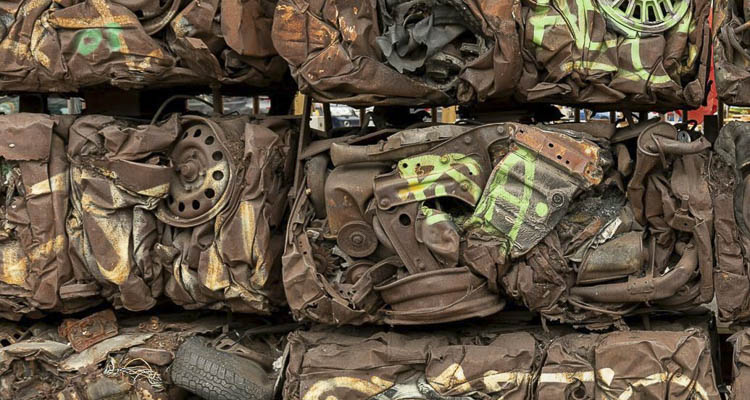
The Legislature passed House Bill 2153, which Gov. Jay Inslee signed into law, which requires catalytic converters to be marked by dealers so they are traceable if stolen
Carleen Johnson
The Center Square Washington
Lawmakers are hoping recently passed legislation will stem the tide of stolen catalytic converters in Washington state.
This session, the Legislature passed House Bill 2153, which Gov. Jay Inslee signed into law, which requires catalytic converters to be marked by dealers so they are traceable if stolen. It goes into effect on April 1, 2025.
A catalytic converter is a device used to reduce the emissions from an internal combustion engine. There’s a significant black market trade in catalytic converters because of the valuable rare metals – platinum, palladium and rhodium – that make them work, meaning they can be recycled and resold.
And though prices for precious metals are down from pandemic-era highs, demand could go back up if prices rise again.
Christina Sanders is the director of the Division of Governmental Studies and Services at Washington State University.
She led a team tasked by state lawmakers with researching and reporting on the rise in catalytic converter thefts in comparison to other states, and suggesting solutions.
Many of those solutions are included in the legislation that passed during this year’s legislative session and last year’s legislative session.
“Situations caused by the pandemic put a lot of people in more desperate times and, so, no surprise that property crimes and things like catalytic converter theft increased,” Sanders said.
Her team’s research found that, in 2000, approximately 3,000 catalytic converters were reported stolen in the state.
“By the time we got to 2022, it was up over 13,000 and those are just the ones reported,” Sanders said.
The pandemic shined a spotlight on the problem.
“Catalytic converter theft impacts one family at a time so we don’t necessarily hear about it until there’s really a build up like we saw during the pandemic,” Sanders continued. “The cost for getting a vehicle repaired is pretty expensive, and in the meantime you’ve got family members without transportation to get to work or to get kids to school or daycare, so the impact on the costs is pretty hefty so far as property crime goes.”
Victims frequently don’t report the crime because they either don’t have vehicle insurance, or only carry liability coverage which does not cover the cost of fixing the damage.
In other cases the deductible is so high that victims determine it’s not worth reporting the theft to an insurance company.
Legislation born out of the report was sponsored by Rep. Cindy Ryu, D-Shoreline, who said she became passionate about the issue after catalytic converters were stolen from the vans at her church.
Ryu first sponsored House Bill 1815, which was passed in 2022. It forced scrap metal recyclers and vehicle wreckers to keep better records and cooperate with law enforcement.
Legislation passed this session, HB 2153, is a continuation of that.
During a January public hearing, Mark Johnson with the Washington Retail Association testified in support of the bill.
“This is not a victimless crime,” he said. “Catalytic converter theft impacts retailers, their customers and their employees.”
Jeff Gombosky with Carvana urged lawmakers to amend language in the bill requiring VIN numbers to be etched onto catalytic converters.
“We would support an approach that is used in the state of Minnesota, which requires when catalytic converters are removed from vehicles, the etchings occur at that time,” he said.
Carvana sells automobiles nationwide.
“And when those cars are rehabbed, it’s often outside of the state, and we can’t identify when something is coming specifically into Washington state,” he explained.
Brad Tower with Radius Recycling also spoke out in support of the legislation.
“I want to remind members of the committee that in June of 2021, Auburn police found over 800 stolen catalytic converters in a self-storage unit and in November 2022, the Department of Justice cracked down on a nationwide ring connected to the forfeiture of $545 million worth of ill-gotten materials linked to the theft of catalytic converters.”
Sanders’ WSU study found rates of catalytic converter theft were much higher in Washington and Oregon than in Idaho and Montana.
This report was first published by The Center Square Washington.
Also read:
- Opinion: Were Republican voters just sleeping during the August primary election?
 CCRP Chairman Matt Bumala says 60% of primary no-shows in the 17th and 18th districts were Republicans.
 - High school football: New coach prepares for long-term success at Prairie High School
 James Young-Lewis, a Clark County native who graduated from Evergreen in 2009, became Prairie’s head coach in May after working as an assistant coach across various programs since 2015, joining Prairie’s staff in 2024.
 - Cost to battle 20 wildfires in WA has topped $200M
 Twenty wildfires have cost Washington $207M in one month, more than two-thirds of what DNR spent all last fiscal year.
 - Opinion: WA Cares’ launch showcased care WA Cares did not provide
 Gov. Ferguson showcased a caregiving arrangement at the WA Cares launch that the program had not paid for a single day of.
 - Former State Rep. Liz Pike provides update on husband Neil Cahoon
 Neil Cahoon, a Camas resident, has undergone multiple surgeries including five on Aug. 15 after the Aug. 10 crash near La Center’s Daybreak Airport.
 - Opinion: Portland’s War on Cars Part 4 – A smarter automobile strategy to end gridlock
 O’Toole argues fuel wasted in Portland-area congestion has sextupled since 1982, generating 250,000 tons of extra greenhouse gases annually.
 - $1,000 first prize for Camas Plein Air Art Event honoring Marquita Call on Sept. 26
 Plein air artists compete Sept. 26 in Camas for $1,000 first prize honoring gallery founder Marquita Call.