



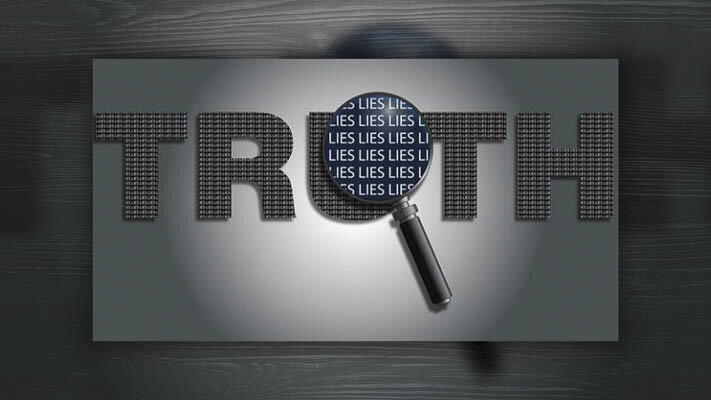
Targets not only misinformation, but accurate details ‘deemed wrongthink’
Bob Unruh
WND News Center
One part of the scheming by the federal government to censor information it dislikes has been uncovered and revealed in a new report by Mike Benz, Allum Bokhari and Oscar Buynevich at the Foundation for Freedom Online.
It involves a “Disinformation Primer” that was unleashed by USAID in a 97-page document that was labeled “for internal use only.”
USAID, which is a branch of the federal government that “purports to use taxpayer dollars for ‘strengthening resilient democratic societies,'” the report said, instead has been “pushing private sector technology companies, media organizations, education ministries, national governments and funding bodies to adopt social media censorship practices.”
The report explains the document was obtained by American First Legal, which was forced by the feds to sue to gain access to documents subject to a Freedom Information Act procedure.
The revelatory paperwork shows USAID’s pursuit of many damaging censorship strategies that were used to throttle comments during the 2020 election and more.
The document is dated February 2021, just after Joe Biden took office, and calls for censorship strategies for “virtually every governmental, non-governmental and private sector commercial actor,” calling for them to “take action against disfavored speech online.”
For example, tech companies could deprive those with objectionable speech of funding, governments could regulate those statements, media groups could attack any source of information that does not meet the standards for being politically correct and more.
USAID told think tanks, non-profits and others to “blacklist’ sources of “wrong” opinions.
The report explains, for example, USAID calls for financial “throttling,” “In order to disrupt the funding and financial incentive to disinform, attention has also turned to the advertising industry, particularly with online advertising. A good example of this is the concerted response to the discovery of the websites traced to the village of Veles outside of Skopje, Macedonia, which showed how easy it was to exploit the digital advertising model to flood the news ecosystem with fabricated content. Wired Magazine profiled the Veles case study in 2017. As most online advertisers are unaware of the disinformation risk of the domains featuring their ads due to the automated process of ad placement, they inadvertently are funding and amplifying platforms that disinform.”
It claims that online competition to “traditional media” is the problem, because it reduces the power of those leftist corporations that control networks and publications to “shape … dialogue.”
So, it insists, those casting doubt on those partisan sources should be attacked.
“Because traditional information systems are failing, some opinion leaders are casting doubt on media, which, in turn, impacts USAID programming and funding choices,” the warning came.
Having sources of information outside of the legacy media industry is problematic, it charges.
“It leads to a loss of information integrity. Online news platforms have disrupted the traditional media landscape. Government officials and journalists are not the sole information gatekeepers anymore. As such, citizens require a new level of information or media literacy to evaluate the veracity of claims made on the internet.”
The report said FFO chief Mike Benz has released a video primer on the ideology of “media literacy.”
The agenda also includes using Google to redirect people who come across information that the bureaucracy doesn’t want Americans to see to other, “curated” videos that casts doubt, often falsely, on the sought-after information.
Those posts “debunk” the information that is being hidden from the public, the report said.
USAID also wants various of its compatriots in the war on “unapproved” information to do “prebunking,” which involves “anticipating what disinformation is likely to be repeated” and having a different opinion already prepared.
“USAID’s Disinformation Primer also suggests various other technological tools for combatting disinformation,” the report said.
The foundation report noted, “In addition to mis- (speech that unintentionally causes harm or is inaccurate) and dis-information (speech that is deliberately created to cause harm), the USAID mimics the censorship industry’s proclivity to also target factually true speech under the framing of ‘mal-information.’ Malinformation is speech that is factually accurate, but is deemed wrongthink by the censors because it presents an oppositional narrative.”
USAID even attacks “satire or parody” in its “Ten types of mis- and disinformation.”
This report was first published by the WND News Center.
Also read:
- Opinion: In plain sight – yielding to pedestrians
 Drivers often fail to see pedestrians due to inattentional blindness, which highlights the need for more focused awareness at intersections and stronger safety practices.
 - NBA vote clears way for expansion to Seattle
 The NBA Board of Governors has voted to explore adding teams in Seattle and Las Vegas, moving Seattle closer than ever to hosting pro basketball again.
 - Opinion: The legislature has committed $2.4 billion to recurring pension increases since 2018
 Six legislative COLAs have raised public employer costs by $2.38 billion since 2018, driving up unfunded pension liabilities and increasing burdens on county and city budgets.
 - Opinion: ‘Just because they got away with it doesn’t mean they weren’t wrong’
 A Skamania County deputy’s report found violations of county rules and the Open Public Meetings Act, but no prosecutor acted on the findings.
 - More drama at Clark County Council in regard to its representatives on the C-TRAN Board
 Councilors debated whether C-TRAN board representatives must follow group mandates, with Michelle Belkot refusing to commit to new voting rules and Glen Yung opposing her nomination.
 - Opinion: Small things grow great by concord
 Washington’s initiative process gives citizens direct power to challenge lawmakers. Failed restrictions and new measures on girls’ sports, parental rights, and citizenship prove the influence of grassroots action.
 - Opinion: California’s $20 fast food minimum wage creates less jobs and lower income
 Study data show California fast food workers now face fewer shifts, higher menu prices, and widespread automation after the $20 wage hike.
