



California representative fell short in rounds of voting across several days this week as a small group of conservative Republicans remained steadfast in opposing him
California Republican Kevin McCarthy was elected Speaker of the U.S. House early Saturday after the 15th round of voting and a week of turmoil and nonstop negotiations.
McCarthy received 216 votes to 212 for Democrat Hakeem Jeffries, with five voting present. The five voting present lowered the threshold for the 218 votes that McCarthy would have needed if everyone voted.
Just a couple hours earlier, McCarthy fell one vote short of becoming the next speaker of the U.S. House in the 14th round of voting.
McCarthy fell short in rounds of voting across several days this week as a small group of conservative Republicans remained steadfast in opposing him, but Saturday morning’s final ballot won him the position.
Conservative members in the House laid out conditions for McCarthy ahead of the votes. Those conditions included a promise to vote on a balanced budget, the “Texas Border Plan,” term limits for members of Congress, and the Fair Tax Act, which would create a national sales tax on certain services and property to replace the current income tax, payroll taxes, and estate and gift taxes.
This is just the 15th time in the country’s history it’s taken multiple votes to elect a speaker. From 1793 to 1925, from the 3rd to the 68th Congress, there were 14 instances when it took multiple ballots to elect a speaker, the Historian’s office notes. Among them, 13 occurred before the Civil War, “when party divisions were more nebulous.”
“The last time a Speaker election required two or more votes on the floor happened in 1923,” the office states. It also notes that the House “has filled vacancies in the Speakership three times using a resolution.”
This report was first published by The Center Square.
Also read:
- Opinion: Were Republican voters just sleeping during the August primary election?
 CCRP Chairman Matt Bumala says 60% of primary no-shows in the 17th and 18th districts were Republicans.
 - High school football: New coach prepares for long-term success at Prairie High School
 James Young-Lewis, a Clark County native who graduated from Evergreen in 2009, became Prairie’s head coach in May after working as an assistant coach across various programs since 2015, joining Prairie’s staff in 2024.
 - Cost to battle 20 wildfires in WA has topped $200M
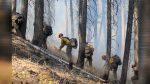 Twenty wildfires have cost Washington $207M in one month, more than two-thirds of what DNR spent all last fiscal year.
 - Opinion: WA Cares’ launch showcased care WA Cares did not provide
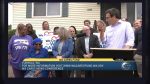 Gov. Ferguson showcased a caregiving arrangement at the WA Cares launch that the program had not paid for a single day of.
 - Former State Rep. Liz Pike provides update on husband Neil Cahoon
 Neil Cahoon, a Camas resident, has undergone multiple surgeries including five on Aug. 15 after the Aug. 10 crash near La Center’s Daybreak Airport.
 - Opinion: Portland’s War on Cars Part 4 – A smarter automobile strategy to end gridlock
 O’Toole argues fuel wasted in Portland-area congestion has sextupled since 1982, generating 250,000 tons of extra greenhouse gases annually.
 - $1,000 first prize for Camas Plein Air Art Event honoring Marquita Call on Sept. 26
 Plein air artists compete Sept. 26 in Camas for $1,000 first prize honoring gallery founder Marquita Call.