


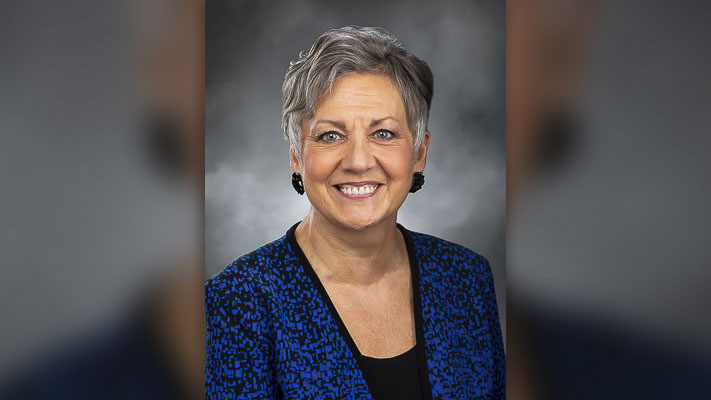
Sen. Lynda Wilson said she remembers the murder well, noting how it led to the passage of the Chelsea Harrison Act in 2008
VANCOUVER – A 2021 change in state law that will eventually allow a Clark County child-killer to go free instead of spending the rest of his life in prison needs to be undone in 2023, says Sen. Lynda Wilson, R-Vancouver.
“At a time when the statewide annual murder count is at an all-time high and aggravated assaults in Washington are on a five-year upward trend, a former ‘three striker’ and confessed murderer has had his mandatory life sentence replaced with something far less,” said Wilson, speaking about today’s resentencing of Roy Wayne Russell Jr. She represents the 17th Legislative District, where 14-year-old Chelsea Harrison lived when she was murdered by Russell in 2005.
“It’s no wonder people have lost trust in government and are so concerned about public safety. They see how the laws are being tilted in favor of criminals, with less regard for the rights of victims, in the name of being ‘progressive.’ A reboot is in order when the Legislature convenes in January.”
Wilson, a former member of the Senate Law and Justice Committee, said she remembers the murder well, noting how it led to the passage of the Chelsea Harrison Act in 2008. That legislation, sponsored by her predecessor in the Senate, plugged a loophole in the state’s voter-approved “three strikes” law by allowing certain felony convictions from other states to qualify as a “strike” in Washington.
In 2019, the Democratic majority in Washington’s Legislature created a loophole in the three-strikes law by removing second-degree robbery as a “most serious” offense. It made that change retroactive in 2021, which basically removed Russell from the list of criminals who qualified for a mandatory life sentence.
“Anyone who has been a legislator is familiar with the concept of ‘unintended consequences,’ but that defense doesn’t work for the pro-criminal bills that got through in 2021,” Wilson continued. “Republicans accurately predicted the fallout from the law that essentially banned police pursuits, which has been especially good for car thieves. When the bill to weaken the three-strikes law came to the Senate floor, we went to great lengths to point out the flaws, and the Democrats went ahead with it anyway. That’s the same day we were told, by one of the progressive Democratic senators, how accused criminals should not be judged by their ‘worst moment.’ I don’t see today’s resentencing of Roy Russell as progress.
“People would be shocked if they knew about all the efforts being made to go soft on crime. I would ask those who supported this loophole in the law to explain to Chelsea Harrison’s family how it’s equitable. We need laws that are fair to victims, and this law needs to be fixed.”
Also read:
- Opinion: Were Republican voters just sleeping during the August primary election?
 CCRP Chairman Matt Bumala says 60% of primary no-shows in the 17th and 18th districts were Republicans.
 - High school football: New coach prepares for long-term success at Prairie High School
 James Young-Lewis, a Clark County native who graduated from Evergreen in 2009, became Prairie’s head coach in May after working as an assistant coach across various programs since 2015, joining Prairie’s staff in 2024.
 - Cost to battle 20 wildfires in WA has topped $200M
 Twenty wildfires have cost Washington $207M in one month, more than two-thirds of what DNR spent all last fiscal year.
 - Opinion: WA Cares’ launch showcased care WA Cares did not provide
 Gov. Ferguson showcased a caregiving arrangement at the WA Cares launch that the program had not paid for a single day of.
 - Former State Rep. Liz Pike provides update on husband Neil Cahoon
 Neil Cahoon, a Camas resident, has undergone multiple surgeries including five on Aug. 15 after the Aug. 10 crash near La Center’s Daybreak Airport.
 - Opinion: Portland’s War on Cars Part 4 – A smarter automobile strategy to end gridlock
 O’Toole argues fuel wasted in Portland-area congestion has sextupled since 1982, generating 250,000 tons of extra greenhouse gases annually.
 - $1,000 first prize for Camas Plein Air Art Event honoring Marquita Call on Sept. 26
 Plein air artists compete Sept. 26 in Camas for $1,000 first prize honoring gallery founder Marquita Call.