


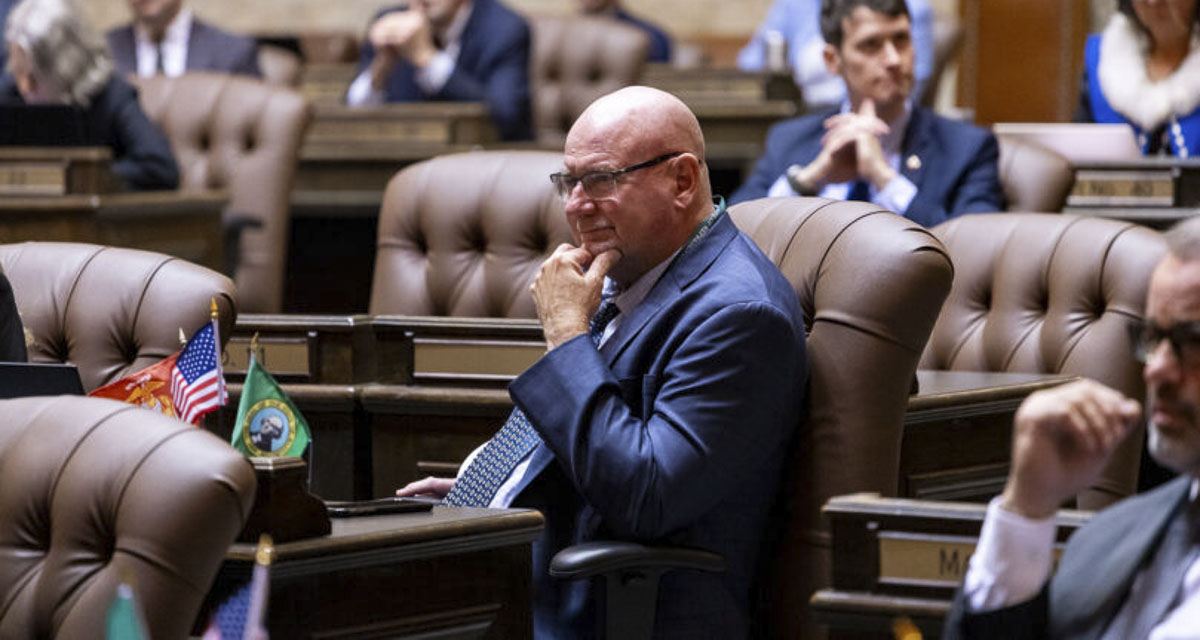
HB 2531 would update Washington’s ambulance quality assurance fee program to promote long-term financial stability for emergency medical providers while maintaining compliance with federal Medicaid requirements
The Washington State House of Representatives, on Thursday, unanimously passed a bill from Rep. David Stuebe that would reinforce Medicaid support for emergency ambulance providers and protect access to lifesaving services across the state.
House Bill 2531 would update Washington’s ambulance quality assurance fee program to promote long-term financial stability for emergency medical providers while maintaining compliance with federal Medicaid requirements. The bill would modernize the way Medicaid reimbursement rates are calculated and adjusted for emergency ambulance transports.
Under the legislation, the state would continue collecting a quality assurance fee from private, nongovernmental ambulance providers, placing those funds into a dedicated account, and using them to draw down federal Medicaid matching dollars. Those combined funds would then be used to increase reimbursement rates for emergency transports.
“Ambulance providers are often the first and only line of care in a crisis, particularly in rural communities,” said Stuebe, R-Washougal. “This legislation strengthens the financial foundation they depend on and helps ensure Washington does not leave federal Medicaid dollars on the table.”
HB 2531 would require the Health Care Authority to update the Medicaid add-on payment for emergency ambulance transports each year. Current law allows those rates to remain unchanged for multiple years, even when transport volumes and costs fluctuate. Annual recalculations would better reflect real-time conditions and the available federal funding.
“Reliable funding allows providers to plan ahead, retain trained professionals, and keep emergency vehicles ready to respond,” Stuebe said. “This approach balances stability for providers with accountability for taxpayers.”
The measure would also update and clarify program definitions to ensure accurate calculations and continued federal compliance. The program would remain revenue-neutral to the state and would not rely on the general fund.
The bill now moves to the Senate for further consideration.
Information provided by the Washington State House Republicans, houserepublicans.wa.gov

Also read:
- Opinion: Were Republican voters just sleeping during the August primary election?
 CCRP Chairman Matt Bumala says 60% of primary no-shows in the 17th and 18th districts were Republicans.
 - Opinion: WA Cares’ launch showcased care WA Cares did not provide
 Gov. Ferguson showcased a caregiving arrangement at the WA Cares launch that the program had not paid for a single day of.
 - Auditor, auditor candidate address scrutiny over job title
 Greg Kimsey says roughly 40 county employees hold the deputy county auditor designation Kelly used in his campaign.
 - Opinion: Is Mitchell Kelly misleading voters with his ‘deputy auditor’ claim?
 Clark County HR records show no position called “Deputy County Auditor” has ever existed, Anderson argues.
 - Opinion: Democrats rig the ballot to save their income tax
 Churchill argues the ballot disclosure warning voters of education cuts describes revenue never collected and not yet allocated.