



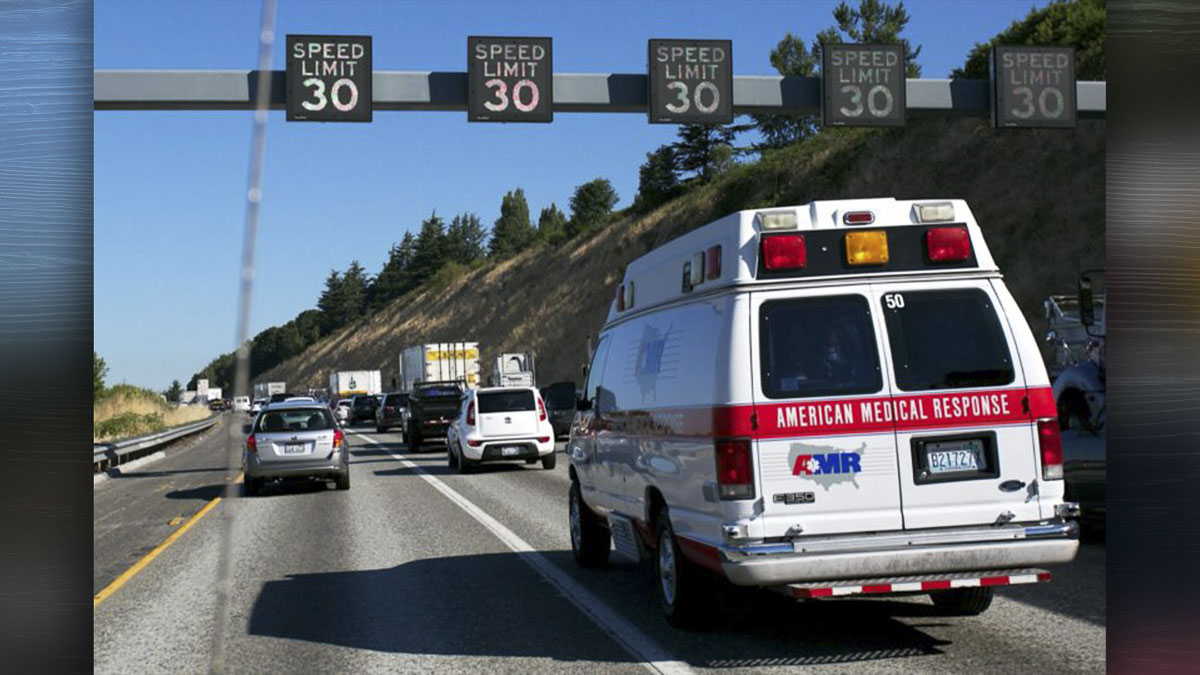
House Bill 2531 would update Washington’s ambulance quality assurance fee program to promote long-term financial stability for emergency medical providers while maintaining compliance with federal Medicaid requirements
Legislation from Rep. David Stuebe that would reinforce Medicaid support for emergency ambulance providers and protect access to lifesaving services across the state is one step closer to becoming law, after the Washington State Senate unanimously passed the bill on Saturday.

House Bill 2531 would update Washington’s ambulance quality assurance fee program to promote long-term financial stability for emergency medical providers while maintaining compliance with federal Medicaid requirements. The bill would modernize the way Medicaid reimbursement rates are calculated and adjusted for emergency ambulance transports.
“Emergency medical crews are the front door to our health care system, especially in rural parts of the state where options are limited,” said Stuebe, R-Washougal. “This bill helps shore up the funding they rely on and makes sure Washington captures every available federal Medicaid dollar to support lifesaving services.”
Under the proposal, Washington would continue assessing quality assurance fees on private, non-governmental ambulance providers. Those dollars would be deposited into a dedicated account and used to secure federal Medicaid matching funds. Together, the state and federal funds would boost reimbursement rates for emergency ambulance transports.
HB 2531 directs the Washington State Health Care Authority to recalculate the Medicaid add-on payment for emergency transports each year. Under current law, those rates can remain unchanged for several years, even as call volumes, staffing needs, and operational expenses shift. Annual updates would ensure reimbursement more accurately reflects current costs and the level of federal support available.
“When funding is predictable and up-to-date, providers can invest in equipment, keep highly trained paramedics on staff, and maintain readiness around the clock,” Stuebe said. “We can protect taxpayers while also giving emergency responders the stability they need to serve our communities.”
The legislation also refines program definitions to improve clarity, maintain compliance with federal requirements, and ensure payment calculations remain accurate. The program would continue to operate without drawing from the state’s general fund and is structured to remain revenue-neutral for Washington.
The bill now awaits the governor’s signature.
Information provided by the Washington State House Republicans, houserepublicans.wa.gov

Also read:
- 18th District lawmakers to host town hall meeting on Saturday, March 28, in Battle Ground
 Stephanie McClintock and John Ley will meet with Battle Ground constituents to answer questions, review the new income tax, and discuss the effects of the $80 billion budget.
 - Opinion: The legislature has committed $2.4 billion to recurring pension increases since 2018
 Six legislative COLAs have raised public employer costs by $2.38 billion since 2018, driving up unfunded pension liabilities and increasing burdens on county and city budgets.
 - Opinion: ‘Just because they got away with it doesn’t mean they weren’t wrong’
 A Skamania County deputy’s report found violations of county rules and the Open Public Meetings Act, but no prosecutor acted on the findings.
 - More drama at Clark County Council in regard to its representatives on the C-TRAN Board
 Councilors debated whether C-TRAN board representatives must follow group mandates, with Michelle Belkot refusing to commit to new voting rules and Glen Yung opposing her nomination.
 - Opinion: Small things grow great by concord
 Washington’s initiative process gives citizens direct power to challenge lawmakers. Failed restrictions and new measures on girls’ sports, parental rights, and citizenship prove the influence of grassroots action.
 wpDiscuz
