


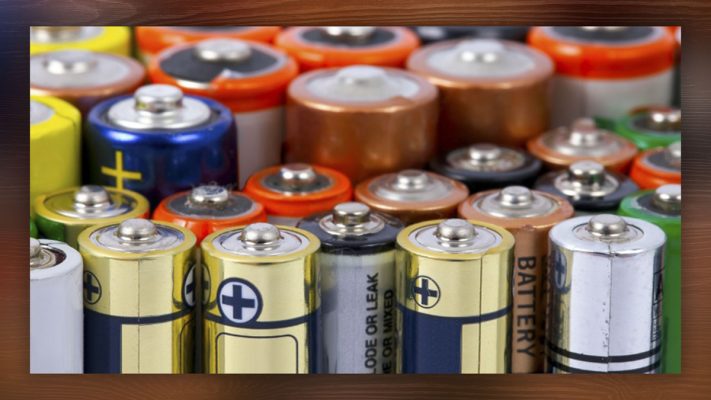
Batteries that end up in household garbage or inside recycling carts can explode, posing significant fire risks during transportation and at transfer stations
VANCOUVER — Clark County Public Health’s Solid Waste & Recycling team encourages residents to celebrate National Battery Day on Feb. 18 by recycling their used batteries at one of several safe, convenient drop-off locations across the county.
Batteries power countless everyday devices that make lives easier and more efficient. However, improperly disposing of batteries can have serious consequences. Batteries that end up in household garbage or inside recycling carts can explode, posing significant fire risks during transportation and at transfer stations. These fires can cause serious harm to sanitation workers and can damage costly equipment at Clark County transfer stations.
Clark County Battery Drop-Off program
Residents can drop off household batteries for free at several participating sites throughout Clark County. Drop-offs are limited to 10 batteries per person per day. Larger quantities must be dropped off at the household hazardous waste (HHW) locations at the transfer stations.
Battery drop-off sites accept:
- Alkaline
- Button and coin cell batteries
- Carbon zinc
- Lithium-ion (Li-Ion)
- Lithium primary
- Nickel cadmium (Ni-Cd)
- Nickel metal hydride (Ni-MH)
- Nickel zinc (Ni-Zn)
- Small-sealed lead acid under 5 pounds (SSLA/Pb)
- All cellphones regardless of size, make, model or age
Battery drop-off sites do not accept:
- Batteries from businesses
- Batteries larger than 300Wh
- Battery-containing products (except cellphones)
- Never attempt to remove batteries that are embedded or built into devices if not readily accessible. Damaging these inner batteries can pose serious health and safety risks, including fire and combustion hazards.
- Damaged, defective, or recalled batteries*
- Vaping or e-cigarette devices and products*
- Vehicle batteries*
- Other hazardous waste*
*These items can be dropped off at the HHW drop-off locations at the transfer stations.
Batteries must be individually bagged or have the ends taped to prevent hazards. To find a nearby drop-off location, go to RecyclingA-Z.com or download the RecycleRight mobile app (downloadable on Apple and Android). Larger quantities and certain specialized batteries can be dropped off at a household hazardous waste facility.
The battery drop-off program is provided by Clark County Public Health and Waste Connections of Washington. For more information, contact solidwaste@clark.wa.gov.
Information provided by Clark Co. WA Communications.
Also read:
- Opinion: Were Republican voters just sleeping during the August primary election?
 CCRP Chairman Matt Bumala says 60% of primary no-shows in the 17th and 18th districts were Republicans.
 - High school football: New coach prepares for long-term success at Prairie High School
 James Young-Lewis, a Clark County native who graduated from Evergreen in 2009, became Prairie’s head coach in May after working as an assistant coach across various programs since 2015, joining Prairie’s staff in 2024.
 - Cost to battle 20 wildfires in WA has topped $200M
 Twenty wildfires have cost Washington $207M in one month, more than two-thirds of what DNR spent all last fiscal year.
 - Opinion: WA Cares’ launch showcased care WA Cares did not provide
 Gov. Ferguson showcased a caregiving arrangement at the WA Cares launch that the program had not paid for a single day of.
 - Former State Rep. Liz Pike provides update on husband Neil Cahoon
 Neil Cahoon, a Camas resident, has undergone multiple surgeries including five on Aug. 15 after the Aug. 10 crash near La Center’s Daybreak Airport.
 - Opinion: Portland’s War on Cars Part 4 – A smarter automobile strategy to end gridlock
 O’Toole argues fuel wasted in Portland-area congestion has sextupled since 1982, generating 250,000 tons of extra greenhouse gases annually.
 - $1,000 first prize for Camas Plein Air Art Event honoring Marquita Call on Sept. 26
 Plein air artists compete Sept. 26 in Camas for $1,000 first prize honoring gallery founder Marquita Call.