



‘I’d be careful about that’
Bob Unurh
WND News Center
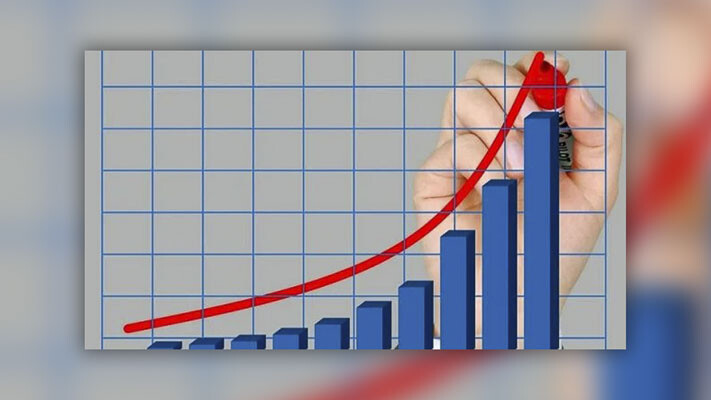
Inflation for hurting American consumers exploded under Joe Biden.
Just a little over a year ago, it was at 9.1% – costing people thousands of dollars a year more just to live the same lifestyle they had a year or two earlier.
The response was for the Federal Reserve to surge interest rates, which cost any consumer who has a credit card or financing for a car or home even more.
Even now, inflation is down from a year ago, but remains far above the government’s goal.
Blame it on Joe Biden.
That’s according to JP Morgan Chase CEO Jamie Dimon who was interviewed by the Economist.
A report at the Daily Mail confirmed that Dimon questioned the effectiveness of “Bidenomics,” previously known as “Bidenflation,” and “blamed Joe Biden’s $5 trillion economic stimulus for causing inflation.”
Biden has been scheming to raise a lot of taxes, especially on the wealthy “in order to invest in the middle class,” the report said.
That’s opposite the wildly successful plan used by President Ronald Reagan to grow the economy during his White House days.
“I’d be careful about that,” Dimon said of Biden’s agenda.
He said Bidenomics is more of an industrial policy, to help particular industries.
He’s opposed those in the past, but sees them now as usable within a few narrow confines like national security.
“If it relates to supersonic missiles, I think we should do it. If it relates to holding down the Chinese people, I think we shouldn’t do it,” Dimon said. “There shouldn’t be social policy around that, it shouldn’t be political it should be purely economic.”
He also was critical of Biden’s massive stimulus spending.
He has continued concerns with inflation, which spiked nearly to the double digits just a year ago. And while that rate has slowed somewhat, those price spikes that hit consumers so hard then now are the base level for the new price surges they are seeing now.
Biden, as the octogenarian campaigns for another four years in office, has been promoting his “Bidenomics,” which involves a lot more taxes.
However, polling shows Americans widely dissatisfied and unhappy with Biden’s work on the economy. Nearly half have confirmed they are “a lot worse off” since Biden took office and largely abandoned economic goals of President Trump.
Biden’s first term has focused largely on promoting the LGBT, specifically the transgender, ideology, as well as abortion.
Also read:
- White House govt. Funding request for 2027 cuts $73 billion
 President Trump’s budget seeks to boost defense funding while cutting $73 billion from agencies like the EPA, NASA, and Agriculture, prompting sharp criticism from Democratic leaders.
 - Heywood asks WA Supreme Court to allow referendum effort on income tax
 Brian Heywood is petitioning the state Supreme Court after the Secretary of State rejected a referendum to repeal Washington’s new 9.9% tax on income over $1 million.
 - Opinion: Half the road, full stop – Understanding pedestrian right-of-way
 Doug Dahl explains how Washington’s law requires drivers to stop when a pedestrian is within one lane of their half of the road, not just when directly in front.
 - Clark County seeks volunteer for Law and Justice Council
 Applicants with experience in mental health services are encouraged to help guide Clark County’s coordination of local criminal justice and corrections planning.
 - VIDEO: Families at center of WA transgender sports debate face-to-face with OSPI
 Two Washington high school students and their parents met with Superintendent Chris Reykdal to discuss concerns about sports policies after one student faced an investigation for harassment.
 - As Washington lawmakers punt on school cellphone ban, some want more action
 At Robert Eagle Staff Middle School, all-day phone removal led to fewer conflicts and more student engagement, but some parents and lawmakers argue a ban should not be imposed statewide.
 - Opinion: The state’s RFK-proofing bill comes with a cost
 Mandates like HB 2242 can lead to higher premiums as insurance companies absorb costs for new preventive services, affecting affordability statewide.
