



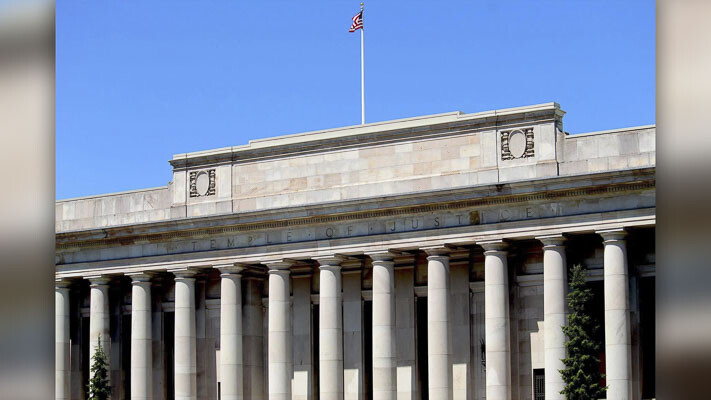
The Saturday letter lays out a variety of concerns over Senate Bill 5536, which failed the pass at the tail end of the 105-day regular session
Brett Davis
The Center Square Washington
Washington state House Republicans sent a letter to Gov. Jay Inslee outlining their concerns over any legislative solution to address a state Supreme Court decision that essentially decriminalized drugs.
With the legislative session having ended on April 23, a special session would have to be called to pass such a bill.
The Saturday letter lays out a variety of concerns over Senate Bill 5536, which failed the pass at the tail end of the 105-day regular session:
- “Although the bill would make drug possession a gross misdemeanor on paper, the jail diversion process proposed in the bill would lead to a revolving door of offenses in practice. We requested a 12-month diversion with a six-month review hearing and some prosecutorial involvement. This would ensure those individuals in compliance with the conditions of the treatment and the diversion would remain eligible after six months. Individuals still struggling with compliance and in need of additional support would receive the appropriate services. We believe this would deliver both compassion and accountability as equal parts of the equation.
- “The bill would preempt local communities’ regulations in regard to using, selling, giving, delivering, and possessing drug paraphernalia, including establishing needle exchange locations. We believe local communities should have more control and flexibility in this area.
- “The bill would create recovery residences in local communities that co-mingle individuals seeking treatment and sobriety with individuals who continue to use. We had grave concerns with this policy and asked for greater separation and prioritization of those striving to recover.
- “The bill would establish health engagement hubs for children, as well as adults affiliated with syringe service programs and consumption sites. We asked that the state be notified and intervention occur when children are present.
- “The bill would not require public notice for siting of opioid treatment facilities in local communities. We asked for mandatory public notice.”
Sen. Majority Leader Andy Billig, D-Spokane, and House Speaker Laurie Jinkins, D-Tacoma, also received a copy of the letter.
The Center Square reached out Billig and Jinkins for comment on the letter but did not receive a reply.
The governor’s office, however, seemed optimistic.
“We think negotiations are making good progress,” Mike Faulk, Inslee’s spokesperson, emailed The Center Square on Monday. “The governor said earlier today he expects to make an announcement soon on a date for a special session.”
In February 2021, the state Supreme Court struck down the statute that made possession of a controlled substance a felony punishable by up to five years in prison. The court ruled the statute unconstitutional because it allowed people to be convicted of possession even when they didn’t realize they had drugs in their possession.
The ruling came in the case of a Spokane woman, Shannon Blake, who had received a pair of jeans from a friend. A pocket in the jeans contained a small bag of methamphetamine.
In April 2021, the state Supreme Court rejected a request from the state to reconsider the ruling. Later that month, the Legislature passed Senate Bill 5476, reclassifying drug possession as a misdemeanor. Per the bill, first and second-time convictions that occurred before the ruling would be vacated in retrial and defendants referred to treatment programs.
Inslee signed SB 5476 into law the following month, vetoing a portion of the bill that would have created a state fund to reimburse local governments and individuals who incur legal fees resulting from resentencing under the court’s decision.
The bill’s drug possession provisions expire on July 1.
This report was first published by The Center Square Washington.
Also read:
- Vancouver Police arrest barricaded man
 Terry Meyers, 58, faces multiple assault charges after pointing firearm at neighbor and barricading himself.
 - 49th Legislative District Democrats share their reasons for backing state income tax at Town Hall
 Three Democrat legislators defended the new income tax affecting only those earning over $1 million annually.
 - Letter: Freeze the scope and build the bridge
 Vancouver resident calls for project discipline after 22 years of planning and nearly half a billion in costs.
 - Ekklesia Theatre presents ‘Every Brilliant Thing’
 Interactive theatre production donates 50% of ticket sales to local counseling services.
 - Opinion: Public workers’ First Amendment rights are getting attention – in Idaho, not Washington
 Idaho moves to stop public schools from collecting union dues through government payroll while Washington continues favoring unions over worker choice.
 - Opinion: Lawsuit filed against the unconstitutional income tax in Washington state
 Former Attorney General Rob McKenna and Supreme Court Justice Phil Talmadge challenge the 9.9% income tax in Klickitat Superior Court.
 - Vancouver Police investigate domestic violence homicide
 Vancouver Police Major Crimes Unit investigating after woman found dead with knife wounds on NE Oakbrook Circle.
