



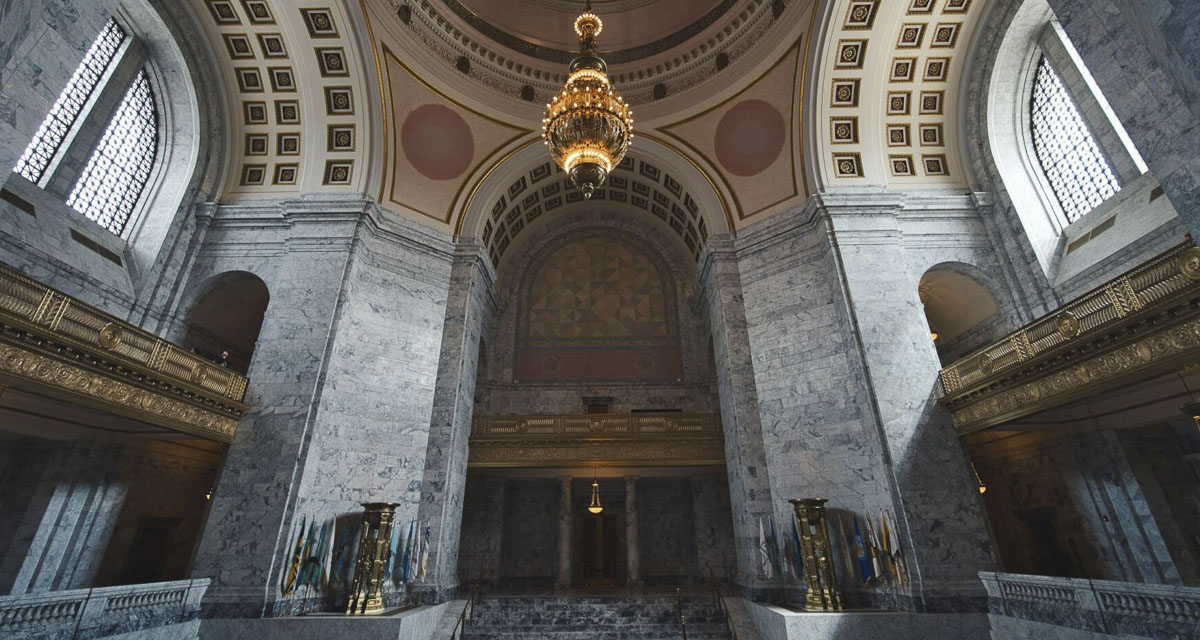
The legislative session is scheduled to wrap up on April 27, but if the majority party can’t figure out how to balance the budget by then, Gov. Bob Ferguson may have to call a special session
Tim Clouser
The Center Square Washington
With only days to fill a $16 billion operating budget shortfall, House Democrats advanced three bills on Wednesday that could raise taxes by more than $18 billion if the Senate passes them before Monday.
The legislative session is scheduled to wrap up on April 27, but if the majority party can’t figure out how to balance the budget by then, Gov. Bob Ferguson may have to call a special session.
Ferguson already told Democrats that he would veto plans that rely too heavily on a novel wealth tax or property tax hikes. However, hoping to avoid cuts, his party responded with plans to expand excise taxes, repeal several tax breaks, raise the state’s capital gains tax and more.
The majority passed three of those plans off the House floor on Wednesday, sending them back to the other chamber to approve their changes and hold a vote on final adoption. If passed, they could raise roughly $18 billion over the next decade unless the governor or courts get in the way.
“At a time of great economic uncertainty …, raising $12 billion in taxes is unsustainable, too risky,” Ferguson wrote in an April 17 news release. “That said, the Legislature has made progress on key issues in its updated revenue proposals.”
Senate Bill 5813
The Democrats passed SB 5813 after a 53-45 vote, with six siding with Republicans against increasing the capital gains tax. The Senate already approved the bill, but since the House amended it, the chamber of origin must hold another vote before final passage.
The proposal would maintain the 7% base tax on capital gains under $1 million but implement a new 2.9% surtax on anything above that threshold. The shift applies to individuals, not businesses, and excludes gains on real estate, retirement accounts and small business assets.
The proposal also increases the estate tax, currently capped at 20%, to up to 35% depending on a person’s wealth at the time of death. Democrats hope it’ll provide more education funding.
On the estate side, under the bill the exemption rises to $3 million, up from just under $2.2 million.
Senate Bill 5814
House Democrats passed SB 5814 with a 50-47 vote, which saw nine majority members break from the party to vote with Republicans. Like the other proposal, the House amended the bill on the floor, sending it back to the Senate for concurrence and a vote on final passage.
If approved, the bill would expand excise taxes and business and occupation, or B&O, taxes on several industries. Tech companies and advertisers may face the most taxes under a new 3% B&O tax on those services, but the price of nicotine pouches would also go up several dollars.
Senate Bill 5794
The majority passed SB 5794 with a 53-45 vote after six Democrats jumped ship to vote with Republicans. Like the others, the lawmakers amended the proposal and sent it back to the Senate for concurrence over the changes and a vote on final passage.
If approved, the bill would eliminate “obsolete tax preferences,” or breaks, on interest on real estate loans, prescription drug resellers, insurance producers, precious metals, home energy assistance, dentistry prepayments and international banking and investment services.
The bill also imposes a B&O tax of up to 1.75% B&O on rental storage units, regardless of duration.
Fiscal Impact
While the revenue estimates will likely change with Wednesday’s amendments, each bill could fill a considerable gap in the state’s finances. However, the question remains regarding what Ferguson will do, considering his stance last week on a $12 billion tax increase.
According to fiscal notes, SB 5813, regarding capital gains and estate taxes, could raise about $1.6 billion over the next decade. SB 5814, regarding excise taxes, could generate around $14.1 billion, and SB 5794, regarding tax preferences, could yield approximately $3.1 billion.
House Democrats passed three other revenue proposals on Tuesday night to help fill the $16 billion shortfall projected over the next four years. Combined with these bills and cuts to balance spending, Democrats could finalize the budget by Sunday, assuming Ferguson doesn’t veto it.
“We need a balanced approach,” Ferguson wrote in the release, “using a reasonable amount of progressive revenue and adopting solutions to reduce our spending.”
This report was first published by The Center Square Washington.

Also read:
- Opinion: Lawsuit filed against the unconstitutional income tax in Washington state
 Former Attorney General Rob McKenna and Supreme Court Justice Phil Talmadge challenge the 9.9% income tax in Klickitat Superior Court.
 - Letter: ‘Oregon and Washington aren’t refusing to clean their rolls — they’re contesting federal jurisdiction and timing’
 Camas resident challenges Lars Larson’s fraud claims, explaining legal disputes over federal jurisdiction.
 - County Council to hold hearing on preferred land use alternative for comprehensive plan update
 Clark County Council will select preferred land use alternative from three options studied in environmental review.
 - Opinion: ‘When are we going to get the full and complete details of the Interstate Bridge Replacement Program’s I-5 Bridge replacement project?’
 IBR team buried key details about light rail ending at waterfront with massive elevator system required.
 - County seeks public comment on plans tied to CDBG and HOME funding
 Clark County proposes $2.4 million in federal funding for dental care, affordable housing, and sidewalk improvements.
