



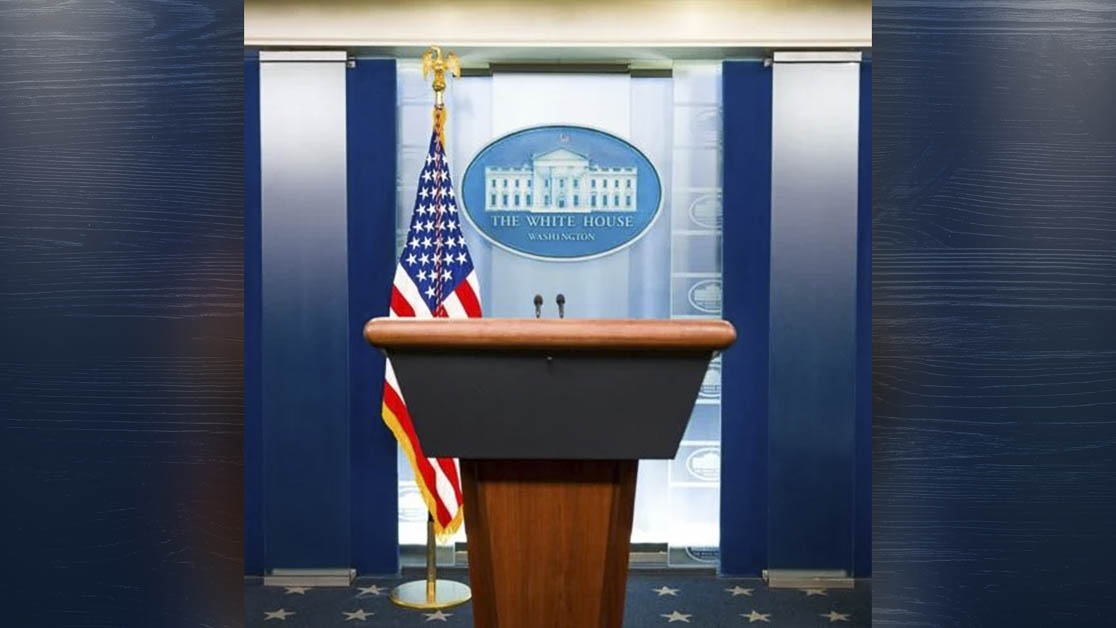
The Center Square reached out to a professor of journalism at Western Washington University for his perspective on how the media’s coverage of Biden’s decline may or may not impact consumers’ trust in the fourth estate
Carleen Johnson
The Center Square
A month after President Joe Biden’s calamitous debate performance against former President Donald Trump, and days after Biden’s decision Sunday not to seek reelection, there are still many questions about how the news media covered – or didn’t cover – Biden’s mental and physical decline in recent months, or even years.
From the onset of the June 27 debate, Biden, 81, struggled, speaking in a weak, raspy voice. He repeatedly tripped over his words and lost his train of thought, often trailing off inaudibly.
Mainstream media outlets were forced to acknowledge Biden’s shockingly bad debate performance.
Right-leaning news organizations were quick to point out that Biden’s frailty and cognitive issues were something they had been covering for months or longer.
The Center Square reached out to a professor of journalism at Western Washington University in Bellingham, Wash., for his perspective on how the media’s coverage of Biden’s decline may or may not impact consumers’ trust in the fourth estate.
Derek Moscato teaches classes in public relations and news media at WWU.
“Unfortunately, depending on what media you subscribe to, you were getting different stories,” Moscato said. “That is until recently, when there has been a broader consensus emerging that there were concerning health issues for the president.”
That could have an impact on reporters and editors.
“It’s going to be tougher to be a journalist and even more with media audiences in general,” Moscato said. “It’s sometimes hard to find out what is actually going on.”
Trust in mainstream media has been under water and declining for years. A March 2024 The Center Square Voters’ Voice poll found that just 43% of Americans say the media is trustworthy, compared with 54% who said it is not trustworthy.
Reflecting on how recent events may impact journalism and the students he teaches – who hope to enter the profession – Moscato said he went back to the Society of Professional Journalists Code of Ethics delineating journalists’ rights and responsibilities.
“It’s contingent upon journalists to sometimes get beyond what is presented to [them] through a press office or a politician’s handlers and to get beyond that surface level,” Moscato said.
“For some reporters, they were content to hear he’s in good health and they said that’s good enough for me,” the professor continued. “Until we as a nation saw in that debate that there were some concerns – and that didn’t break down on party lines – it was just acknowledging, yes, there’s an issue.”
Moscato told The Center Square the debate over how the media has handled Biden’s declining health opens up an opportunity to examine corporate newsrooms.
“There’s been gatekeeping in newsrooms, particularly large newsrooms, and that’s a thing in terms of what stories are emphasized or amplified and which stories reporters are put on,” he observed.
Criticism of the media and a close examination of how journalists did and did not cover Biden’s health issues ahead of the debate are worthy of serious consideration, according to Moscato.
“I think more than ever we need those independent reporters who will go against the grain to get the story right or get the story that’s not being told,” he said.
Moscato emphasized that journalists should act independently.
“That’s why I think we’re seeing such a rise of independent journalists and reporters, blogs, podcasts, you name it,” he said. “People are flocking to them.”
Another positive: it’s a good source of debate in the classroom.
“It’s a good, healthy thing to go back and ask. What are my journalistic values, as opposed to what am I feeling pressured to write about on any given day, or what are sources pressuring me to write about?” he asked. “This can be a positive experience from the journalism student’s perspective, because there’s a lot to chew on here.”
This report was first published by The Center Square.
Also read:
- ‘Our new normal’: WA confronts another year of drought
 Casey Sixkiller says every watershed in Washington has dropped below 75% of normal water supply.
 - Schools expect minimal impact with Title IX pacts rescinded
 Federal officials rescinded agreements with six school districts, saying previous administrations misapplied Title IX protections.
 - Area Agency on Aging & Disabilities in Southwest Washington announces the Senior Farmers Market Nutrition Program
 AAADSW opens applications for $80 benefit cards to help eligible seniors buy fresh produce at farmers markets.
 - Free in-person workshops promote composting and sustainable living
 Clark County’s free workshops teach residents worm composting, green cleaning, and smart recycling through April and May.
 - Keeping afloat: A bittersweet chronicle of two women who endured the sinking of the Titanic
 Local historian Peri Muchich shares the story of Pacific Northwest Titanic survivor Anna Warren at Sunday’s museum event.
 - Letter: ‘This is the worst thing that ever happened to the region’
 A Hayden Island resident Sam Churchill is criticized in a letter calling the $14 billion Interstate Bridge Replacement project a “boondoggle” that destroys local businesses.
 - Washougal ramps up efforts to support small businesses
 Washougal launches Gateway to Success Series with free workshops starting April 15 at Best Western Plus Convention Center.
 wpDiscuz
