


‘Government simply dropped the ‘hot potato,’ then re-created the same operation with a new name’
Bob Unruh
WND News Center
When the Biden administration was working to launch what quickly became known as his Orwellian “Ministry of Truth,” the public reacted negatively and it was “shut down.”
But it may be back already.
A extensively sourced report from Just the News notes that the original operation was called the “Disinformation Governance Board” and was under the Homeland Security Department.
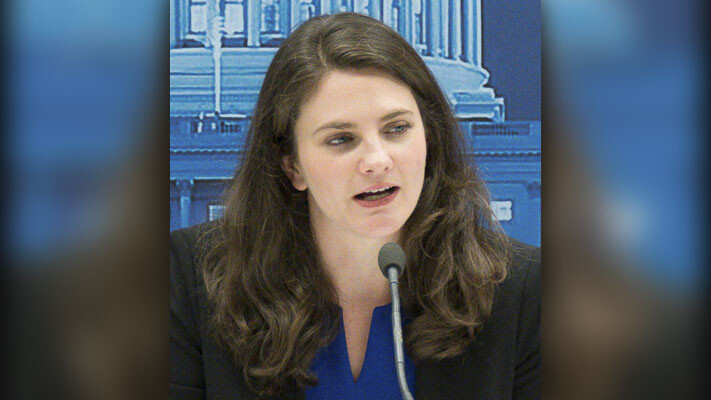
Its chief was supposed to be far-left activist Nina Jankowicz, who later insisted that Fox News’ reporting on Biden’s scheme to influence information Americans can access hurt her work.
She launched a campaign to collect money from Americans so she could sue.
Now, the Just the News report explains, there are those with concerns about a “new federal official to shield U.S. public opinion from purported threats of foreign disinformation” and it is nothing more than a “thinly veiled reboot” of the original censorship plan.
The new name is the “Foreign Malign Influence Center,” and the report confirms it was launched virtually without notice under the Office of the Director of National Intelligence.
It already is “provoking fears that it will use overstated foreign threats as a pretext to interfere in domestic political debate or will duplicate other federal efforts, especially a controversial State Department unit that tries to squelch populism abroad,” the report said.
The FMIC itself claims “The threat to U.S. democratic processes and institutions from foreign malign influence is persistent and dynamic. Informing efforts to counter it requires constant attention, a whole-of-government approach, support from the private sector, and engagement from the public.”
The first public mention apparently came in comments from director Avril Haines during a Senate Armed Services Committee meeting just days ago.
It apparently is to protect American “public opinion,” “suggesting the potential for policing domestic narratives,” the report said.
One “domestic narrative” that appeared just before the 2020 presidential election was the accurate reporting on the Biden family scandals detailed in a laptop computer Hunter Biden abandoned at a repair shop.
The FBI instructed social and other media companies to suppress that information, a move that likely impacted the election results, as a Media Research Center poll after showed had that information about Joe Biden been widely reported, many voters would have dropped their support for him.
Twitter Files journalist Matt Taibbi said, in the Just the News report, “It’s the basic rhetorical trick of the censorship age: raise a fuss about a foreign threat, using it as a battering ram to get everyone from Congress to the tech companies to submit to increased regulation and surveillance. Then, slowly, adjust your aim to domestic targets.”
The project was funded in the Intelligence Authorization Act for Fiscal Year 2022 and it officially is supposed to be protecting “political, military, economic, or other policies or activities” of federal, state and local governments, including elections, and domestic “public opinion.” Just the News said.
Brownstone Research, described by Just the News as a “boutique investment research firm,” said, “The government simply dropped the ‘hot potato’ – the original ‘Disinformation Governance Board’ – then re-created the same operation with a new name.
Haines told the Senate panel the FMIC was to look at “foreign influence and interference in elections” and deal “generally” with disinformation.
WND previously reported that members of the U.S. Senate were accusing Biden’s handlers of concealing details about their censorship schemes.
Those cited his now-failed Disinformation Governance Board. It was supposedly a government operation that would review and declare certain statements, even opinions, “disinformation” and rule that it be censored.
It’s already known that the Biden administration had multiple channels to foundations to complain about social media statements it disliked.
Those foundations then would, acting on behalf of the government, lobby social media companies to censor those views.
That scenario has raised many First Amendment questions, as the government is forbidden from censoring private speech.
When the board’s work became known it quickly was termed the “Ministry of Truth,” which, as Orwell described, perpetuated lies.
Also read:
- Opinion: Were Republican voters just sleeping during the August primary election?
 CCRP Chairman Matt Bumala says 60% of primary no-shows in the 17th and 18th districts were Republicans.
 - High school football: New coach prepares for long-term success at Prairie High School
 James Young-Lewis, a Clark County native who graduated from Evergreen in 2009, became Prairie’s head coach in May after working as an assistant coach across various programs since 2015, joining Prairie’s staff in 2024.
 - Cost to battle 20 wildfires in WA has topped $200M
 Twenty wildfires have cost Washington $207M in one month, more than two-thirds of what DNR spent all last fiscal year.
 - Opinion: WA Cares’ launch showcased care WA Cares did not provide
 Gov. Ferguson showcased a caregiving arrangement at the WA Cares launch that the program had not paid for a single day of.
 - Former State Rep. Liz Pike provides update on husband Neil Cahoon
 Neil Cahoon, a Camas resident, has undergone multiple surgeries including five on Aug. 15 after the Aug. 10 crash near La Center’s Daybreak Airport.
 - Opinion: Portland’s War on Cars Part 4 – A smarter automobile strategy to end gridlock
 O’Toole argues fuel wasted in Portland-area congestion has sextupled since 1982, generating 250,000 tons of extra greenhouse gases annually.
 - $1,000 first prize for Camas Plein Air Art Event honoring Marquita Call on Sept. 26
 Plein air artists compete Sept. 26 in Camas for $1,000 first prize honoring gallery founder Marquita Call.
 wpDiscuz