



Supporters expect a lawsuit over the measure, which sets a path to remove problematic sheriffs from office. Opponents believe it’s overruling the will of voters
Jake Goldstein-Street
Washington State Standard
 See Grok’s analysis of this story
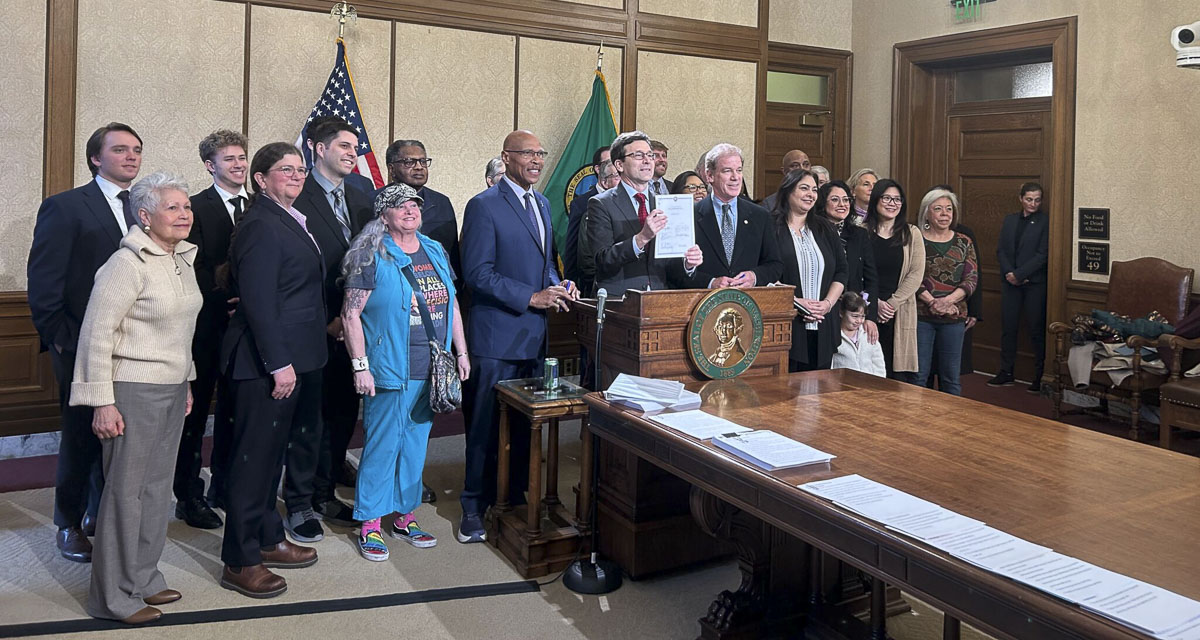
Washington Gov. Bob Ferguson on Wednesday signed into law new standards for sheriffs that make it easier to remove them from office.
But Ferguson didn’t love all of Senate Bill 5974, suggesting it could be tweaked in 2027.
Sheriffs, who are mostly elected in Washington, ardently opposed the law as undemocratic. The law’s supporters, who see it as holding police leaders to the same standards as their rank-and-file officers, expect litigation.
The legislation requires county sheriffs and police chiefs to meet heightened eligibility standards. The criteria include having five years of full-time law enforcement experience, not having any felony or gross misdemeanor convictions, being at least 25 years old and not having done anything that would get state certification as a peace officer revoked.
Until now, sheriffs haven’t had to meet the same eligibility requirements as police chiefs. Sheriffs are elected, except in King County, while police chiefs are appointed.
Within nine months of taking office, the bill says sheriffs need to get their certification if they don’t already have it. Previously, they had a year.
If they don’t obtain or lose certification from the state Criminal Justice Training Commission, or otherwise don’t meet the new requirements, sheriffs would have to vacate office. This aspect of the bill has drawn the most ire.
The commission also decides on rescinding officer certification. Critics say the law gives the commission too much power.
Five-member hearing panels from the Criminal Justice Training Commission make final decisions on decertification. The panels include three civilians and two police officials.
Several sitting sheriffs have open complaints before the commission, including Pierce County Sheriff Keith Swank, who drew criticism earlier this year after delivering testimony some lawmakers took as threatening.
Local officials will be tasked with appointing a replacement if a sheriff is removed. Until now, the only recourse for removing a sheriff from office has been the rarely used recall process, which leaves the decision up to voters.
Ferguson said Wednesday that he had reservations about this vacancy process. He had the option to veto parts of the bill, but stopped short of taking that step. Sheriffs had been pressing the governor to veto sections of the bill for weeks. Some of them met with Ferguson in recent weeks to express their frustrations, he said.
“It’s a serious step when someone’s being removed from office, speaking as an elected official,” Ferguson told reporters. “I just want to make sure we’re being as thoughtful as possible on that, and so I just pressed that to the bill sponsors. I don’t make too big a deal out of it.”
“I’ll be looking for ways if we can just improve that process a little bit as we go into next session,” he added, noting it’s too early to say what those revisions could be.
In the days before signing, Ferguson called bill sponsor Sen. John Lovick, D-Mill Creek, to share his concerns. They met again this week, Lovick said.
“We were able to satisfy his concerns,” Lovick said, noting lawmakers may return to the issue when they reconvene next January.
But it’ll likely still be in the limelight in the meantime. Rep. Roger Goodman, D-Kirkland, is expecting a lawsuit over the law, but thinks it’ll be upheld.
“We worked really hard to make sure this is constitutional,” said Goodman, who led the charge for the law in the House.
Ferguson also said he’s confident the law can withstand legal scrutiny.
The Washington Association of Sheriffs and Police Chiefs declined to comment Wednesday, but had written to the governor last month urging his veto.
Walla Walla County Sheriff Mark Crider has been one of the law’s most vocal critics, but wasn’t reachable for comment on Wednesday.
“We’ve made our point that this is an unconstitutional piece of legislation that takes away the voters’ right to choose who their elected officials are,” Crider said last month. “In my opinion, the whole thing is looking for a problem that doesn’t exist.”
Sheriffs have also expressed concerns about another provision in the law requiring sheriff candidates to get a background check from the Washington State Patrol. Counties will foot the bill for those costs. The sheriffs say this will burden counties that are already strapped for cash.
Most of the law’s provisions take effect at the end of April. Its limitations on the use of police volunteers don’t kick in until January.
On this issue, the law says police agencies can’t use untrained volunteers to enforce criminal statutes or civil immigration laws, engage in pursuits, use force, carry weapons or use surveillance technology, among other things. They could still assist with administrative support and other more routine duties. They also must be distinguishable from commissioned officers.
This report was first published by the Washington State Standard.

This independent analysis was created with Grok, an AI model from xAI. It is not written or edited by ClarkCountyToday.com and is provided to help readers evaluate the article’s sourcing and context.
Quick summary
Gov. Bob Ferguson signed Senate Bill 5974 on April 1, 2026, creating new eligibility standards for sheriffs, including a five-year law enforcement experience requirement and disqualification for certain convictions. The law also requires certification within nine months, authorizes decertification by the Criminal Justice Training Commission that could lead to removal from office, limits some police volunteer roles, and requires background checks for candidates.
What Grok notices
- Summarizes several major policy changes in one law: eligibility standards, certification deadlines, background checks, decertification authority, and limits on certain volunteer roles.
- Notes that Gov. Ferguson signed the measure while expressing reservations about the process for filling vacancies, indicating support for the bill’s goals but concern about at least one implementation issue.
- Shows that the measure shifts accountability mechanisms beyond voter recall by creating a state-level certification and decertification path that can affect an elected sheriff’s ability to remain in office.
- Includes opposition from sheriffs and notes expectations of a lawsuit, signaling that the law may trigger legal disputes over local control, separation of powers, or voter authority.
- Helps readers understand scope and timing by referencing when provisions take effect and by describing how the volunteer restrictions fit into the broader public-safety framework.
Questions worth asking
- How could the new decertification process change the balance between state oversight of law enforcement standards and local voters’ authority to choose their sheriff?
- In smaller or rural counties, how might a five-year law enforcement experience requirement affect the number and background of viable candidates?
- What safeguards and review standards will matter most in ensuring Criminal Justice Training Commission panels are seen as fair and impartial?
- How do the new volunteer restrictions attempt to balance public safety concerns with community involvement in local policing?
- Could this law establish a broader precedent for how Washington handles qualification and accountability standards for other elected law enforcement positions?
Research this topic more
- Washington State Legislature – SB 5974 bill text and history
- Washington Criminal Justice Training Commission – certification and decertification information
- Washington Association of Sheriffs and Police Chiefs – law enforcement policy positions
- Office of the Governor – bill actions and signing statements
- National Sheriffs’ Association – standards and policy resources

Also read:
- With more state financial stress on horizon, Ferguson signs WA budget
 Washington’s latest $79.4 billion state budget taps rainy day funds, reduces child care provider payments, and defers big tax collections, setting up a deficit in 2028.
 - Gov. Ferguson signs controversial law tightening standards for WA sheriffs
 Sheriffs must now meet strict standards or risk removal, with local officials appointing replacements instead of voter recall, amid ongoing debate over constitutionality.
 - Opinion: Stalin would be proud – Clark County Socialists gathered for ‘No Kings’
 Reform Clark County’s Rob Anderson criticizes local and national groups for organizing protests that featured Auditor Greg Kimsey as a keynote, raising concerns about public trust and political partisanship.
 - Opinion: The beginning of the end of anchor babies
 Lars Larson argues the Constitution excludes children born to non-legal residents, as the Supreme Court debates birthright citizenship and public opinion data shows limited support.
 - VIDEO: Rejected – WA SOS will not process referendum to repeal income tax law
 State officials stopped Let’s Go Washington’s referendum to overturn the new tax, citing constitutional limits. Legal and political battles, including a Supreme Court challenge, are expected next.
