



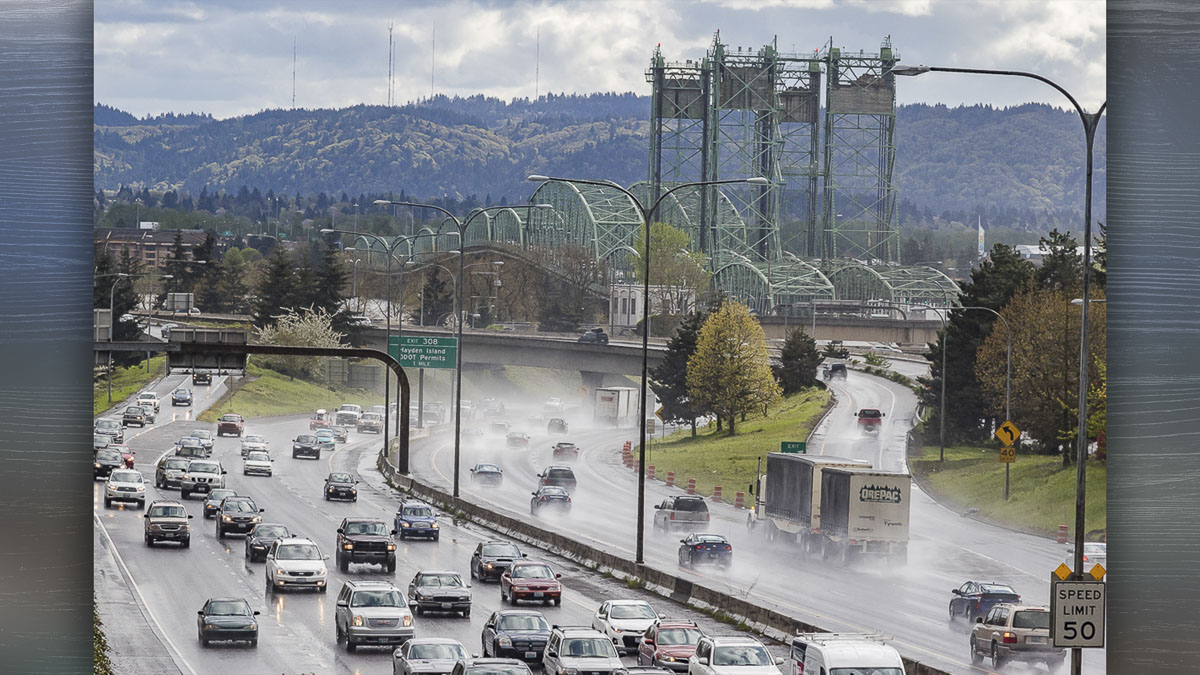
Legislators are expected to be challenged in the upcoming session in figuring out how to fund ongoing projects
Carleen Johnson
The Center Square Washington
The Economic and Revenue Forecast Council has approved Washington state’s updated transportation revenue forecast.
There was some challenging news in the forecast, but at least there was transparency, according to Washington Research Council Senior Research Analyst Emily Makings.
“It confirms what we’ve known for some time, and that is transportation revenues and the transportation budget are really facing a lot of challenges,” she told The Center Square on Thursday. “Revenues are now expected to be much lower than they had been when the current budget was enacted, so that will not help legislators as they start to write the next transportation budget.”
The transportation revenue forecast includes money from motor vehicle fuel taxes – that’s the biggest chunk – vehicle and driver fees, revenue from ferry fares and road tolls, among other sources.
“When you adjust revenues for inflation over a 10-year period, it’s expected to be down 13.8%, whereas last year about this time revenues were going to be down by about 6.7% adjusted for inflation,” said Makings, who noted gas tax revenues are not keeping up with an increase in project costs.
“With revenues coming in lower and all the cost overruns on projects, there are a lot of challenges,” she said.
Makings expects legislators to be challenged in the upcoming session in figuring out how to fund ongoing projects, like the State Route 520 project, which is way over budget.
According to the ERFC report, Washington now anticipates collecting about $3.23 billion from motor vehicle fuel taxes , or MVFT, in the 2023-2025 biennium, which is a decrease of $127 million. MVFT revenues are anticipated to be $3.14 billion in the 2027-2029 biennium, which is a decrease of about $362 million or 10.3% from the previous forecast.
Vehicle registration fees, revenue from ferry fares and toll revenues are all forecast to be well below prior estimates.
Another factor is Initiative 2117 to repeal the 2021 Climate Commitment Act and do away with carbon auctions that have brought in more than $2 billion so far. Voters will decide I-2117 this Nov. 5.
“There are a lot of transportation projects funded by CCA money,” Makings said. “They’re all related to pedestrian projects like bike lanes. Public transportation as CCA money can’t be used for highway projects.”
But as noted in Makings blog on the ERFC projections, supporters of several big dollar projects funded by CCA money would likely put up a big fight during the legislative session to restore that funding if I-2117 is passed by voters.
“If you repeal the CCA, it won’t directly impact highway projects, but there could be some rebalancing that has to occur,” she observed.
Even without a repeal, several climate related projects will be well in the red within a few years, based on the ERFC report.
There is some good news, according to Makings, on the transparency front.
She noted that the public has largely been in the dark about transportation funding, beyond what lawmakers debated during legislative sessions.
“A recent bill moved responsibility for the forecast to the ERFC, which is an independent agency,” Makings explained. “Previously DOT [Washington State Department of Transportation] had that responsibility, and a lot of other agencies had their hands in it and there was no public transparency in the process at all.”
“This is vastly improved for transparency,” she said of House Bill 1838 that was passed by the Legislature and signed into law last year.
Makings called TVW’s coverage of ERFC’s Sept. 27 Transportation Revenue Forecast meeting another sign of improving transparency.
This report was first published by The Center Square Washington.
Also read:
- Letter: ‘This is the worst thing that ever happened to the region’
 A Hayden Island resident Sam Churchill is criticized in a letter calling the $14 billion Interstate Bridge Replacement project a “boondoggle” that destroys local businesses.
 - Opinion: Half the road, full stop – Understanding pedestrian right-of-way
 Doug Dahl explains how Washington’s law requires drivers to stop when a pedestrian is within one lane of their half of the road, not just when directly in front.
 - Opinion: What is the cost of a bridge?
 John Ley argues the I-5 Bridge replacement’s soaring cost stems from costly extras like light rail, noting other states deliver larger, toll-free bridges for much less.
 - Letter: Vancouver Mayor Anne McEnerny-Ogle makes several serious and incorrect engineering statements
 Bob Ortblad critiques engineering claims by Vancouver Mayor Anne McEnerny-Ogle, highlighting cost and safety advantages of an immersed tunnel for the I-5 crossing.
 - Washington’s studded tire deadline is March 31
 Drivers must remove studded tires by March 31 or face a $137 fine, with WSDOT urging early action due to busy service centers and no planned deadline extension.
 wpDiscuz
