



The case, represented by Vancouver Attorney D. Angus Lee in collaboration with the Institute for Free Speech, is a step forward in protecting expressive rights in digital public forums
In a landmark victory for free speech, the United States Court of Appeals for the Ninth Circuit ruled in favor of Professor Bruce Gilley, affirming his First Amendment rights were violated when the University of Oregon’s Division of Equity and Inclusion blocked him from their Twitter account. This case, represented by D. Angus Lee in collaboration with the Institute for Free Speech, is a step forward in protecting expressive rights in digital public forums.
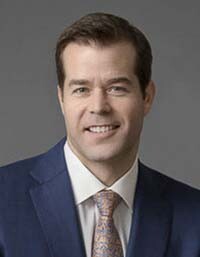
Professor Gilley’s ordeal began when he responded to a tweet from the University of Oregon’s Division of Equity and Inclusion, by quoting the foundational principle, “all men are created equal.” This expression led the University of Oregon’s Division of Equity and Inclusion to block him and resulted in his unjustified exclusion from participating in public discourse on the platform. The Ninth Circuit’s decision underscores the constitutional protection against viewpoint discrimination in public forums, reaffirming that government entities cannot silence dissenting voices.
D. Angus Lee remarked, “This ruling is a triumph not just for Professor Gilley, but for all who cherish the fundamental right to free expression. It sends a clear message that public institutions cannot disregard the First Amendment in digital spaces.”
The case traces back to an incident where Gilley, echoing the Declaration of Independence, faced censure for promoting ideas of equality and meritocracy. His tweet, intended to foster dialogue, was met with censorship, igniting a legal battle against the infringement of his speech rights.
The Institute for Free Speech, co-representing Gilley, has been instrumental in championing the cause. The organization, dedicated to defending First Amendment rights, played a pivotal role in articulating the need for robust protections of free speech, especially in the age of digital communication.
“This case reinforces the principle that public forums, whether in a park or on social media, must respect the diversity of thought,” stated D. Angus Lee.
The legal journey revealed inconsistencies in the university’s rationale for blocking Gilley, highlighting the precarious nature of speech rights in the digital realm. The court’s decision mandates a more transparent and stringent policy for social media conduct by public entities, ensuring a fair and open exchange of ideas.
Reflecting on the case, Lee added, “This case demonstrates the enduring power of the First Amendment. We will continue to fight for the rights of individuals against the encroachments of censorship and silencing.”
As this ruling marks a significant moment in the ongoing discourse on free speech and digital expression, it serves as a reminder of the vigilance required to safeguard our constitutional freedoms. The case of Gilley v. Stabin not only rectifies a personal grievance but also fortifies the foundation of democratic engagement in our modern public squares.
For more information and ongoing updates, please visit the Institute for Free Speech and Angus Lee Law Firm’s websites.
Also read:
- White House govt. Funding request for 2027 cuts $73 billion
 President Trump’s budget seeks to boost defense funding while cutting $73 billion from agencies like the EPA, NASA, and Agriculture, prompting sharp criticism from Democratic leaders.
 - Heywood asks WA Supreme Court to allow referendum effort on income tax
 Brian Heywood is petitioning the state Supreme Court after the Secretary of State rejected a referendum to repeal Washington’s new 9.9% tax on income over $1 million.
 - Opinion: Half the road, full stop – Understanding pedestrian right-of-way
 Doug Dahl explains how Washington’s law requires drivers to stop when a pedestrian is within one lane of their half of the road, not just when directly in front.
 - Clark County seeks volunteer for Law and Justice Council
 Applicants with experience in mental health services are encouraged to help guide Clark County’s coordination of local criminal justice and corrections planning.
 - VIDEO: Families at center of WA transgender sports debate face-to-face with OSPI
 Two Washington high school students and their parents met with Superintendent Chris Reykdal to discuss concerns about sports policies after one student faced an investigation for harassment.
 - As Washington lawmakers punt on school cellphone ban, some want more action
 At Robert Eagle Staff Middle School, all-day phone removal led to fewer conflicts and more student engagement, but some parents and lawmakers argue a ban should not be imposed statewide.
 - Opinion: The state’s RFK-proofing bill comes with a cost
 Mandates like HB 2242 can lead to higher premiums as insurance companies absorb costs for new preventive services, affecting affordability statewide.
