



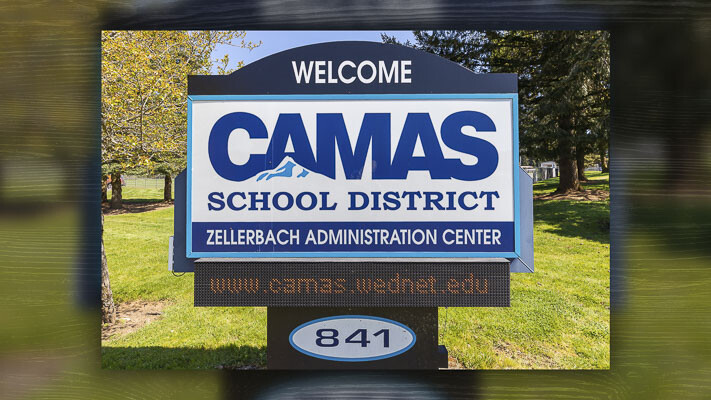
There are two propositions on the ballot for residents of the Camas School District
Dick Rylander
for Clark County Today
On Friday (Jan. 26) ballots will be mailed out for the Feb. 13 special election. There are two propositions on the ballot for residents of the Camas School District. The Pro/Con/Rebuttal statements can be read online at Camas School District Feb. 13 special election levies.
There are two propositions:
Proposition 6 is a Replacement Educational Programs and Operations Levy (called an EP&O levy). The stated intent is to replace an expiring levy, on all taxable property within the district, for educational programs and operations expenses not funded by the state (including salaries and benefits, instructional materials, special education, extracurricular activities, substitute teachers, food service costs).
This is a four-year levy for $80.05 million. The expiring levy was for three years and was $59.03 million. The difference is $21 million (this is partially due to an extra year included this time). The increase in total dollars appears to be about 14 percent.
Proposition 7 is a Replacement Capital Levy for Educational Technology, Health and Safety Improvements. The stated intent of the use of the funds is to replace an expiring levy, on all taxable property within the district, to make district-wide educational technology, health and safety improvements (including upgrading educational technology equipment and infrastructure, replacing or repairing artificial turf, boilers, roofs and other equipment).
What is the difference between an Operations levy and a Capital levy? The Capital levy money is intended for projects like roof replacement, HVAC, technology and similar longer term assets. An operations levy is intended for short term wear and tear expenses. This money can also be used to pay personnel.
What’s the difference between a Levy, Capital Levy and a Capital Bond? Levy’s require a voter approval of 50 percent +1 to pass and the money is normally used to cover general wear and tear expenses (but can also be used to supplement compensation for teachers). Capital Bonds are usually for 20-plus years and require a 60 percent voter approval to pass. A Capital Levy is used for larger expenses but only needs 50 percent +1 to pass.
This levy is for four years in the amount of $17.35 million. The expiring Capital Levy was for three years and was $11.47 million. The only way to compare the two is to use averages for the 3- and 4-year periods. This works out to the replacement capital levy being an increase of approximately 13.45 percent. Student testing performance can be reviewed at the OSPI website: Washington State Report Card – Camas School District. The data provided also covers student headcount trends, expenditure per student and a host of other information. An additional source of OSPI (Office of Superintendent of Public Instruction) can be found at: School Data Project – Camas School District.
Also read:
- Letter: ‘Public trust in elections isn’t maintained by repeating talking points’
 Camas resident demands answers after ballots discovered next to trash can, endorses Quiring O’Brien for auditor.
 - Lincoln Day Gala: Independent journalist Jonathan Choe wants more storytellers
 Investigative journalist Jonathan Choe challenged Clark County Republicans to become citizen reporters at Saturday’s fundraiser.
 - Vancouver Fire Department responds to emergency aircraft landing on SR-14
 A Cessna aircraft made an emergency landing on State Route 14 near milepost 2 after experiencing mechanical issues.
 - Vancouver Police investigate shooting
 Vancouver Police seek suspect after 20-year-old shot in SE Mill Plain parking lot early Saturday morning.
 - Dollars flowing into a pair of hotly contested WA congressional races
 Amanda McKinney leads 4th District GOP field with $523,892 raised, while Braun trails significantly behind incumbent.
 - Final Supplemental Environmental Impact Statement published for Interstate Bridge Replacement Program
 Federal agencies published the final environmental impact statement for the Interstate Bridge replacement project.
 - Belkot appeals judge’s decision to dismiss her case against Clark County
 Belkot’s attorney says the federal appeals court will hear the case in several months after judge dismissed all five claims.
 wpDiscuz
