



Rising debt and deficits threaten not only economic growth and income levels, but also increase the risk of a severe U.S. fiscal crisis if investors lose faith in the government’s ability to service its debt in full
Thérèse Boudreaux
The Center Square
Institutional reforms, updated procedures, and even Constitutional amendments may be necessary to avoid a complete fiscal crisis in America, according to testimony presented Wednesday before the U.S. House Committee on the Budget.
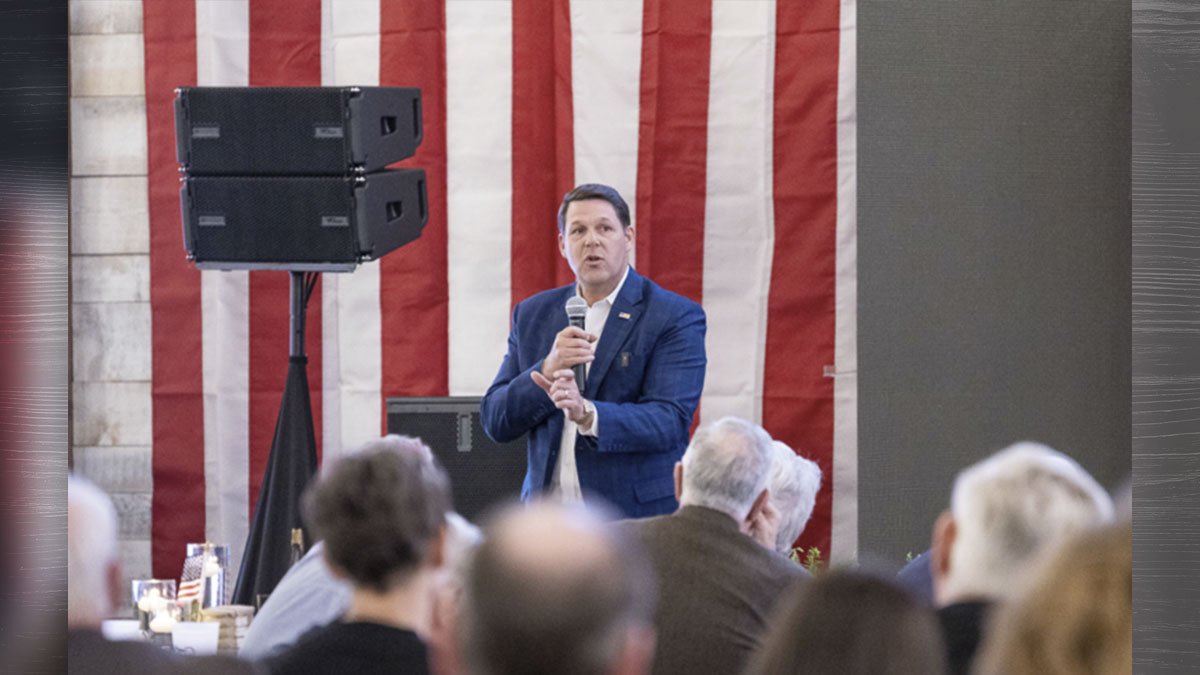
Rising debt and deficits threaten not only economic growth and income levels, but also increase the risk of a severe U.S. fiscal crisis if investors lose faith in the government’s ability to service its debt in full, Committee Chairman Jodey Arrington, R-Texas, stated at a hearing Wednesday.
“We’ve got major fiscal problems and a completely unsustainable fiscal trajectory. I haven’t heard anyone, Democrat or Republican, witness or member, that doesn’t accept that fact,” Arrington said. “This is a moral imperative, to right this ship before it sinks.”
The U.S. national debt, currently over $36 trillion, will soon exceed its record high of 106% of GDP.
David Walker, chairman of the Federal Fiscal Sustainability Foundation, echoed the chairman’s sentiment during his testimony, saying the U.S. is on an unsustainable fiscal path that poses both serious economic consequences and endangers national stability and security.
Walker referenced how total federal liabilities and unfunded social insurance obligations now exceed $125 trillion, growing faster than the U.S. economy.
“The federal government has grown too big, promised too much, subsidized too many, undercut states’ rights, and lost control of the budget,” Walker said. “Failure to change course, restructure our nation’s finances, and transform the federal government’s operations will have serious adverse economic security, national security, diplomatic, and domestic tranquility consequences over time.”
Walker suggested several solutions to the committee that he said would cumulatively help solve the problem, including passing the Fiscal 2025 appropriations bills, which should reduce bloated spending by deleting expired programs and non-recurring items.
He lauded the proposed Department Of Government Efficiency, or DOGE, but also said the U.S. needs to establish a statutory Fiscal Sustainability Commission to reduce spending, reform social insurance programs, and modify the tax system to truly make a lasting impact.
Douglas Elmendorf, professor of Public Policy at the Harvard Kennedy School of Government, added that raising taxes alone, or cutting spending alone, are not feasible options.
“Cutting spending that much would require large cuts to popular and important government benefits and programs, and raising taxes that much would require large tax increases for many people,” Elmendorf said. “The only realistic way forward is through a combination of those changes.”
He also argued that drastic cuts to entitlement programs like Medicare and Social Security would be unwise.
But Romina Boccia, director of Budget and Entitlement Policy at the Cato Institute, argued at the hearing that some cuts to or restructuring of entitlement programs like Social Security and Medicare may be necessary, if politically unpopular.
She pointed out that the fastest growing expense to the federal budget is interest and the second is government healthcare programs.
“Continuing to ignore the elephant in the room is not helping,” she said.
Boccia’s main recommendations to Congress included immediately adopting a Balanced Budget Amendment accompanied by reforms to entitlement programs, restraints on spending, and the requirement that emergency spending must have a repayment plan.
She also suggested the U.S. create a debt brake, where spending ceilings are calculated based on projected revenues and adjusted for economic conditions using a GDP adjustment factor.
This firm yet flexible approach, Boccia argued, would allow the nation to run deficits during economic downturns and accumulate surpluses during economic booms, maintaining overall fiscal balance.
Kurt Couchman, senior fellow at Americans for Prosperity, agreed with Boccia that Congress should adopt a Balanced Budget Amendment. Of 35 advanced economies, only Greece, Spain, Canada, and the United States have no national-level balance rule, Couchman said.
All witnesses suggested or agreed that a Fiscal Responsibility Amendment to the Constitution is necessary to bind future Congresses to ensuring sustainable federal fiscal responsibility.
While lawmakers on the committee generally showed support for the witnesses’ recommendations, some disagreed on what spending should be reduced and which tax cuts should be repealed.
Democrat lawmakers argued that Trump-era tax cuts only exacerbated the debt problem and proposed that reforming the tax code to target the rich would better remedy income inequality.
“Two decades of Republican tax cuts have exploded our national debt,” Ranking member Rep. Brendan Boyle, D-Pa., said. “We are missing $10 trillion in revenue cumulatively just because of the tax cuts we’ve had ever since 2001. I don’t think the response to those long-term structural issues and our rising national debt is to compound those issues with a new $4.6 trillion in debt because of extending the tax cuts in the TCJA for another decade.”
Some Republicans agreed, but also pointed out that measures like increasing taxes on the wealthy are inadequate. Many suggested that imposing stricter spending limits would be the most realistic way forward.
Overall, lawmakers concluded, while the way forward is difficult, actions must be taken soon in order to avoid worse outcomes.
“One of the barriers to action on debt is that so many proposed solutions are just politically unpopular. My Republican colleagues don’t want to raise revenues, and many of my colleagues on the Democrat side of the aisle are resistant to even examining spending,” Rep. Jimmy Panetta, D-Calif., said. “However, I worry as we’ve heard today, that the longer we take, the more extreme steps must be taken.”
This report was first published by The Center Square.
Also read:
- Vancouver city leaders appreciate the feedback at Monday’s community forum
 Guests filled six tables as Vancouver officials listened to conversations sparked by structured questions touching on connection, barriers, and belonging.
 - Opinion: ‘Stay close, stay informed, stay the course’
 Anna Miller calls on residents to join Clark County Republican Women’s dinner, urging perseverance and unity as local government faces turbulent times.
 - Overnight closure planned on westbound SR 14 Camas Slough Bridge Tuesday
 WSDOT crews will close westbound SR 14 at Exit 14 in Camas to collect bridge deck samples and plan future repairs; detours will be in effect.
 - OII completes investigation of Clark County Sheriff’s Office use of deadly force
 Marc Fogle died after a fatal struggle with Deputy Bryson Layton following a DUI crash; prosecutors will decide on charges after review of OII’s findings.
 - Video: Can accelerated home construction replace need for WA income tax?
 A new report suggests boosting housing production by 20,000 units yearly could bring in over $600 million in revenue, offsetting a portion of proposed income tax revenue.
 - WA Gov. Ferguson to meet with NBA commissioner as hopes rise for Sonics’ return
 The meeting this week comes before a vote that could clear the way for the league’s expansion to Seattle Jake Goldstein-StreetWashington State Standard Washington Gov. Bob Ferguson on Thursday previewed an upcoming meeting with NBA Commissioner Adam Silver ahead of a planned vote on league expansion that could bring men’s professional basketball back to Seattle. …
 - Opinion: Will the income tax cause a drop in charitable giving?
 High-income households leaving Washington after new tax may redirect donations, possibly shrinking local nonprofits’ funding despite the intended deduction benefit.
 wpDiscuz
