


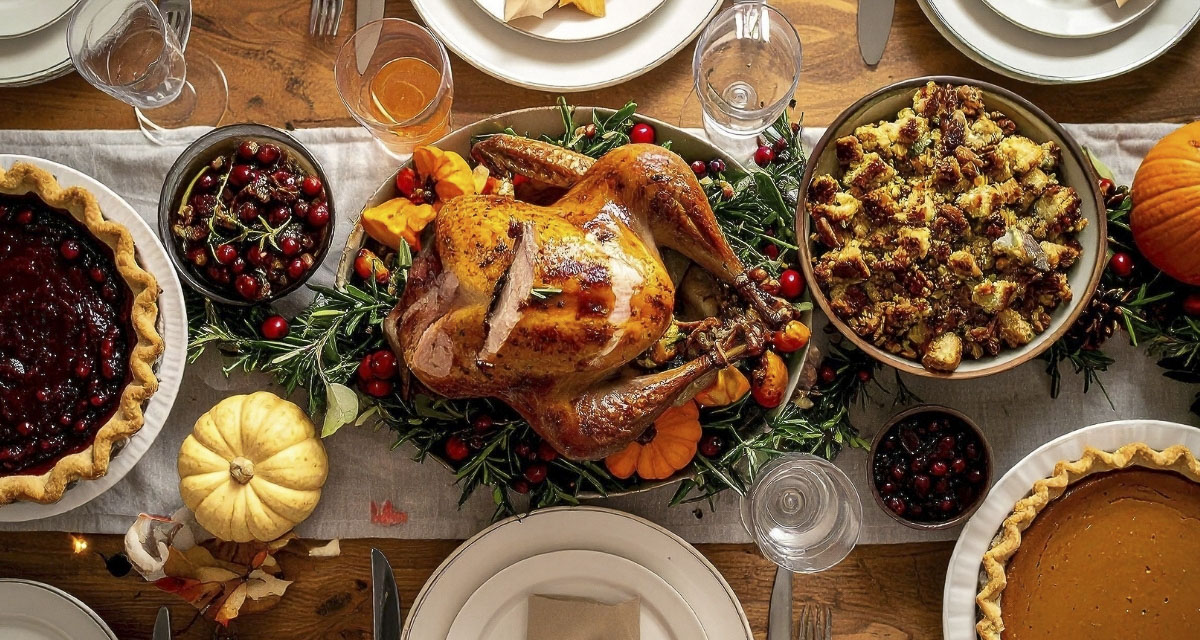
Each year, 30-40% of the food supply in the United States is thrown away
VANCOUVER – While residents are preparing for holiday meals, they may not know that food waste is a big problem. Each year, 30-40% of the food supply in the United States is thrown away. Clark County residents alone generate an average of 35,000 tons of edible food waste each year. The EPA estimates that reducing food waste could save a family of four nearly $3,000 annually, about $728 per person. In addition to wasting money, tossing food in the garbage contributes to climate change. As food breaks down in landfills, it releases methane, a potent greenhouse gas. Wasting food is one of the biggest contributors to a person’s environmental footprint.
Residents can reduce food waste this holiday season by taking some simple steps as they plan for and clean up after a holiday meal.
- Shopping: Food waste prevention starts with not buying more than is needed or can be eaten before it spoils. To prevent over-buying, recommendations include taking inventory of what is available on hand, using a tool like the “Guest-imator” to know how much is needed for parties of various sizes, making a list, and only purchasing items on the list when at the grocery store.
- Storage: Properly storing groceries can minimize spoilage. Dry goods should be stored in labeled, air-tight containers. Onions and apples should be stored separately from other foods, as they emit a gas that causes other foods to spoil faster. Local and in-season produce tends to last longer before spoiling because it requires less time in transport.
- Leftovers: Waste from leftovers can be reduced by sending guests home with leftovers in reusable containers. Using leftovers creatively can also reduce food waste. Examples include using mashed potatoes to make shepherd’s pie, topping oatmeal with cranberry sauce, and boiling bones to create nutrient-rich broths. To prevent foodborne illness, leftovers should be enjoyed within three to four days or frozen in air-tight containers to be enjoyed later.
- Composting: Food scraps can be composted instead of tossed in the garbage. Composting returns nutrients to the soil, reducing the need for synthetic fertilizers. Composting also reduces greenhouse gas emissions. In Clark County, composting options for residents without backyard composting systems include:
- Composting at the curb: Waste Connections customers in the cities of Vancouver and Ridgefield who subscribe to the organics service can dispose of food scraps in their organics carts.
- Food scrap drop-off: All residents can drop off food waste at a We Compost Community Hub location for composting. The service is free and available at locations throughout Clark County. Find locations on the We Compost Community Hub webpage.
More food waste prevention tips and resources are available on the Clark County Green Neighbors webpage, and a video is available on the county’s YouTube channel.
For information about road and park projects, closures, opportunities for community input, and more, residents can follow Public Works on X (formerly known as Twitter), Facebook and Instagram and view information on Nextdoor. Residents can also visit clark.wa.gov/public-works to sign up for email notifications.
Go to clark.wa.gov/public-works/news to read this information in another language. Click the button in the top right of the page that says “Change language” next to a globe icon and choose your preferred language.
Information provided by Clark Co. WA Communications.
Also read:
- Opinion: Were Republican voters just sleeping during the August primary election?
 CCRP Chairman Matt Bumala says 60% of primary no-shows in the 17th and 18th districts were Republicans.
 - High school football: New coach prepares for long-term success at Prairie High School
 James Young-Lewis, a Clark County native who graduated from Evergreen in 2009, became Prairie’s head coach in May after working as an assistant coach across various programs since 2015, joining Prairie’s staff in 2024.
 - Cost to battle 20 wildfires in WA has topped $200M
 Twenty wildfires have cost Washington $207M in one month, more than two-thirds of what DNR spent all last fiscal year.
 - Opinion: WA Cares’ launch showcased care WA Cares did not provide
 Gov. Ferguson showcased a caregiving arrangement at the WA Cares launch that the program had not paid for a single day of.
 - Former State Rep. Liz Pike provides update on husband Neil Cahoon
 Neil Cahoon, a Camas resident, has undergone multiple surgeries including five on Aug. 15 after the Aug. 10 crash near La Center’s Daybreak Airport.
 - Opinion: Portland’s War on Cars Part 4 – A smarter automobile strategy to end gridlock
 O’Toole argues fuel wasted in Portland-area congestion has sextupled since 1982, generating 250,000 tons of extra greenhouse gases annually.
 - $1,000 first prize for Camas Plein Air Art Event honoring Marquita Call on Sept. 26
 Plein air artists compete Sept. 26 in Camas for $1,000 first prize honoring gallery founder Marquita Call.