



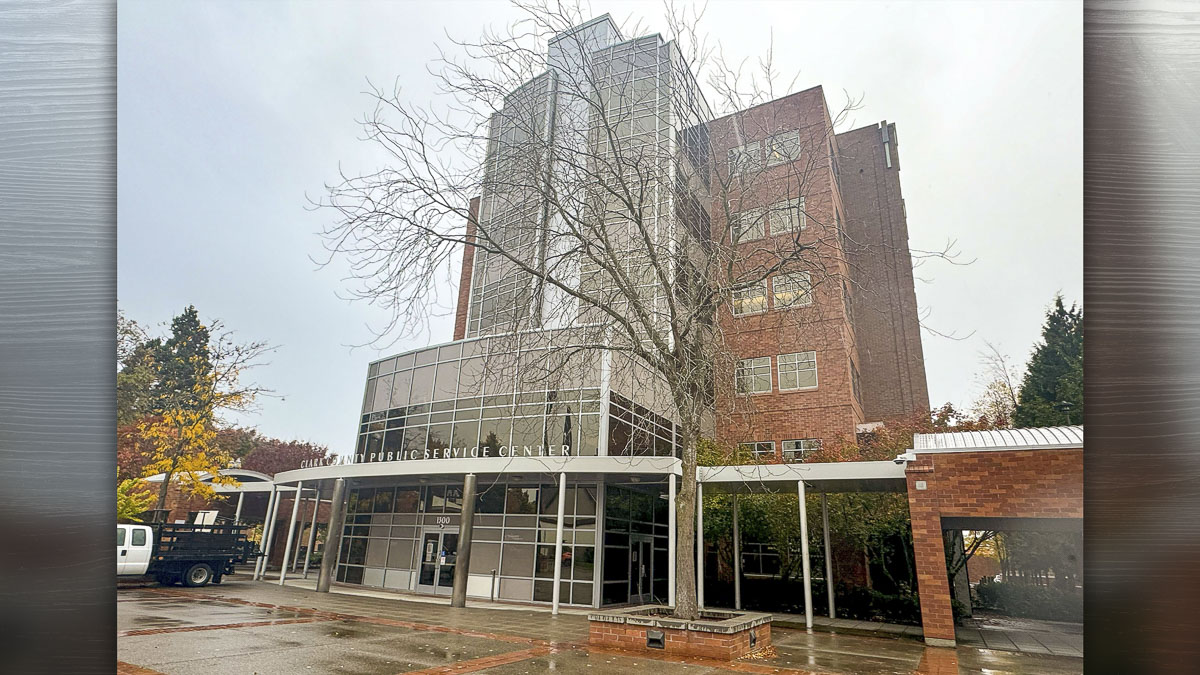
General Fund, subordinate levies, and other funds will be increased by 1 percent as county leaders hope to continue providing services despite the rise in expenses
Paul Valencia
Clark County Today
The 2026 budget for Clark County was adopted Tuesday by the County Council, and it includes a 1 percent property tax increase.
“It’s a bad day for Clark County,” said Michelle Belkot, the only councilor who voted against the general fund increase and several of the other increases.
The council voted to approve the 1percent property tax levy increase, as well as any available banked capacity, for the General Fund, Road Fund, Conservation Futures Fund and Metropolitan Parks District Fund.
Councilor Matt Little, who describes himself as a fiscal conservative, said he was in favor of the increase because he believes the county has been “efficient” with public funds. He and others also noted that the county has not requested the 1-percent increase, allowed by the state, in seven of the past 14 years.
Little explained that the state legislature has a spending problem. So, too, does the federal government. That is not the case locally, he said.
“I want to reiterate my position that the county is doing very well with the limited amount of funding that we have approved over the years,” Little said. “This is the reason I will be approving 1 percent plus banked capacity across the board today.”
Councilor Glen Yung agreed with Little’s assessment.
“That really is the situation the county is in,” Yung said. “The same level of services is becoming more and more expensive and the revenue is not rising to the level the expenses are.”
Sue Marshall, the county chair, also voted to approve the increases.
“The needs in the community are increasing. Our population is increasing. It is important for us to continue to provide services,” Marshall said. “We struggle to do the best we can with what we’ve got.”
The motion to add 1 percent to the General Fund levy passed 4-1, with Wil Fuentes joining Marshall, Little, and Yung. Belkot voted against.
Belkot then abstained from the banked capacity votes, noting that by not supporting the 1-percent increase she did not feel it was right for her to vote on the banked capacity addition.
The General Fund Subordinate Levies also received a 1-percent increase. Voted separately, mental health and veterans assistance carried 5-0 and developmental disabilities carried 4-1.
The Road Fund also carried 4-1, with banked capacity at 4-0.
Before the vote, Fuentes and Yung discussed their concerns with the decrease in revenue from the state’s fuel tax due to so many more people driving electric vehicles.
The Conservation Futures also will get an 1-percent increase, plus banked capacity. Little noted before voting, that Conservation Futures had not had an increase since 2010.
The entire 2026 budget was then approved by a 5-0 vote. For 2026, the total adopted expense budget is $883 million. This strategic financial plan is supported by $735 million in revenues and $149 million of fund balance.
While the county’s overall financial condition is solid, some funding sources — most notably the General Fund — are experiencing structural deficits. These areas require significant attention, and county staff continue to devote considerable time and resources to understanding the underlying issues and developing responsible long-term solutions. Even with these challenges, the adopted budget positions the county to maintain stability while proactively preparing for future needs.
Strategic planning is a major priority for both the county manager and the council, and a firm commitment has been made to advance a comprehensive strategic financial plan in early 2026.
Marshall recognized the hard work from those in the budget office, the county manager, department heads, and more.
“A long, hard process,” Marshall said. “I’d like to thank all of the councilors for their due diligence in working on this budget.”
The county manages hundreds of individual funding sources, and when viewed collectively, its financial outlook remains stable so long as there is continued prioritizing of long-term sustainability, adherence to county financial policies, and alignment with strategic planning goals.
The hearing presentation and video are on the county’s website at https://clark.wa.gov/councilors/clark-county-council-meetings under the date Dec. 2, 2025.

Also read:
- State Representatives McClintock and Ley answer questions at town hall in Battle Ground
 Residents voiced rising concerns about property taxes, school funding debates, the impact of new income tax legislation, and major costs tied to the Interstate Bridge plan.
 - As Washington gets an income tax, the fight to overturn it begins
 Opponents are organizing lawsuits and potential ballot measures to challenge the new 9.9% income tax on Washington households earning over $1 million.
 - VIDEO: WA diesel hits record $6.53, crushing truckers and school budgets
 With diesel nearing $6.53 per gallon in Washington, trucking businesses and school districts now confront sharply higher fuel expenses affecting budgets and workers.
 - WA’s status solidifies as one of the most expensive places in US
 A new study shows Washington outpaces most states on cost of living, with metrics revealing a sharp rise in daily expenses and major metro areas ranking among the nation’s most expensive.
 - Opinion: Someone explain the Democrat Party to me please
 Lars Larson criticizes Democrat politicians for shutdown threats, Homeland Security funding refusals, and positions on election laws, housing, and gun rights.
 wpDiscuz
