



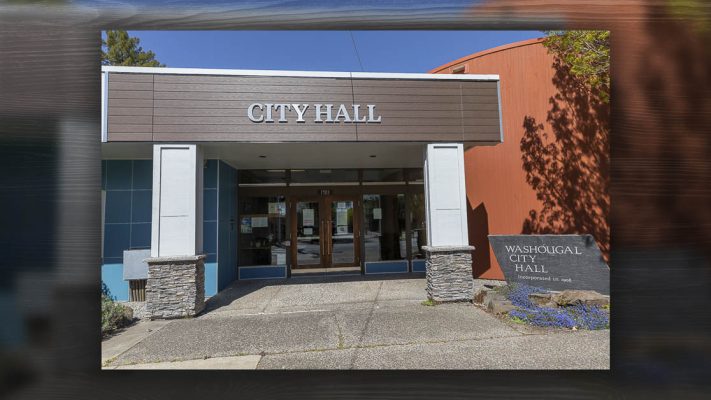
PFAS are a group of synthetic chemicals widely used in consumer products and industrial applications since the 1940s
The city of Washougal has detected trace amounts of per- and polyfluoroalkyl substances (PFAS) in its drinking water supply. PFAS are a group of synthetic chemicals widely used in consumer products and industrial applications since the 1940s, known for their inability to break down easily in the environment. PFAS are often referred to as “forever chemicals.”
Between February and May 2024, routine testing conducted by the city identified PFAS levels slightly above the newly established Environmental Protection Agency (EPA) guidelines of 4 parts per trillion (ppt) at least one time, on at least one PFAS substance at each of the 6 city wellheads. Testing results can be found at https://cityofwashougal.us/PFAS. Despite being below the State Action Level (SAL) set by the Washington State Department of Health, these levels prompted public notification.
On April 10, the EPA announced the final National Primary Drinking Water Regulation (NPDWR) for six PFAS. The new limit from the EPA for levels of PFAS in drinking water is set at 4 parts per trillion. For perspective, 1 part per trillion translates to 1 second in approximately 32,000 years or a single drop of water in 20 Olympic-sized swimming pools. The recommended limits are based on long-term exposure to PFAS throughout a person’s life and represent a conservative level at which no adverse impacts are expected over a lifetime of drinking the water, even in health-sensitive populations.
“The health and safety of our residents are our top priorities,” commented Public Works Director Trevor Evers. “Upon detecting these low levels of PFAS, we have taken immediate steps to ensure our drinking water remains safe and compliant with regulatory standards.”
The city of Washougal currently operates six wells across its service area and continues to thoroughly monitor water quality in accordance with federal and state requirements. The discovery of PFAS has prompted the city to act by investigating interim measures to safeguard the community’s water supply.
Work underway includes:
- Testing the water supply: Operations staff continue to test and monitor water quality in compliance with state and federal requirements to ensure a safe water supply.
- Evaluating treatment options: Water quality engineers are evaluating treatment technologies to remove PFAS from the water supply.
- Finding long-term solutions: Expert scientists are investigating potential sources of PFAS and the extent of PFAS in the local groundwater supply.
- Planning for the future: Future costs for PFAS treatment are included in the City’s long-range capital plans.
PFAS can accumulate in the environment and persist for extended periods. The new EPA regulations underscore the urgency of monitoring and managing these contaminants, with public water systems required to conduct initial monitoring by 2027 and implement corrective actions, if necessary, by 2029.
“We are committed to transparency and proactive communication with our residents,” said David Scott, city manager. “Regular updates on PFAS testing results and our ongoing efforts to address this issue will be readily available to ensure our community remains informed.”
Residents are encouraged to visit the city’s website at cityofwashougal.us/PFAS for the latest information on PFAS testing, mitigation efforts, and educational material. Additionally, statewide PFAS testing results can be accessed through the Washington State Department of Health’s PFAS Dashboard at https://doh.wa.gov/data-and-statistical-reports/washington-tracking-network-wtn/pfas/dashboard.
About the city of Washougal
The city of Washougal provides clean and safe drinking water to over 18,000 residents across an 83-mile service area. Committed to environmental stewardship and public health, the City continuously strives to meet and exceed regulatory standards for water quality.
Information provided by the city of Washougal.
Also read:
- Opinion: Lawsuit filed against the unconstitutional income tax in Washington state
 Former Attorney General Rob McKenna and Supreme Court Justice Phil Talmadge challenge the 9.9% income tax in Klickitat Superior Court.
 - Vancouver Police investigate domestic violence homicide
 Vancouver Police Major Crimes Unit investigating after woman found dead with knife wounds on NE Oakbrook Circle.
 - Letter: ‘Oregon and Washington aren’t refusing to clean their rolls — they’re contesting federal jurisdiction and timing’
 Camas resident challenges Lars Larson’s fraud claims, explaining legal disputes over federal jurisdiction.
 - County Council to hold hearing on preferred land use alternative for comprehensive plan update
 Clark County Council will select preferred land use alternative from three options studied in environmental review.
 - Opinion: ‘When are we going to get the full and complete details of the Interstate Bridge Replacement Program’s I-5 Bridge replacement project?’
 IBR team buried key details about light rail ending at waterfront with massive elevator system required.
 - POLL: Do you support extending light rail beyond the waterfront to connect with C-TRAN at Library Square?
 Readers can weigh in on Anne McEnerny-Ogle’s proposal to extend light rail beyond the waterfront to Library Square for improved C-TRAN connections.
 - Opinion: Passing a cyclist – Law, myth and a little patience
 Most drivers can’t legally pass cyclists in-lane due to vehicle width versus road measurements.
