




This measure will adjust the city’s total sales tax rate to 8.7%, beginning on April 1, 2026
The Battle Ground City Council has approved a 0.1% public safety sales tax, marking a significant investment in the long-term safety, stability, and wellbeing of the community. This measure will adjust the city’s total sales tax rate to 8.7%, beginning on April 1, 2026. The additional 0.1% sales tax revenue will be dedicated exclusively to supporting public safety by increasing police staffing.
Approval Timeline
Under state law via House Bill 2015, cities and counties in Washington may enact 0.1% sales and use tax devoted to public safety-related programs through a councilmanic vote. The Council unanimously voted to adopt the ordinance during its November 17 public meeting, following a public hearing held on November 3.
The 0.1% public safety sales tax is estimated to generate approximately $667,000 in revenue over a twelve-month period.
Why a Sales Tax?
A sales tax distributes the costs of public safety across everyone who uses and benefits from local services, including non-residents who shop in and visit Battle Ground.
“After much deliberation and detailed budget review, the Council unanimously voted to adopt the Public Safety Sales Tax,” shared Mayor Troy McCoy. “Our community has been consistently clear about the importance of maintaining a respectable number of police officers in our city. This, along with the need to reduce overtime and adjust how the officers’ shifts are set up to better meet service needs spoke volumes in guiding this decision.”
Once the new rate takes effect, consumers will see a 0.1% increase added to their taxable purchases made within the city of Battle Ground. For example, for every $100 spent, this will include an additional 10 cents. Essentials such as grocery staples, prescription medications, and other non-taxable goods will not be affected.
Investing in Public Safety
Results from the community survey completed in January 2025 highlighted public safety as one of the community’s top priorities. This investment reflects those findings and supports the community’s expressed expectations for the city’s continued delivery of high-quality public safety services.
The revenue generated by the new public safety sales tax will strengthen the city’s ability to ensure reliable and effective public safety services as Battle Ground continues to grow, including the addition of two (2) police officers to the 28 sworn law enforcement officers budgeted in 2025.
Information provided by the city of Battle Ground.
Also read:
- Clark County seeks volunteer for Law and Justice Council
 Applicants with experience in mental health services are encouraged to help guide Clark County’s coordination of local criminal justice and corrections planning.
 - VIDEO: Families at center of WA transgender sports debate face-to-face with OSPI
 Two Washington high school students and their parents met with Superintendent Chris Reykdal to discuss concerns about sports policies after one student faced an investigation for harassment.
 - As Washington lawmakers punt on school cellphone ban, some want more action
 At Robert Eagle Staff Middle School, all-day phone removal led to fewer conflicts and more student engagement, but some parents and lawmakers argue a ban should not be imposed statewide.
 - Opinion: The state’s RFK-proofing bill comes with a cost
 Mandates like HB 2242 can lead to higher premiums as insurance companies absorb costs for new preventive services, affecting affordability statewide.
 - Opinion: What is the cost of a bridge?
 John Ley argues the I-5 Bridge replacement’s soaring cost stems from costly extras like light rail, noting other states deliver larger, toll-free bridges for much less.
 - POLL: Do you agree with giving a state commission the power to remove an elected sheriff?
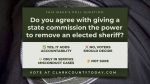 A new poll asks if a state commission—not voters—should have the power to remove an elected sheriff, following concerns raised by Clark County Sheriff John Horch.
 - Opinion: Defending Democracy by denying it?
 Washington voters are blocked from weighing in on new income taxes as state lawmakers and officials bypass public input, drawing criticism from Northwest voices.
