


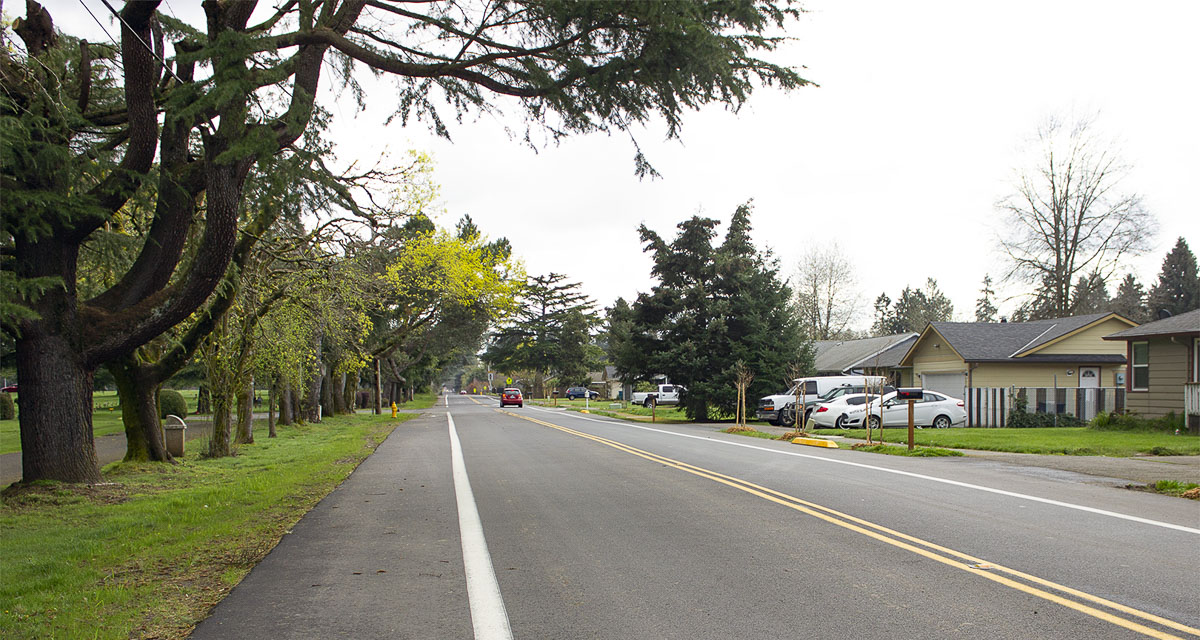
Each year, surface conditions are evaluated to select streets for the City’s Pavement Management Program, find cost-effective methods to extend pavement life and provide better traveling conditions
VANCOUVER – The city of Vancouver is preparing to pave and preserve streets across 20 neighborhoods this summer. Vancouver has more than 1,900 lane miles of paved streets. Each year, surface conditions are evaluated to select streets for the City’s Pavement Management Program, find cost-effective methods to extend pavement life and provide better traveling conditions. The program will invest approximately $13.4 million in planning, design and construction to improve pavement conditions throughout the community. The City’s Street Fund, General Fund and license fees collected through the City’s Transportation Benefits District, provide the main source of funding for this annual program.
This year’s program will pave or preserve several major corridors including portions of Main Street as part of the Main Street Promise project, Northeast Andresen Road, Southeast Evergreen Highway and sections on both West and Northeast Fourth Plain Boulevard. About 16 lane miles of street surfaces will be paved and over 60 lane miles will be preserved.
Resurfacing rehabilitation focuses on residential streets with poor pavement conditions. Rehabilitation paving is planned for streets within the Rose Village, Vancouver Heights and Oakbrook neighborhoods.
Pavement preservation work to extend the life of streets alternates between the east and west sides of the city each year. These preservation treatments help keep good streets in good condition at a much lower cost than resurfacing. For 2025, west Vancouver will see work along East McLoughlin Boulevard, East 29th Street, East 33rd Street, Northeast Andresen Road, Northeast Fourth Plain Boulevard and Northeast 104th Avenue. Crews will also return to the Airport Green neighborhood to complete preservation treatment postponed from last year. Various neighborhood streets within the Hudson’s Bay, Edgewood Park, Harney Heights (East 13th Street), West Minnehaha (Northeast 41st Circle), Meadow Homes (Carlson Road), Green Meadows, Ogden, Burton Ridge and Marrion neighborhoods will receive preservation treatment.
Curb ramps at approximately 125 locations along the project routes will be upgraded to current standards under the Americans with Disabilities Act (ADA) to improve mobility for all. Federal requirements mandate that curb ramps be upgraded along streets receiving treatments that are considered an alteration, such as paving, microsurfacing or cape sealing. Fifty curb ramps in the Rose Village neighborhood will be upgraded to enhance pedestrian access, along with improvements to curb entrances at 26 alleys.
Several steps can be expected before pavement work begins on the street. In preparation for the coming work, street tree and vegetation pruning along identified streets has begun and will continue through June to help clear the way for construction equipment. Construction of ADA-compliant curb ramps, pavement repairs and sealing of street cracks also takes place before paving and preservation work.
Throughout the process, residents and businesses along the project corridors will receive notices with details about work hours, parking restrictions, closures and more. Community members are encouraged to watch for signage and flaggers during construction, alerting travelers to slow down and be prepared for brief delays. Community members are encouraged to watch for signage and flaggers during construction, alerting travelers to slow down and be prepared for brief delays.
More information about the 2025 Pavement Management Program is available online at cityofvancouver.us/pavement. Questions can be emailed to the program team at pwpavementmanagement@cityofvancouver.us. Tentative schedules will be posted in advance of street work. Pavement work is highly weather-dependent and schedules are subject to change.
Information provided by the city of Vancouver.
Also read:
- Opinion: Portland’s War on Cars Part 4 – A smarter automobile strategy to end gridlock
 O’Toole argues fuel wasted in Portland-area congestion has sextupled since 1982, generating 250,000 tons of extra greenhouse gases annually.
 - Opinion: Transit ridership trends are dismal but regional plans are oblivious
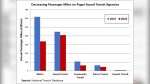 Puget Sound transit passenger-miles fell 31% from 2015 to 2024 despite a half-million-resident population increase.
 - Interstate Bridge Replacement Program seeks qualified firms for bridge replacement contract
 The CRBR project is backed by $5.7 billion from state funds, federal grants, and future tolling.
 - Opinion: Bankrupt – A $3.5 billion Rose Quarter Freeway widening project
 Joe Cortright argues ODOT’s Rose Quarter project has grown from a $450M approval to a $3.5B estimate, with a $2B funding gap.
 - Opinion: Portland’s War on Cars 3 – Ending the war on automobiles
 O’Toole argues Portland should add toll lanes, fix safety hazards, and redesign TriMet routes to end its anti-auto policies.