



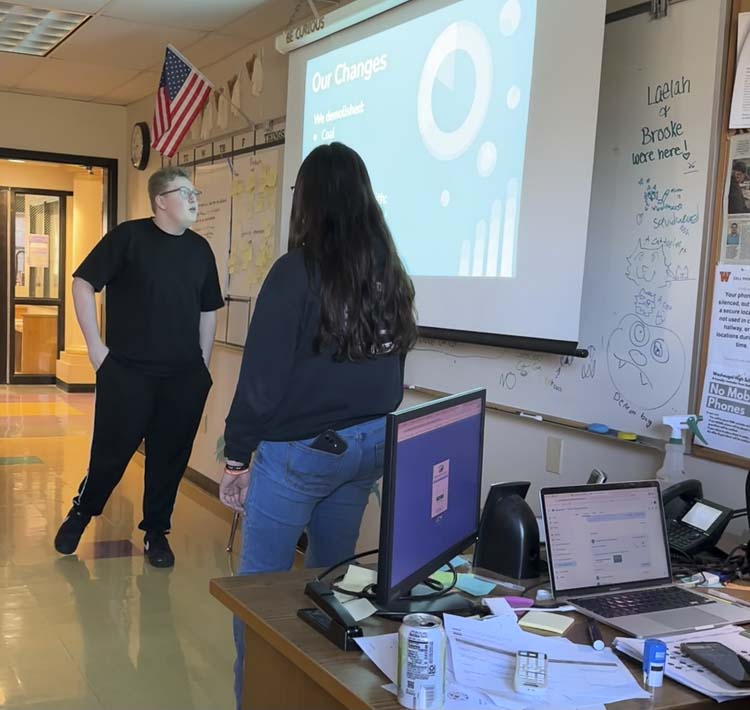
Students were asked to plan for future growth while addressing trade-offs between new energy sources, grid storage, and conservation goals
Students at Washougal High School (WHS) stepped into the role of urban planners and grid engineers this spring, presenting innovative proposals for the future of regional energy supply. Proposals, which focused on energy generation strategies that balance long-term grid reliability, environmental concerns, and conservation efforts, were judged by a panel of guest experts from Clark Public Utility District (Clark PUD) who asked questions and provided real-world feedback on the students’ ambitious designs.
The proposals challenged students to make recommendations about energy infrastructure that meets the communities growing need. Students were asked to plan for future growth while addressing trade-offs between new energy sources, grid storage, and conservation goals. Students planned for future electricity needs that align with environmental stewardship and the mandates of the Clean Energy Transformation Act (CETA), which aims for a 100% clean energy supply by 2045-2050. Students used an Energy Grid Calculator to model their proposed solutions, identifying changes in carbon dioxide output, utility rate changes, and potential benefits. Students also talked through drawbacks to different methods of generating electricity.
“Students shared good ideas; it was fun to watch them think and work through problems,” noted Bailey Burk, a Water System Operator and Washougal High School graduate. Burk challenged students on the technical specifics of their storage ideas, asking about the duration and discharge rates of proposed battery systems.
Students Kaden Gabriel and Audrey Gale proposed a diversified energy portfolio that increased both solar and hydro investment while phasing out coal and biomass. They engaged in a deep dive into energy storage, describing hydro storage as a massive natural “battery” to smooth out generation variability.
The panel of experts from Clark PUD offered students a glimpse into the complexities of utility management. Charles Bennett, Technical Services Supervisor overseeing substations, pushed students to consider the necessity of a diverse generation mix and shared insights into the rigorous fish protection and mitigation efforts the PUD employs to keep local ecosystems healthy.
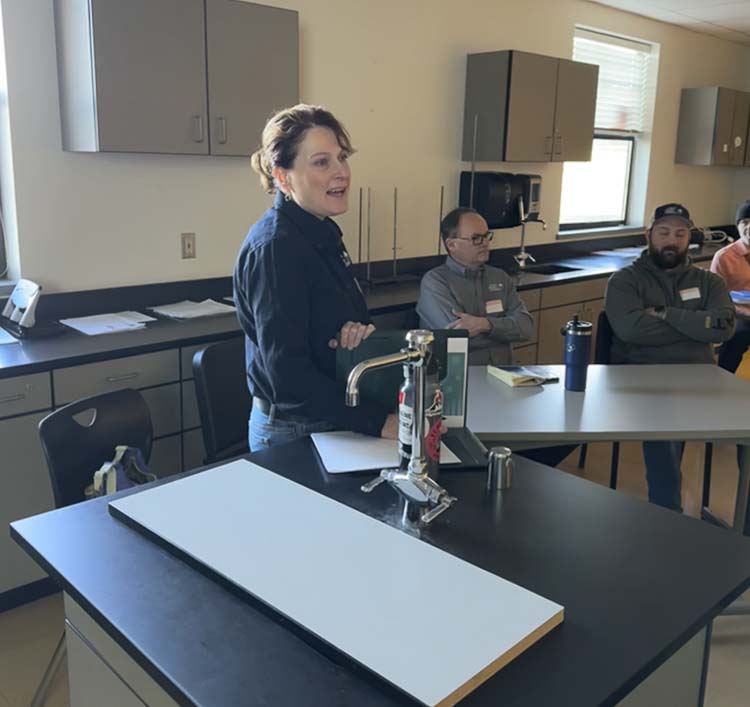
Anthony Garibay-Villa’s group focused on winterizing plants and expanding hydro capacity. They notably suggested a tiered pricing model, increasing costs for high-consumption data centers to fund critical infrastructure projects.
Zeecha Van Hoose, Reliability Compliance officer, reminded students of the human element behind the grid. “Think about all the little things that electricity does in your life… things you don’t even think about,” Van Hoose said. She emphasized that “for those relying on oxygen systems and life-safety equipment, grid reliability isn’t just a convenience—it’s a necessity.” Van Hoose asked follow up questions for groups proposing the phase out of biomass generation facilities, noting that these facilities might be more carbon neutral than students anticipated since the carbon they use comes from recently grown plants.
The lesson is part of the OpenSciEd high school physics curriculum, which the Washougal School Board adopted for use at Washougal High School for science last spring. WHS teachers use the OpenSciEd curriculum for physical science in ninth grade, biology in tenth grade, and earth science in eleventh grade.
The Clark PUD guests each shared their personal career paths and discussed the wide array of opportunities within the utility sector, including generation, transmission, and power grid management.
The project concluded with a discussion on the “long view” of energy. Van Hoose encouraged students to look beyond the immediate output and consider the “cradle-to-grave” costs of energy, with Bennett also talking about the consideration of the carbon footprint of manufacturing and transporting components for renewable projects.
Information provided by the Washougal School District.
Also read:
- Washougal High School students pitch energy ideas to Clark PUD
 High schoolers modeled power grid solutions, balancing future growth, clean energy laws, and everyday reliability challenges with direct input from utility experts.
 - ‘Cram the Cruiser’ to benefit Battle Ground and Prairie High Schools
 Officer Phil Anderson’s food pantry at Battle Ground High inspired Prairie High to launch its own, providing snacks and building bridges between students and law enforcement.
 - 60th Annual Hazel Dell Parade of Bands returns this May
 Twelve retired local band directors will be featured as Grand Marshals when the Hazel Dell Parade of Bands celebrates its 60th year with 120 entries and thousands of spectators.
 - Battle Ground students launch youth-led group to elevate student voices in school Funding Conversations
 Students in Battle Ground formed Youth4PS to bring their voices and fact-based information into funding and policy discussions, aiming for better communication and understanding in the school community.
 - Ridgefield student to serve as Rotary Club’s youth ambassador to central Mexico
 Ridgefield High’s Zander Earl was chosen as Rotary’s youth ambassador and will spend his junior year studying in central Mexico, immersed in both the language and local culture.
 wpDiscuz
