




Jason Mercier of the Washington Policy Center shares that whether or not Washington has a death tax, ensuring an operable inflation index to avoid bracket creep should be an easy call for lawmakers
Jason Mercier
Washington Policy Center

As noted by Benjamin Franklin, “in this world, nothing is certain except death and taxes.” For some taxpayers in just a few states, that quote can be changed to include taxes for dying as well. Washington is one of just 12 states that impose an estate tax (commonly referred to as a death tax) and is the only state without a personal income tax to have one.
To make matters worse, our estate tax currently has an inoperable inflation index, meaning more and more taxpayers are falling prey to it. The reason for this is that the federal report our law was linked to that determined inflation increases hasn’t been published since 2018. This means that there have been no inflation increases to the state’s death tax since then.
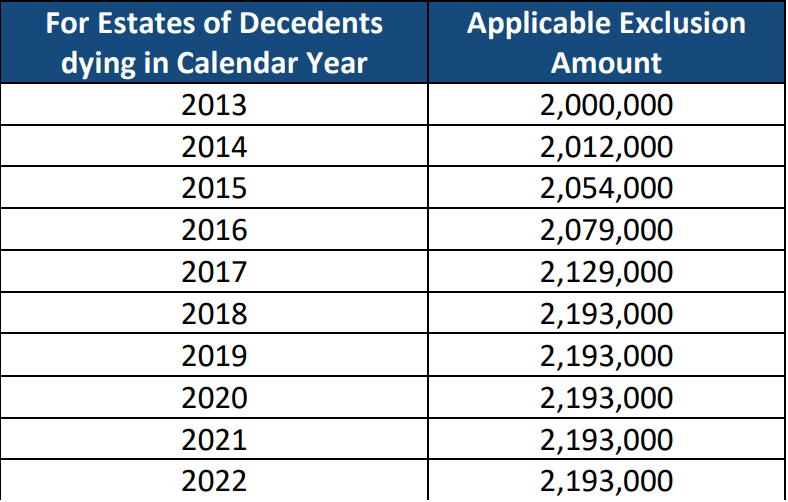
Since 2014, approximately 75% of taxpayers that paid the state’s death tax were for estates valued at less than $5 million according to data from the Department of Revenue. With no functional death tax index for inflation, coupled with increasing property values, that number is likely to grow to capture even more taxpayers than was envisioned under the original law.
A new bill proposed by Rep. Orcutt and Rep. Jacobsen would correct this oversight and restore a working inflation index for the state’s death tax. Their proposal, HB 1484 (Updating the estate tax exclusion amount), not only restores the inflation calculation but also tries to correct for the fact the state estate tax hasn’t been adjusted for inflation since 2018 by increasing the 2023 exemption so that it would reflect the amount had inflation been calculated.
Along with the lack of a working death tax inflation index, our state is tied for the highest estate tax rate in the country. According to the Tax Foundation:
“Estate taxes are paid by the decedent’s estate before assets are distributed to heirs and are thus imposed on the overall value of the estate . . . Hawaii and Washington have the highest estate tax top rates in the nation at 20 percent . . . Estate and inheritance taxes are burdensome. They disincentivize business investment and can drive high-net-worth individuals out-of-state. They also yield estate planning and tax avoidance strategies that are inefficient, not only for affected taxpayers, but for the economy at large. The handful of states that still impose them should consider eliminating them or at least conforming to federal exemption levels.”
Whether or not Washington has a death tax, ensuring an operable inflation index to avoid bracket creep should be an easy call for lawmakers. Especially since the original law included this type of standard inflation tax protection yet it hasn’t been realized since 2018.
HB 1484 is currently scheduled for a public hearing on Thu., Feb. 9 at 1:30 p.m.
Jason Mercier is the director of the Center for Government Reform at the Washington Policy Center.

Also read:
- Opinion: Hard work is being done to try to trade one bad health care system for another
 Elizabeth New (Hovde) cautions that efforts to create a universal, taxpayer-financed health care system in Washington risk replacing existing problems with new challenges tied to cost, access, and centralized control.
 - Opinion: The progressive attack on Washington’s sheriffs
 Nancy Churchill argues that proposed legislation would shift power over county sheriffs away from voters and concentrate control within state government.
 - Letter: Is Secretary of State Hobbs really JUST protecting your voter information?
 Camas resident Rick Vermeers questions the Washington secretary of state’s refusal to provide voter roll data to the U.S. Department of Justice and raises concerns about voter list transparency and compliance with federal law.
 - Opinion: In search of joy at Vancouver Mall during Christmas time
 Paul Valencia reflects on his annual Christmas-time visit to Vancouver Mall, finding nostalgia, people-watching, and moments of joy amid last-minute holiday shopping.
 - Opinion: Atmospheric River events mean even less clearance for vessels crossing under the proposed Interstate Bridge Plan
 Neighbors for a Better Crossing argues that high river levels from atmospheric river events further reduce vessel clearance under the proposed Interstate Bridge design, creating long-term navigation risks on the Columbia River.
