



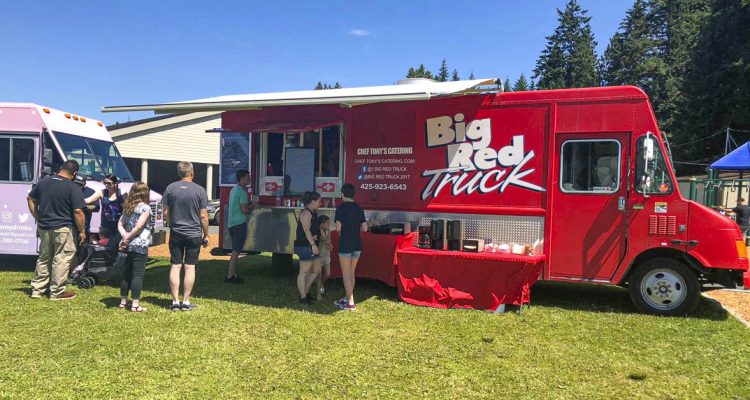
Mark Harmsworth of the Washington Policy Center shares an example of how government delays and red tape destroy small businesses
Mark Harmsworth
Washington Policy Center
Melinda Grenier left her job at Amazon to start her own mobile coffee stand, Hay Girl Coffee, investing about $100,000 in a trailer to kick start her dream. Everything looked like it was going to work, but then the permitting process started with the Snohomish County Health Department, things didn’t go as planned.

The Health Department is 5 months behind on permit applications, the delays caused by staff turnover and an increase in permit applications. Even when things are going well, the agency still can take up to 3 months to get a mobile food permit processed.
In the meantime, mobile food vendors have to apply for temporary permits, which cost thousands of dollars and put huge financial strain on the bottom line.
Lori Johnson, director of the Washington State Food Truck Association emphasizes that unnecessary and costly regulations are overburdening small businesses like Grenier’s and the process needs to be streamlined.
Other states have laws that automatically approve permits if the government takes an unreasonable amount of time to process the permit. While the principal can’t be applied to every permit type, the mobile food permit would be a good candidate for a change in state or municipal law. Since the Health Department issues and charges for temporary permits, at least waving the fees for the temporary permits should be considered when the delay is caused by the government agency.
Government delays and red tape destroy small businesses. As Snohomish County grapples with these challenges, it’s essential to find a balance between regulation and supporting local entrepreneurs.
Mark Harmsworth is the director of the Small Business Center at the Washington Policy Center.

Also read:
- Letter: Freeze the scope and build the bridge
 Vancouver resident calls for project discipline after 22 years of planning and nearly half a billion in costs.
 - Opinion: Public workers’ First Amendment rights are getting attention – in Idaho, not Washington
 Idaho moves to stop public schools from collecting union dues through government payroll while Washington continues favoring unions over worker choice.
 - Opinion: Lawsuit filed against the unconstitutional income tax in Washington state
 Former Attorney General Rob McKenna and Supreme Court Justice Phil Talmadge challenge the 9.9% income tax in Klickitat Superior Court.
 - Letter: ‘Oregon and Washington aren’t refusing to clean their rolls — they’re contesting federal jurisdiction and timing’
 Camas resident challenges Lars Larson’s fraud claims, explaining legal disputes over federal jurisdiction.
 - Opinion: ‘When are we going to get the full and complete details of the Interstate Bridge Replacement Program’s I-5 Bridge replacement project?’
 IBR team buried key details about light rail ending at waterfront with massive elevator system required.
