



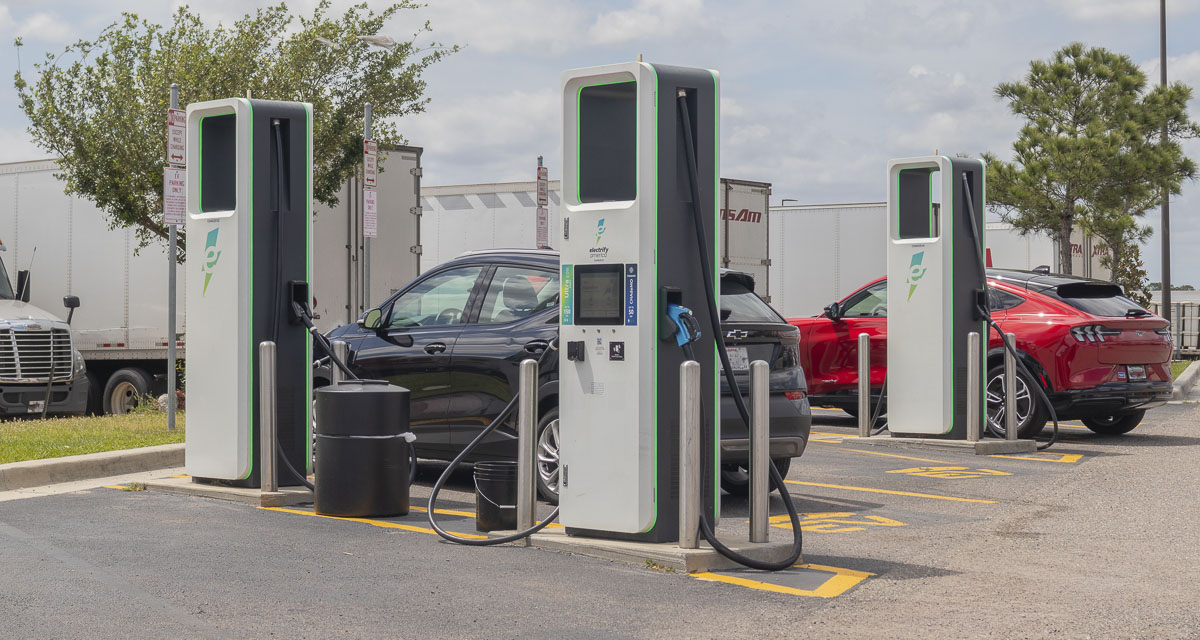
Todd Myers says the state is risking increased car prices or limited vehicle choices in the upcoming years
Todd Myers
Washington Policy Center
Washington electric vehicle sales are far short of the level necessary to meet the requirements that go into effect next year, risking increased car prices or limited vehicle choices in the upcoming years.
For the first two months of 2025, about 21.7 percent of new passenger vehicles and light duty trucks registered in Washington were either electric (EV) or plug-in hybrid (PHEV). That is slightly above 2024, when 20.9 percent were EV or PHEV.

This is far below the level that is required next year by Washington law requiring that 35 percent of cars sold in Washington be either EV or PHEV next year. At the current rate of increase, about 25 percent of new cars will meet the requirements next year, about 29 percent below the goal.
The law applies to both passenger vehicles and light duty trucks, which are defined as trucks below 8,500 pounds. We used data for all vehicles the state lists as “passenger vehicles” and trucks below that weight class. It is unclear if that is exactly how the state is calculating the requirements, but the number of vehicles that may fall on either side of the definition is limited, so while the percentages may be slightly off, the margin of error is relatively small.
If manufacturers fail to meet the required percentage, they can purchase credits from other manufacturers to make up the difference. They have until 2029 to make up a deficit from 2026, so even if Washington sales fall short next year, it would not necessarily impact vehicle availability immediately.
If a manufacturer fails to meet the requirements, however, the penalties are steep, equivalent to four times the cost of EV credits. Additionally, since the targets increase rapidly – jumping from 35 percent in 2026 to 43 percent in 2027 and 51 percent in 2028 – a shortfall in any year can quickly become insurmountable.
The requirements are on dealers, not consumers, so purchases made outside the state are not counted toward the required goals. If Washington car dealers find they are not meeting the targets and prices begin to escalate, it could simply encourage people to buy cars in Idaho or elsewhere.
Earlier this year, a bill was introduced to decouple Washington from California’s requirements, but it never received a hearing.
Ironically, the biggest beneficiary of the EV mandate, and the state’s many other EV subsidies, would be Elon Musk and Tesla.

Thus far in 2025, the top selling EV brand – by a long way – is Tesla. About 46 percent of all new EVs registered this year are Teslas. That is slightly lower than 2024, when nearly 51 percent of newly registered EVs in Washington were Teslas.
The second most popular brand is KIA with just 6.4 percent of new EVs.
Vehicle registration data are released on about the 20th of each month, so we will have to wait a few weeks until we see if the recent backlash against Tesla had a sales impact in March.
The sales data indicate that unless Washington legislators modify the mandated targets or decouple from California’s rules, Washington car buyers could be facing increased prices or car shortages in the next few years.
Todd Myers is the vice president for research at the Washington Policy Center.
Also read:
- Plenty of NBA connections expected in town Sunday for Vancouver Bears game
 Former NBA stars Gary Payton and Robert Pack will coach opposite each other when the SuperHawks visit the undefeated Vancouver Bears in a marquee USBL matchup.
 - 18th District lawmakers to host town hall meeting on Saturday, March 28, in Battle Ground
 Stephanie McClintock and John Ley will meet with Battle Ground constituents to answer questions, review the new income tax, and discuss the effects of the $80 billion budget.
 - State’s umpire-in-chief goes on recruiting trip in his final season as a baseball umpire
 Tim Stevens is spending his last season traveling to every Washington umpire association, working to address the shortage of officials and encourage young people to join the ranks.
 - POLL: After hearing state leaders describe the I-5 Bridge as vulnerable in an earthquake, what is your reaction?
 State and local leaders describe the I-5 Bridge as structurally at risk but recommend drivers continue crossing it while complex replacement plans unfold.
 - Opinion: Historical state income tax and another massive operating budget highlight the end of the 2026 legislative session
 Rep. John Ley details the passage of a state income tax, an expanding $80 billion budget, and new Clark County infrastructure funding following the 2026 legislative session.
 - VIDEO: Legal challenges certain as Gov. Ferguson prepares to sign new income tax
 Senate Minority Leader John Braun and other legislators expect legal challenges and initiative efforts to follow Gov. Ferguson’s signature on Washington’s new income tax law affecting high earners and businesses.
 - Vancouver Fire Department honors firefighters, community members at annual awards ceremony
 Acts of bravery, including river rescues and life-saving interventions by both residents and first responders, were recognized at the Vancouver Fire Department’s annual awards ceremony.
