



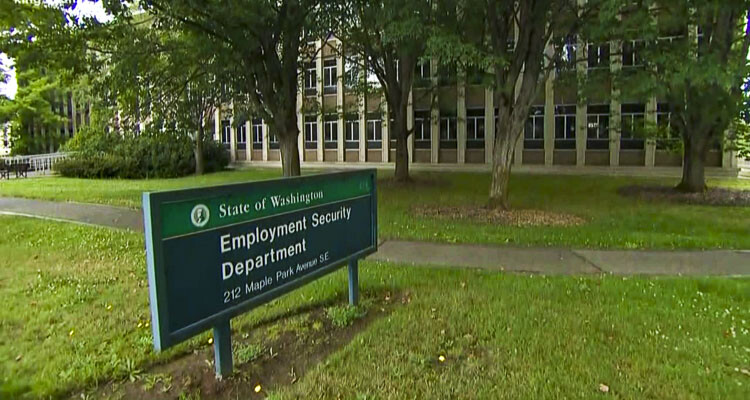
Mark Harmsworth of the Washington Policy Center states that ESD officials need to provide the public with more transparency into its internal policies
Mark Harmsworth
Washington Policy Center
The Employment Security Department (ESD) has been riddled with problems, including a Nigerian fraud scam that lost state taxpayers 100’s of millions of dollars and State auditor’s assessment of the systemic lack of fraud controls at the troubled agency.

Now taxpayers will be footing the bill for ESD’s overpayment mistakes.
An ESD bureaucratic failure to communicate clearly, has left thousands of residents receiving incorrect unemployment benefit amounts and, in some cases, overpayment of benefits. ESD has stated that due to the federal government Pandemic Unemployment Assistance (PUA) benefit ending, claimants were required to refile for unemployment and ESD issued notices instructing claimants on what needed to be done. The notifications for this change was poorly communicated and many claimants didn’t receive notifications and have been asked to repay the overpayments.
ESD had been trying to get the money back for the last two years and now, according to the Seattle Times, ESD is giving up on getting the money back which will require the rest of Washington taxpayers foot the bill for ESDs mistakes. Approximately 115,000 Washington residents owe $1 billion in over payments.
The federal government updated guidance in 2022 and now allows States to waive the overpayment (close to $12 million last week alone).
ESD incompetence has placed many Washington residents that claimed benefits in a difficult situation. Many did not know they were not eligible for benefits, yet the agency continued to pay them. Little or no auditing was performed by ESD, obviously, since the mistake was not corrected immediately.
The scale of the error ($1 Billion) shows the immediate need for ESD review by outside agencies.
ESD officials need to provide the public with more transparency into its internal policies, improve fund balance reporting accuracy, data timeliness and data availability.
Additionally, ESD needs to provide improved authentication and fraud protections against scams and individual fraudulent claims and needs reform to employer taxation policy and trust fund use.
In addition to ESD completing the current audits, regular bicameral legislative oversight of ESD is required.
For all of the Washington Policy Center recommendations, read the full Policy Brief here.
Mark Harmsworth is the director of the Small Business Center at the Washington Policy Center.

Also read:
- POLL: Do you agree with requiring board members to follow council direction?
 Disagreement among county councilors centers on whether C-TRAN board members should reflect the council’s collective wishes or act independently, highlighting ongoing concerns about public accountability.
 - Opinion: In plain sight – yielding to pedestrians
 Drivers often fail to see pedestrians due to inattentional blindness, which highlights the need for more focused awareness at intersections and stronger safety practices.
 - Opinion: The legislature has committed $2.4 billion to recurring pension increases since 2018
 Six legislative COLAs have raised public employer costs by $2.38 billion since 2018, driving up unfunded pension liabilities and increasing burdens on county and city budgets.
 - Opinion: ‘Just because they got away with it doesn’t mean they weren’t wrong’
 A Skamania County deputy’s report found violations of county rules and the Open Public Meetings Act, but no prosecutor acted on the findings.
 - Opinion: Small things grow great by concord
 Washington’s initiative process gives citizens direct power to challenge lawmakers. Failed restrictions and new measures on girls’ sports, parental rights, and citizenship prove the influence of grassroots action.
 wpDiscuz
