



Vicki Murray of the Washington Policy Center believes the latest Nation’s Report Card shows the state clearly doesn’t know what’s best for students, and it’s time for the real education experts to be back in charge: their parents
Vicki Murray
Washington Policy Center
The Nation’s Report Card is out, and the results are sobering.
The Nation’s Report Card presents results from the National Assessment of Educational Progress (NAEP), which is overseen and administered by the U.S. Department of Education through the National Center for Education Statistics (NCES). First administered in 1969, NAEP is the largest continuing, nationally representative evaluation of American students’ knowledge in core academic subjects.
Alarming majorities of American fourth and eighth grade students—up to two-thirds or more—are not at or above proficient in reading and math.
Only 39% of fourth graders nationwide are at or above proficient in math, and performance in 30 states does not statistically differ from that average—including Washington, where the results are similarly concerning with just 40% of fourth graders at or above proficient.
Not only does student performance get worse from there, but student performance in Washington (along with at least a dozen or so states or more) is also not statistically different than the national averages.
- Less than one-third of fourth graders are at or above proficient in reading, 30% nationwide and 32% in Washington.
- Less than one-third of eighth graders are at or above proficient in math, 27% nationwide and 30% in Washington.
- Less than one-third of eighth graders are at or above proficient in reading, 29% nationwide and 31% in Washington.
The U.S. Department of Education described these results “heartbreaking,” noting that “not only did most students not recover from pandemic-related learning loss, but those students who were the most behind and needed the most support have fallen even further behind.” NCES Commissioner Peggy Carr concurred: “The news is not good…Student achievement has not returned to pre-pandemic levels, reading scores continue to decline, and our lowest performing students are reading at historically low levels.”
Yet it would be a mistake to dismiss the latest Report Card results as another post-COVID blip. Instead, it should serve as “a national wakeup call,” as NCES puts it, “because it gives us a window into the state of our K-12 education system.”
It sure does.
Not once in more than 20 years did a majority of Washington fourth or eighth grade students score at or above proficient in NAEP math or reading. Fourth graders came closest in 2013, when 48 percent of them scored at or above proficient in reading.
It’s hard to imagine any Washington parent whose child has been among the majority of students performing below proficiency being okay with giving the system that’s failing their children more money and more time to tinker around with what amounts to more of the same.
Yet that’s exactly what State Superintendent Chris Reykdal is proposing, all while proclaiming to be “proud that our students continue to outperform many of their peers across the nation.” But hold off on handing out any gold stars: 50% or more of students are falling short of proficiency in nearly every state (except two, here and here)
For parents, the implications are clear: waiting for the system to reform itself could cost their children precious learning time they simply don’t have. As learning stalls, students lose momentum, making it harder to catch up, which increases the likelihood of dropping out.
The parents of students who aren’t succeeding in their current school should be allowed to take them, along with their associated education funding, to any other school they think will get the job done. Not only would this help struggling students find a better school fit, allowing all parents to “vote with their feet” would introduce powerful positive pressure to focus on improving academic student learning.
Ultimately, the latest Nation’s Report Card shows the state clearly doesn’t know what’s best for students, and it’s time for the real education experts to be back in charge: their parents.
Vicki Murray (PhD.) is a Paul W. Locke Research Fellow for Education.

Also read:
- Opinion: State is rightly emphasizing experience and skills, not degrees
 Elizabeth New explains how a new state policy removes unnecessary advanced degree requirements, supporting skills-based employment and broadening opportunities for capable workers.
 - Opinion: The wealth migration is real – which states are benefiting?
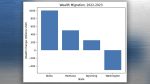 IRS data shows Idaho, Montana, and Wyoming attracted significant wealth from new residents, while Washington state saw a loss of $500 million as its new capital gains tax took effect.
 - Opinion: Voting with the Democrat Party – Back to the future!
 Lars Larson connects the history of election rules to today’s debates, highlighting Supreme Court concerns over counting ballots after Election Day.
 - Opinion: ‘Stay close, stay informed, stay the course’
 Anna Miller calls on residents to join Clark County Republican Women’s dinner, urging perseverance and unity as local government faces turbulent times.
 - Opinion: Will the income tax cause a drop in charitable giving?
 High-income households leaving Washington after new tax may redirect donations, possibly shrinking local nonprofits’ funding despite the intended deduction benefit.
