



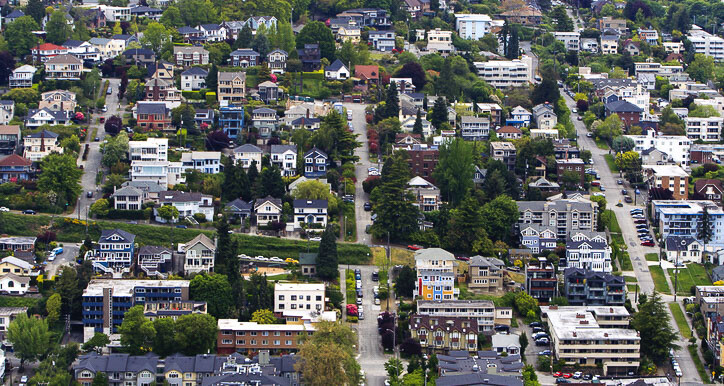
Mark Harmsworth of the Washington Policy Center shares why House Bill 1628 will not solve housing affordability in either the ownership, rental or commercial real estate markets
Mark Harmsworth
Washington Policy Center
House Bill 1628 (HB 1628) creates a new property tax category of 4% on property valued at over $5 million.

Proponents of HB 1628 argue that a property owner that sells property that is valued at over $5 million can afford to pay the additional tax rate. The majority of properties, however, that are sold that are valued over $5 million, are multi-unit housing, apartments, duplexes, retail and commercial properties which provide homes, products and services for every Washington resident.
The additional tax will be passed on to the home purchasers and renters in the form of increased home prices and rents. The primary stated goal of HB 1628 is to reduce the cost of housing, the net effect will be exactly the opposite with only state and local government benefiting from the new tax revenue.
HB 1628 would affect industries that have real estate investments in retail properties, office space and businesses such as the self-storage and warehousing industries to name a few. In the case of commercial real-estate, the additional tax will push the price of products and services higher as business owners will have to cover the increase in rent. Rental storage and warehouse space will be more expensive.
The tax collected will be deposited into a new account that distributes the money 30% to the Washington State Housing Trust Fund, 30% to the Apple Health and Homes Account, 15% to a new Developmental Disabilities Trust Account, and 25% to the Affordable Housing for All account.
The bill authorizes a city or county to add an additional 0.25% property tax to every property in their jurisdiction with up to half of the new tax being used for administration of the program.
Simple demand and supply economics show that by redistributing taxes (and in the case of House Bill 1628, increasing taxes) will not decrease prices.
The legislature needs pass legislation that promotes the availability of new housing rather that subsidizing the housing that is already built. Simple changes to the Growth Management Act (GMA), by modifying the arbitrary growth boundaries and population density goals set by the Puget Sound Regional Council (PSRC) will increase available land and the ability for more affordable housing to be built.
House Bill 1628 will not solve housing affordability in either the ownership, rental or commercial real estate markets. It will, in the long term, only continue to increase the cost of housing, products and services.
Mark Harmsworth is the director of the Small Business Center at the Washington Policy Center.

Also read:
- Opinion: Tax day is painful enough without Washington adding its own
 Washington’s new 9.9% income tax mirrors federal pattern: start narrow, expand to hit everyone within years.
 - POLL: What do you believe is the biggest reason school districts are facing budget shortfalls?
 Districts across Washington warn of budget gaps as debate grows over rising costs versus inadequate state funding.
 - Opinion: The high cost of hiding – Why IBR’s delayed revenue study is a $15 billion warning sign
 IBR delays critical toll revenue analysis until June 2027, hiding financial details until after project approval.
 - Opinion: The high cost of hiding – Why IBR’s delayed revenue study is a $15 billion warning sign
 IBR delays critical toll revenue analysis until June 2027, hiding financial details until after project approval.
 - Opinion: Washington fails the test for affordability
 Mountain States Policy Center analysis reveals Washington ranks 5th most expensive state as residents migrate to Idaho and Texas.
