



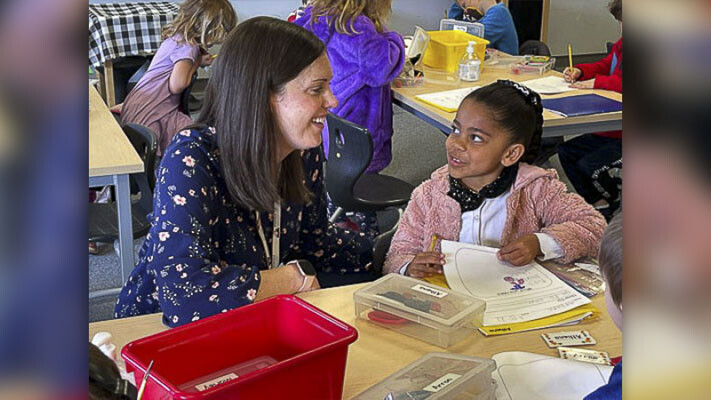
Liv Finne of the Washington Policy Center points out that the bill would set the precedent of filling classrooms with district staff who are not qualified to teach
Liv Finne
Washington Policy Center
The text of SB 5054 proposes to re-define the meaning of “instructional hours” in state law to include the time students spend with non-teachers. During that time their regular teachers would be absent and meeting in groups as newly-formed “professional learning communities.”

The effect of the bill would be to cut instruction time for students by four hours a week, from 30 hours to 26 hours.
SB 5054 is being proposed as the level of academic achievement provided students in the public system is falling. For example, on the 2022 Smarter Balance state tests public schools failed to educate 62 percent of students adequately in math, and failed to educate 49 percent of students adequately in reading.
SB 5054 would contribute to inequity in education. Students attending private schools and charter public schools would continue to receive full instructional time with fully-qualified teachers. The bill would hurt the education of Washington’s 1.1 million K-12 students by denying them access to a quality education.
In addition, the bill would set the precedent of filling classrooms with district staff who are not qualified to teach. The bill would result in lower academic standards, and would deny students the public education they have been promised, at a time when school funding and teacher pay are at record-high levels. Both trends would work to encourage more families to lose confidence in public education and to transfer their children to other schools.
For more information, here is our Legislative Memo on SB 5054: https://www.washingtonpolicy.org/publications/detail/sb-5054-to-cut-classroom-learning-time-in-schools-by-four-hours-a-week.
Liv Finne is the director of the Center for Education at the Washington Policy Center.

Also read:
- POLL: Do you agree with requiring board members to follow council direction?
 Disagreement among county councilors centers on whether C-TRAN board members should reflect the council’s collective wishes or act independently, highlighting ongoing concerns about public accountability.
 - Opinion: In plain sight – yielding to pedestrians
 Drivers often fail to see pedestrians due to inattentional blindness, which highlights the need for more focused awareness at intersections and stronger safety practices.
 - Opinion: The legislature has committed $2.4 billion to recurring pension increases since 2018
 Six legislative COLAs have raised public employer costs by $2.38 billion since 2018, driving up unfunded pension liabilities and increasing burdens on county and city budgets.
 - Opinion: ‘Just because they got away with it doesn’t mean they weren’t wrong’
 A Skamania County deputy’s report found violations of county rules and the Open Public Meetings Act, but no prosecutor acted on the findings.
 - Opinion: Small things grow great by concord
 Washington’s initiative process gives citizens direct power to challenge lawmakers. Failed restrictions and new measures on girls’ sports, parental rights, and citizenship prove the influence of grassroots action.
 wpDiscuz
