




Elizabeth Hovde explains that it’s going to middle- and upper-income wage earners
Elizabeth Hovde
Washington Policy Center
What’s the hourly wage of a Paid Family and Medical Leave recipient in Washington state? It’s higher than I’m comfortable with. Lawmakers should explain to all workers why they think it is good policy to take money from low-income workers and give their money to people with ample resources.

Using hourly wage estimates from the Employment Security Department, here are the earnings of people who took the program’s tax dollars in the past fiscal year (July 2022 through June 2023):
- Up to $18/hr: 12%
- Between $18 and $24/hr: 21%
- Between $24 and $35/hr: 26%
- Between $35 and $61/hr: 26%
- More than $61/hr: 16%
Lower-income workers shouldn’t be paying higher-income workers to bond with babies or take medical time off from work. They should be able to keep more of their wages for their own needs. But the state’s Paid Family and Medical Leave (PFML) program is fueled by employees’ wages. The tax rate is 0.8 percent of wages this year and represents a doubling of the payroll tax in its short lifetime. PFML also requires employers to contribute to the fund, even though many employers already give employees paid time off for sickness or family needs. The total payment required of a worker who made $50,000 in 2023 was $400. (Calculate your yearly PFML payroll tax here.)
The fast increase of the tax is said to have happened because of high use of the program. Some government leaders are proud of that and suggest it shows how much the program was needed. Did people need this program? Maybe some. All recipients no doubt enjoyed greater ease managing life happenings, but they did so at the expense of others who then had a harder time making ends meet.
PFML is laced with entitlement. It’s hard not to feel entitled to other people’s money when you’ve been forced to pour your wages into a shared piggy bank. I hope the state doesn’t ever require low-income workers to start paying into a fund other workers can use for vacation time or mental health days away from their jobs.
All Washingtonians would benefit from policies that encourage and expect self-sufficiency, tapping taxpayer generosity only for the vulnerable. Safety nets for people in need are worthy of support. Building social programs that act as safety nets for people who are not in need — and that harm the finances of others who are less fortunate — are not.
Inflation is tough and can be aggravating. Government inflation is extra aggravating. Read more about PFML and how it harms workers’ wages here and here.
Elizabeth Hovde is a policy analyst and the director of the Centers for Health Care and Worker Rights at the Washington Policy Center. She is a Clark County resident.

Also read:
- Opinion: State is rightly emphasizing experience and skills, not degrees
 Elizabeth New explains how a new state policy removes unnecessary advanced degree requirements, supporting skills-based employment and broadening opportunities for capable workers.
 - Opinion: The wealth migration is real – which states are benefiting?
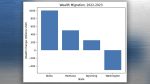 IRS data shows Idaho, Montana, and Wyoming attracted significant wealth from new residents, while Washington state saw a loss of $500 million as its new capital gains tax took effect.
 - Opinion: Voting with the Democrat Party – Back to the future!
 Lars Larson connects the history of election rules to today’s debates, highlighting Supreme Court concerns over counting ballots after Election Day.
 - Opinion: ‘Stay close, stay informed, stay the course’
 Anna Miller calls on residents to join Clark County Republican Women’s dinner, urging perseverance and unity as local government faces turbulent times.
 - Opinion: Will the income tax cause a drop in charitable giving?
 High-income households leaving Washington after new tax may redirect donations, possibly shrinking local nonprofits’ funding despite the intended deduction benefit.
