



🎧 Obamacare’s Tax Trap: Who’s Really Paying the Bill?
Dr. Roger Stark says Obamacare has not lived up to its promises of universal health insurance and affordable health care
Dr. Roger Stark
Mountain States Policy Center
Remember when Obamacare passed in 2010, the American public was told that the law would hold down the ever-increasing cost of health care, you could keep your doctor and insurance plan, and the rich would pay their “fair share?” So, where are we 16 years later?
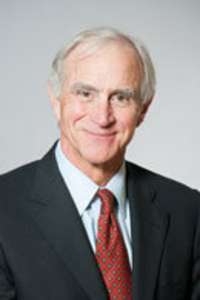
Dr. Roger Stark, Mountain States Policy Center
The original budget showed a cost of almost $1 trillion over the first ten years, which was to be financed by new and expanded taxes and substantial cuts to Medicare. The taxes include an increased payroll tax of 0.9 percent and a new 3.8 percent tax on net investment income, such as capital gains, dividends, and interest. These new taxes apply to single filers at $200,000 and for couples at $250,000. The net investment tax also applies to home sales at any amount exceeding $250,000 for single filers and $500,000 for couples.
By design, these taxes were not tagged to inflation. Instead of an additional tax on the “rich,” these taxes have now entrapped hundreds of thousands of Americans in the middle socio-economic class.
A recent report in the Wall Street Journal is revealing. The new taxes were rolled out in 2013 when 2.8 million filers paid the increased Medicare payroll tax. In 2022, 7 million filers were forced to pay the tax. In 2013, 3.1 million filers paid the investment tax, more than doubling to 7.1 million by 2022. Obviously, as wages have increased due to inflation, these taxes now entrap more payers than just the “rich.”
Obamacare has not lived up to its promises of universal health insurance and affordable health care. This doesn’t deter supporters, however, most of whom see the program as simply another step toward a government-run, single-payer health care system for the United States.
Half of all enrollees are in the Medicaid entitlement program, which is not financially sustainable in its present form. The other half of enrollees are in the Obamacare exchanges, where they receive taxpayer subsidies to purchase health insurance.
Opponents of Obamacare have made multiple attempts to repeal or reform the program. To date, these attempts have failed. In the meantime, more and more Americans are caught up in the financing of this program that has never reached its goals, is a drag on the economy, and is ultimately destined to fail without meaningful reform.
Instead of wasting taxpayer money on the inefficient Obamacare program, reforms could be instituted that put patients in charge of their health care. Rather than using complex and cumbersome exchanges, federal dollars could be given directly to patients via subsidies, premium supports, or tax credits. People already receiving subsidies in the Obamacare exchanges could gradually transition to the individual insurance market, where they would have more options.
Medicaid began in 1965 as a safety-net health insurance plan for the truly needy. Half of the patients in Obamacare are in the Medicaid entitlement, which now includes able-bodied 18 to 64-year-olds. Medicaid should be reformed by returning it to a health insurance plan for the most vulnerable.
Multiple attempts at repealing Obamacare entirely have been unsuccessful. However, Americans would welcome common-sense reforms that would guarantee the program’s effectiveness and its financial future while reducing the growing tax burden on Americans.
Dr. Roger Stark is a visiting fellow with Mountain States Policy Center, an independent research organization based in Idaho, Montana, Eastern Washington and Wyoming. Online at mountainstatespolicy.org. A retired surgeon, Dr. Stark has authored three books including “Healthcare Policy Simplified: Understanding a Complex Issue,” and “The Patient-Centered Solution: Our Health Care Crisis, How It Happened, and How We Can Fix It.”

Also read:
- Opinion: Were Republican voters just sleeping during the August primary election?
 CCRP Chairman Matt Bumala says 60% of primary no-shows in the 17th and 18th districts were Republicans.
 - Opinion: WA Cares’ launch showcased care WA Cares did not provide
 Gov. Ferguson showcased a caregiving arrangement at the WA Cares launch that the program had not paid for a single day of.
 - Auditor, auditor candidate address scrutiny over job title
 Greg Kimsey says roughly 40 county employees hold the deputy county auditor designation Kelly used in his campaign.
 - Opinion: Is Mitchell Kelly misleading voters with his ‘deputy auditor’ claim?
 Clark County HR records show no position called “Deputy County Auditor” has ever existed, Anderson argues.
 - Opinion: Democrats rig the ballot to save their income tax
 Churchill argues the ballot disclosure warning voters of education cuts describes revenue never collected and not yet allocated.