




Regardless of the new study, Elizabeth Hovde of the Washington Policy Center states why it’s important for all of us to reflect on how tax rates rise over time
Elizabeth Hovde
Washington Policy Center
A meeting Friday morning about the WA Cares’ Fund highlighted hope that the state’s long-term-care program is now projected to remain solvent with its current payroll tax rate, given the latest actuarial analysis. A study done two years ago — before taxpayers knew about WA Cares and before widespread concern about how the program will add a new payroll tax — showed insolvency. Washington state officials were concerned about the fund being able to pay its way.

Sen. Curtis King, R-Yakima, sits on the Long-Term Services and Supports (LTSS) Trust Commission and still has valid concerns.
After asking for clarification about some of the study’s finer points, including whether or not the study’s positive outcome has the law being amended to allow people who pay into WA Cares for years to see a benefit if they move out of state (it did not), King said: “I have to tell you that I’m skeptical that we can do a financial analysis or the Milliman analysis and have it come out so that we end up at .58, which is where we wanted it to be and where we started.”
Regardless of the new study, it’s important for all of us to reflect on how tax rates rise over time. For example, the payroll tax rate for the state’s paid family and medical leave has doubled in just a few short years. We should be aware that allowing a new tax for a fund that won’t help solve our long-term-care crisis in the way promised is asking for more of the same.
See more about the tax’s cost-shifting and misplaced burden on low-income wage earners, as well as the long-term-care program’s inadequate and “maybe you’ll see it” lifetime benefit, here. Past and future meeting information for the commission overseeing the state’s long-term-care law and a payroll tax that begins in July 2023 is available here.
Elizabeth Hovde is a policy analyst and the director of the Centers for Health Care and Worker Rights at the Washington Policy Center. She is a Clark County resident.

Also read:
- Opinion: State is rightly emphasizing experience and skills, not degrees
 Elizabeth New explains how a new state policy removes unnecessary advanced degree requirements, supporting skills-based employment and broadening opportunities for capable workers.
 - Opinion: The wealth migration is real – which states are benefiting?
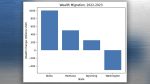 IRS data shows Idaho, Montana, and Wyoming attracted significant wealth from new residents, while Washington state saw a loss of $500 million as its new capital gains tax took effect.
 - Opinion: Voting with the Democrat Party – Back to the future!
 Lars Larson connects the history of election rules to today’s debates, highlighting Supreme Court concerns over counting ballots after Election Day.
 - Opinion: ‘Stay close, stay informed, stay the course’
 Anna Miller calls on residents to join Clark County Republican Women’s dinner, urging perseverance and unity as local government faces turbulent times.
 - Opinion: Will the income tax cause a drop in charitable giving?
 High-income households leaving Washington after new tax may redirect donations, possibly shrinking local nonprofits’ funding despite the intended deduction benefit.
