



Nancy Churchill says to make your voice matter, one legislator, one committee at a time
Nancy Churchill
Dangerous Rhetoric
Many people tell me, “I’m not political.” I understand that, because I used to feel the same way. So what changed for me? I realized that politics is not about parties or power. Politics is people. It is relationships. And it is policy.

When people, relationships, and policy come together, we have an opportunity to create real good in our communities. That is why I chose to get involved, and it is why I hope you will consider doing the same. Politics can be a way to build what is healthy and strong, and it can also be a tool to push back against ideas that would make our lives harder.
In last week’s column, I asked you to find a way to get involved in politics. This week, we will explore how to do that without ever leaving home.
It is time to get ready for session
Let’s turn our attention to the Washington State Legislature. In 2026, lawmakers will meet for only nine weeks, from January 12 to March 12. That short window often makes it difficult for the public to follow the action and have influence over the outcomes. That is why we want to begin in December, so we are ready to hit the ground running in January.
Committee meetings are beginning December 3. You can find the hearing schedules listed at leg.wa.gov. Legislators will be learning about issues, programs, and systems. You can watch these meetings live or on TVW.
For the next six weeks, while most people are focused on holidays and travel, the legislature will be preparing for action. The question is simple. Will they create policies that help, or will they pass policies that make life more difficult? And more important, do you know how to encourage the good and stop the bad?
Advocate for a good bill
Most people imagine dramatic floor votes and fiery debates when they think about how laws are made. In reality, most bills in Olympia live or die in committee, sometimes without a single public hearing.
That is where the real power is. And that is where you come in. Whether you want to block a harmful proposal or support a good one, the committee is your best chance to make an impact.
When a bill is introduced, it is assigned to a committee. Every bill must pass through at least one committee and some move through several. In each one, the bill needs a public hearing to advance. If the chair does not schedule this public hearing, the bill quietly dies. There is no vote, no debate, and no headlines.
Many good bills never even receive a hearing. If you were following a bill last session that stalled, now is the time to contact the ranking member of that committee. Share your story about why that bill matters and ask for it to be given a public hearing this session.
Focus your attention
You do not need to follow every bill or every committee. Choose one or two that deal with the issues you care about most. Keep an eye on the hearing schedule. Right now, bills from last session are already queued up for hearings. Review them and decide which ones you support and which you oppose. Once the session begins, watch the committee hearings online. A narrow focus increases your impact.
Form a kitchen table team
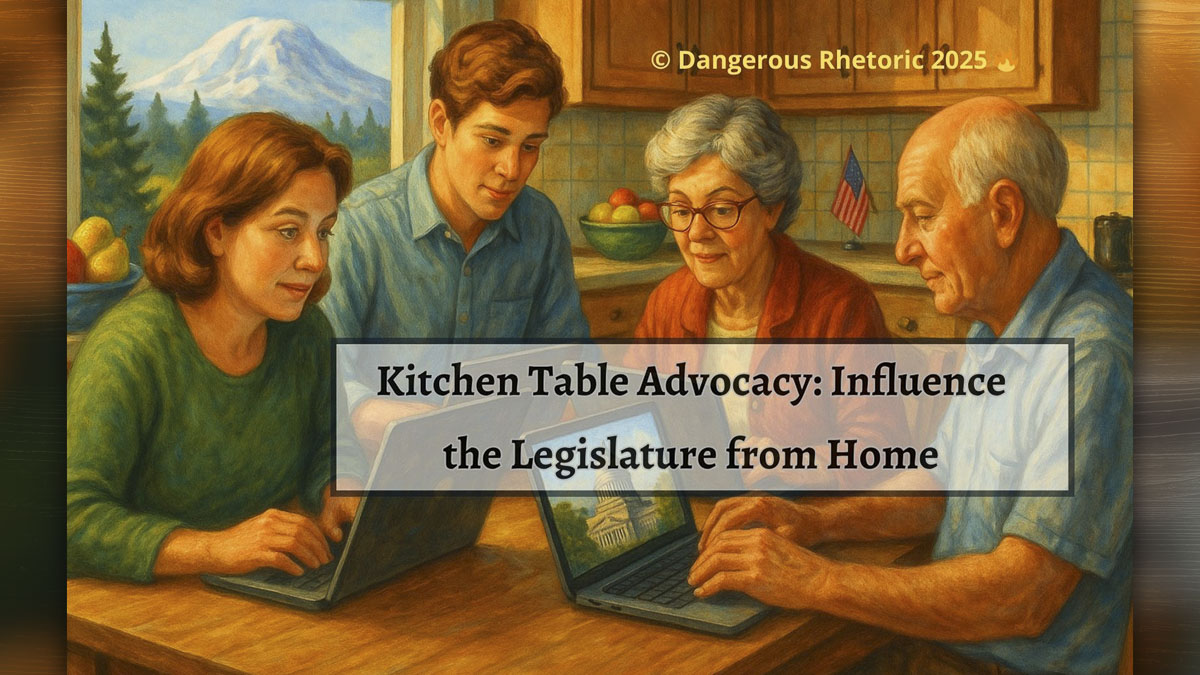
You do not need a formal group or a big network. Gather a few friends, neighbors, or family members who care about the same issue. Start a text thread or phone tree. Check in weekly. Share updates and divide tasks. Working together helps you stay motivated and makes your efforts more effective.
Learn the legislators on your committee
Learn who serves on the committee that handles your issue. Every member matters. Find out who chairs the committee, who represents your district, and who might be open to persuasion. Learn their names and districts. Even one tough question or one well-placed amendment can shift the direction of a bill. That is how influence works.
Be ruthlessly positive
Know your own legislators. Every legislative district has three: one senator and two representatives. Each one represents roughly the same number of people. No matter who your legislators are or what party they belong to, you are their constituent. That gives you unique influence.
Request a short meeting by phone, Zoom, or in person. Share your top concern. Ask what it would take for them to support your position. Or, ask how you can help them promote a bill. Follow up after the meeting. Attend their town halls and fundraisers. Be respectful, steady, and sincere. Above all, stay ruthlessly positive. You may not win them over right away, but you will be remembered when it counts.
Begin with one small step
Choose your issue. Choose a committee. Choose one legislator. Then make one phone call. Write one email. Ask one thoughtful question. Invite one friend to join you.
This is how change begins. Not in hearing rooms or headlines, but at kitchen tables, in community spaces, and in inboxes. One citizen at a time, reminding lawmakers that government does not just belong to politicians. It belongs to the people.
If you are concerned about the direction of our state, whether it is election integrity, government overreach, education policy, or constitutional rights, these are practical steps you can take right now to make a difference. You do not need to be an expert. You just need 10 to 15 minutes a day and a willingness to do good.
If you want to follow the action this year, join me at InfluencingOlympia.com. It is a hands-on resource for Washington State citizens who want to understand the process, track bills, and take strategic action from their own kitchen tables. You can join advocates from across the state and use politics to do good, and to stop the bad. Every voice matters, including yours.
Nancy Churchill is a writer and educator in rural eastern Washington State, and the chair of the Ferry County Republican Party. She may be reached at DangerousRhetoric@pm.me. The opinions expressed in Dangerous Rhetoric are her own. Dangerous Rhetoric is available on Substack, X, and Rumble

Also read:
- Opinion: Someone explain the Democrat Party to me please
 Lars Larson criticizes Democrat politicians for shutdown threats, Homeland Security funding refusals, and positions on election laws, housing, and gun rights.
 - POLL: Do you agree with requiring board members to follow council direction?
 Disagreement among county councilors centers on whether C-TRAN board members should reflect the council’s collective wishes or act independently, highlighting ongoing concerns about public accountability.
 - Opinion: In plain sight – yielding to pedestrians
 Drivers often fail to see pedestrians due to inattentional blindness, which highlights the need for more focused awareness at intersections and stronger safety practices.
 - Opinion: The legislature has committed $2.4 billion to recurring pension increases since 2018
 Six legislative COLAs have raised public employer costs by $2.38 billion since 2018, driving up unfunded pension liabilities and increasing burdens on county and city budgets.
 - Opinion: ‘Just because they got away with it doesn’t mean they weren’t wrong’
 A Skamania County deputy’s report found violations of county rules and the Open Public Meetings Act, but no prosecutor acted on the findings.
 wpDiscuz
