



Mark Harmsworth of the Washington Policy Center wants Commerce to refocus the $3.1 million it is spending to reduce the barriers the state created into simplifying the rules that are causing the problem in the first place
Mark Harmsworth
Washington Policy Center
In a recent opinion piece in the Seattle Times, former State Senator and current Washington State Director of Commerce, Lisa Brown, rightly describes the difficulties a small business startup faces in Washington State. Director Brown then says the Department of Commerce is helping small business owners navigate the complicated array of regulations and mandates that the very same government agency had previously imposed.

Director Browns article completely glosses over the underlying problem small businesses face when they first start; that is, over complex government regulations.
Instead of pouring money into programs to help businesses deal with overly complex regulations that Director Brown helped create, the Department of Commerce should focus on reducing the barriers to small businesses through a reduction in over burdensome regulations and complexity in the tax and licensing code. All can be achieved at a much lower cost. Reducing regulations also helps businesses long term and not just in the short term.
Take the business licensing requirements for municipalities as an example. Several cities are now issuing licenses based on the number of hours worked requiring businesses to track the hours employees are working inside the city limits (referred to as nexus) and pay based on a multiple of 1920 hours (one full time employee). This placed a burden on businesses to track where and when every hour is worked.
The reporting not a huge burden if you operate within one municipality, but when you have employees traveling to customer sites all over the state, the problem becomes significantly more difficult to track. If a business operates in 20 cities, it needs 20 different licenses, all with their own requirements on reporting and payment. Many businesses do not have the time to comply and just ignore the requirements.
Another example is the proportional (or destination) sales tax requirements. Each business has to track the sales tax rate (which often changes quarterly) in each political subdivision and charge a customer the appropriate rate depending on the type of work or product that was performed. Reporting this to the state is done at a municipal level, so every business has to collate this information based not on customer totals, but based on activities in the municipality, taxable and tax exempt.
Commerce should refocus the $3.1 million it is spending to reduce the barriers the state created in the business environment, into simplifying the rules that are causing the problem in the first place. Changing the focus to regulation simplification will have a long lasting, positive impact on every business in the state and will create a more equitable business environment.
Mark Harmsworth is the director of the Small Business Center at the Washington Policy Center.

Also read:
- Opinion: Were Republican voters just sleeping during the August primary election?
 CCRP Chairman Matt Bumala says 60% of primary no-shows in the 17th and 18th districts were Republicans.
 - Opinion: WA Cares’ launch showcased care WA Cares did not provide
 Gov. Ferguson showcased a caregiving arrangement at the WA Cares launch that the program had not paid for a single day of.
 - Opinion: Portland’s War on Cars Part 4 – A smarter automobile strategy to end gridlock
 O’Toole argues fuel wasted in Portland-area congestion has sextupled since 1982, generating 250,000 tons of extra greenhouse gases annually.
 - Opinion: The Tooth Fairy’s secrets to making brushing & flossing magical
 Delta Dental of Washington’s Tooth Fairy Experience offers free resources to help children build lifelong brushing and flossing habits.
 - Opinion: Transit ridership trends are dismal but regional plans are oblivious
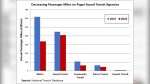 Puget Sound transit passenger-miles fell 31% from 2015 to 2024 despite a half-million-resident population increase.