



Todd Myers of the Washington Policy Center says that using forest fires to justify the CO2 tax is a smokescreen
Todd Myers
Washington Policy Center
In his editorial on Washington’s CO2 tax, Dr. Vin Gupta claims he likes “to go to the data to find the truth.” But he starts by saying something false.
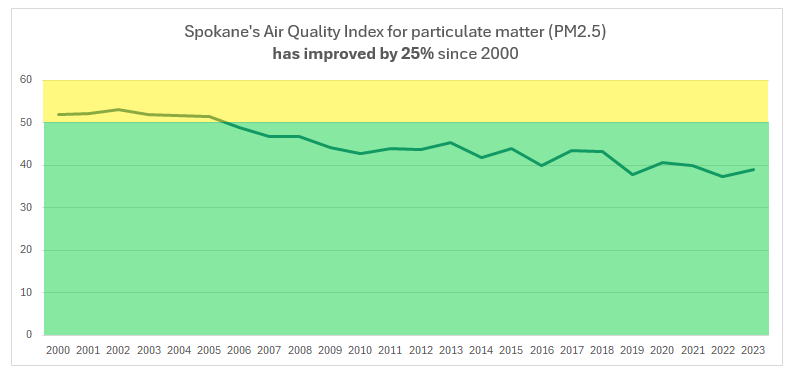

He claims Spokane has “declining air quality.” This is false. EPA data for Spokane County show that since 2000, average levels of particulate matter have fallen by more than 20% – from “moderate” to consistently “good.”
He clearly didn’t look at the data.
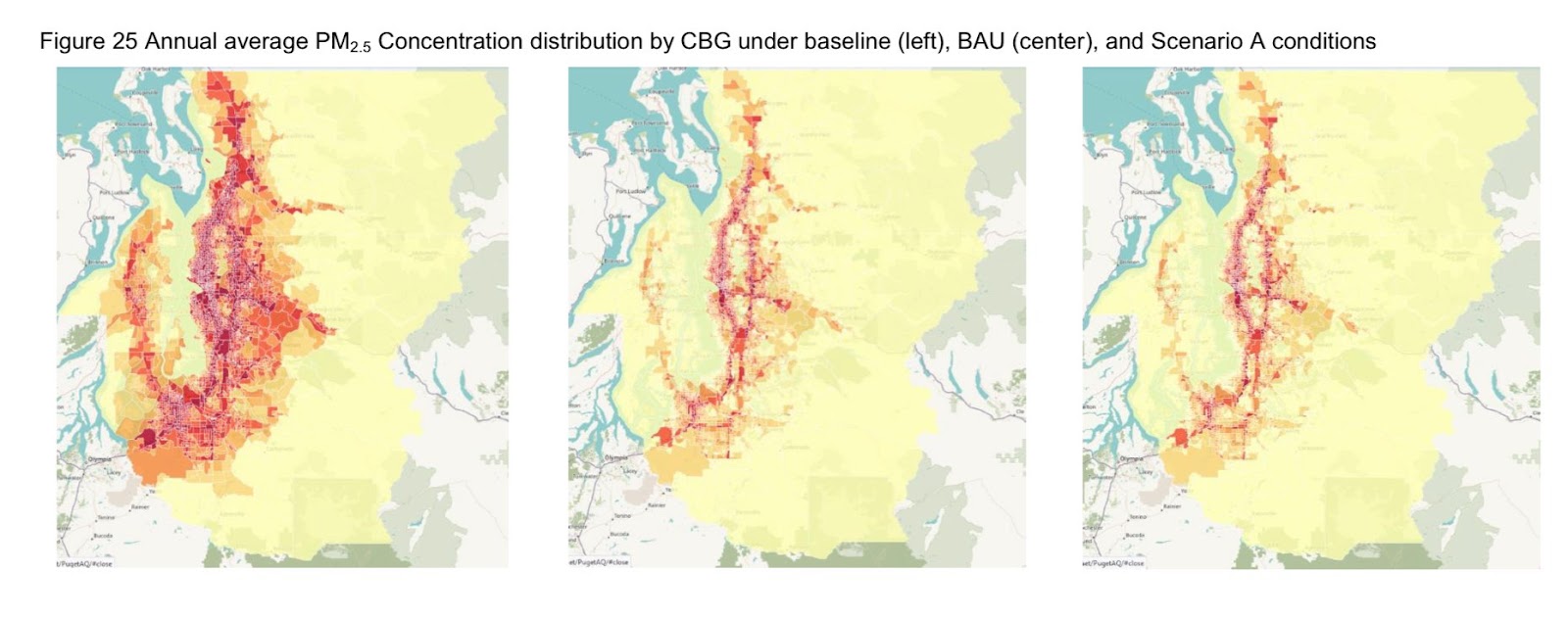
In fact, air quality will continue to improve without the CO2 tax. In 2019, the Puget Sound Clean Air Agency released a report on a proposal for a low-carbon fuel standard showing the impact of the policy on air quality. The study found that between 2019 and 2030 there would be a significant reduction in particulate matter (PM2.5) under the business as usual (BAU) scenario. This was two years before the Climate Commitment Act had been proposed.
Air quality will be better in 2030 with or without the CO2 tax.
Additionally, he says the CO2 tax would reduce the risk of smoke from catastrophic wildfire. Of the $3.2 billion from the CO2 tax, only $12 million – just 0.4% of the tax revenue – is budgeted to go to forest health. By way of comparison, more is spent on funding for government planning than forest health.
If preventing catastrophic wildfire was truly important, the legislature would have used more of the nearly $20 billion in new tax revenue the state received in the past four years.
Instead, the largest threat to projects that reduce the risk of wildfire are the very environmental groups supporting the CO2 tax. When the Colville Confederated Tribes worked with the Forest Service to thin unhealthy forests on their border, Spokane-based environmental groups immediately sued – preventing efforts to improve forest health and prevent catastrophic wildfires.
Using forest fires to justify the CO2 tax is a smokescreen.
Todd Myers is the vice president for research at the Washington Policy Center.

Also read:
- Letter: Freeze the scope and build the bridge
 Vancouver resident calls for project discipline after 22 years of planning and nearly half a billion in costs.
 - Opinion: Public workers’ First Amendment rights are getting attention – in Idaho, not Washington
 Idaho moves to stop public schools from collecting union dues through government payroll while Washington continues favoring unions over worker choice.
 - Opinion: Lawsuit filed against the unconstitutional income tax in Washington state
 Former Attorney General Rob McKenna and Supreme Court Justice Phil Talmadge challenge the 9.9% income tax in Klickitat Superior Court.
 - Letter: ‘Oregon and Washington aren’t refusing to clean their rolls — they’re contesting federal jurisdiction and timing’
 Camas resident challenges Lars Larson’s fraud claims, explaining legal disputes over federal jurisdiction.
 - Opinion: ‘When are we going to get the full and complete details of the Interstate Bridge Replacement Program’s I-5 Bridge replacement project?’
 IBR team buried key details about light rail ending at waterfront with massive elevator system required.
