



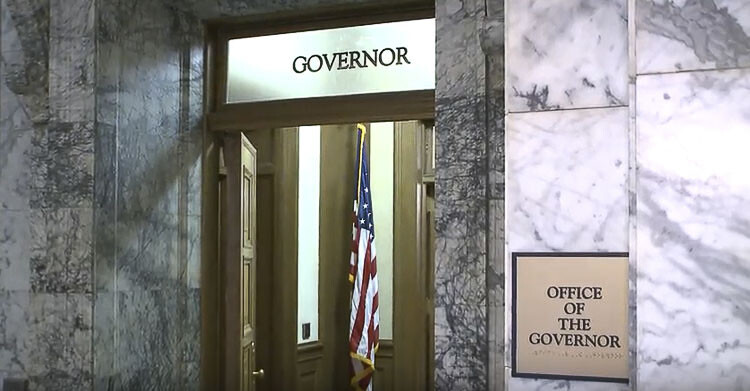
Jason Mercier of the Washington Policy Center explains why our system of governance is not meant to be the arbitrary rule of one behind closed doors
Jason Mercier
Washington Policy Center
It’s true that no bill is really dead until the legislature adjourns. That said, when a bill doesn’t even receive a public hearing, it’s safe to call it double-dead. Unfortunately, efforts to reform the state’s emergency powers died yet again this year without even the courtesy of public hearings. There was hope that with the Governor’s nearly 1,000-day governance by emergency orders finally expired, the legislature this year would give a fresh look at the statutory imbalance concerning checks and balances present in our emergency powers statute.

Instead, these important reform efforts received strike four (no changes in 2020, 2021, 2022, or 2023), clearly communicating that the current majority legislative leadership is comfortable with the executive branch having a blank check to make policy when an emergency is declared.
Two bills were introduced this year to reform the state’s emergency powers. They are HB 1535 (Increasing legislative involvement in gubernatorial proclamations relating to a state of emergency) and SB 5063 (Establishing balanced legislative oversight of gubernatorial powers during a declared emergency).
Though introduced on January 24, the House State Government & Tribal Relations did not even hold a public hearing on HB 1535.

Here is the intent section for HB 1535:
“The legislature recognizes that the executive branch is well-equipped to confront emergencies and lead responses. However, for long-lasting states of emergency when the continuity of government has not been disrupted, the legislature finds that each of the branches of government has a role to play. Accordingly, this act is designed to ensure adequate legislative involvement in long-lasting states of emergency.”
Rather than consider HB 1535, a higher priority for the committee was spending time approving HB 1020 (Declaring state dinosaur).

Emergency powers reform didn’t fare any better in the Senate. Despite being pre-filed on December 19, 2022, the Senate State Government & Elections Committee refused to hold a public hearing this year on SB 5063.
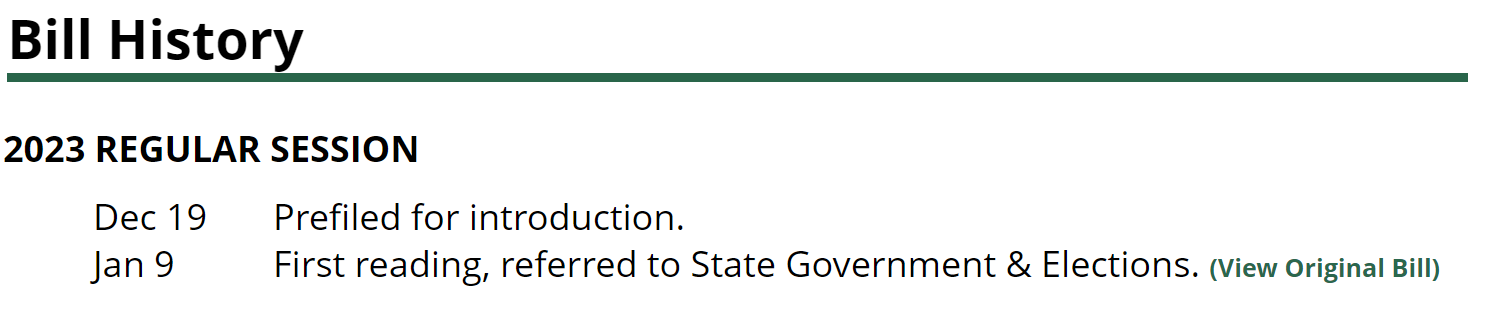
Here is the intent section for SB 5063:
“This act may be known and cited as the bipartisan approach to legislative authority necessary in continuing emergencies (BALANCE) act of 2023.”
SB 5063 would implement three important reforms to address the current lack of meaningful legislative oversight for Washington’s emergency powers law:
- When in session, allow the legislature to pass a concurrent resolution terminating an emergency declaration;
- When out of session and more than 90 days after an emergency declaration has been issued, all four members of the House and Senate leadership may terminate the declaration in writing; and
- Harmonizing the treatment of restrictive declarations and suspension of law by requiring both actions to expire after 30 days unless extended by the legislature (when out of session all four legislative leaders in House and Senate can extend in writing).
Instead of acting on SB 5063, the committee decided its time was better spent moving SB 5595 (Declaring state nickname).
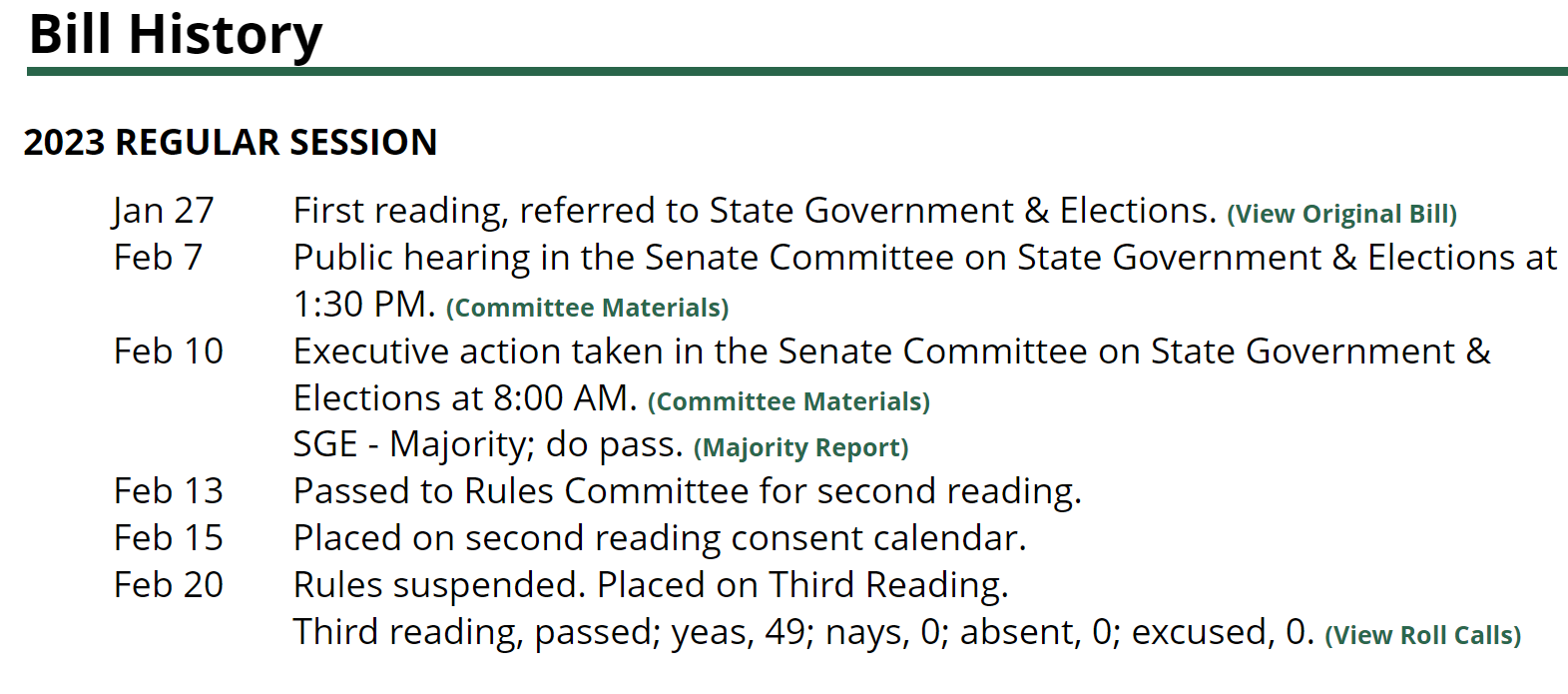
While declaring a state dinosaur and nickname may be worthy of lawmakers’ approval, the fact remains time was spent to move these bills while refusing to hold public hearings or acting on modest proposals to restore checks and balances and ensure meaningful legislative oversight for the use of emergency powers.
The lack of action by the legislature to reform the state’s emergency powers has been noticed by the courts. The state Supreme Court on February 23 heard oral arguments in a case concerning the Governor’s emergency powers (Gonzales, et al. v. Governor Jay Inslee).
This question asked during the oral arguments by Chief Justice Gonzalez sent a shiver down my spine (8:44 mark of video)
“When we decide what a statute means, and years go by with the legislature not changing the statute, we say they may have acquiesced in our understanding of what that statute meant by their silence . . . the legislature didn’t call a special session, which they could have by a two-thirds vote. And when they were in session, they didn’t change the statute that I’m aware of. So should we treat that also as a legislative acquiesce in the executive’s interpretation of the authority the executive had?”
Though the current majority legislative leadership may have “acquiesced” and ceded their constitutional authority as lawmakers to the executive branch to govern behind closed doors indefinitely during an emergency, it’s doubtful the citizens prefer this type of governance.
Even as the years have passed, I still vividly remember the dread and panicked phone calls I received from business owners each time the Governor scheduled a press conference during his nearly 1,000-day declared emergency. Restrictions imposed for an indefinite period developed in secret by the executive branch behind closed doors without legislative approval is not the way policy should be made in a republican form of government.
As noted by Washington’s constitution:
“All political power is inherent in the people, and governments derive their just powers from the consent of the governed, and are established to protect and maintain individual rights.”
Consent of the governed is hard to achieve when decisions are made behind closed doors by the executive branch without meaningful legislative oversight and accountability.
No one disputes that in an emergency, governors need broad powers to act fast. Legislative bodies inevitably take longer to assemble and act than a single executive, so they temporarily delegate their power to the executive in emergencies. But these powers are supposed to be transferred for a limited period of time.
When situations last for extended periods, longer-term policies need to be implemented and the legislature needs to debate risks, benefits and trade-offs of various approaches. Lawmakers may end up passing the very policies the governor would prefer to see implemented, but they do it after deliberation as representatives of the people and do it in a democratic public process.
It is the legislature, not the governor, that is charged with making law, and the governor who is charged with implementing the laws passed by the legislature. Whether or not you agree or disagree with every decision the Governor made during Washington’s “temporary,” 975 days-long state of emergency, the fact remains these decisions with vast impact on individuals and businesses were made without public input or legislative debate.
The Governor should not fear being required to make the case to lawmakers why a particular emergency restriction is appropriate to continue, and the legislature should not hide from its constitutional responsibility to debate and adopt policy. At some point, the executive branch should be required to receive permission from the legislative branch to continue making far-reaching policies under an emergency order.
Our system of governance is not meant to be the arbitrary rule of one behind closed doors. Hopefully, someday soon, majority legislative leadership will finally agree and act to require meaningful oversight and accountability for Washington’s emergency powers.
Jason Mercier is the director of the Center for Government Reform at the Washington Policy Center.

Also read:
- Opinion: Sheriffs fight back
 Four county sheriffs are suing to block a new law giving a governor-appointed board power to decertify and remove sheriffs, bypassing voter oversight in Washington.
 - Opinion: The growing gap between public voice and political power
 Todd Myers describes how large-scale protest and sign-ins often fail to sway state leaders, and argues authentic influence is most likely found through local action.
 - Opinion: Who is winning the race for affordable power?
 Hydroelectric power keeps Washington competitive, but new laws and carbon pricing are driving up electricity costs for residents each year.
 - Opinion: Half the road, full stop – Understanding pedestrian right-of-way
 Doug Dahl explains how Washington’s law requires drivers to stop when a pedestrian is within one lane of their half of the road, not just when directly in front.
 - Opinion: The state’s RFK-proofing bill comes with a cost
 Mandates like HB 2242 can lead to higher premiums as insurance companies absorb costs for new preventive services, affecting affordability statewide.
 wpDiscuz
