



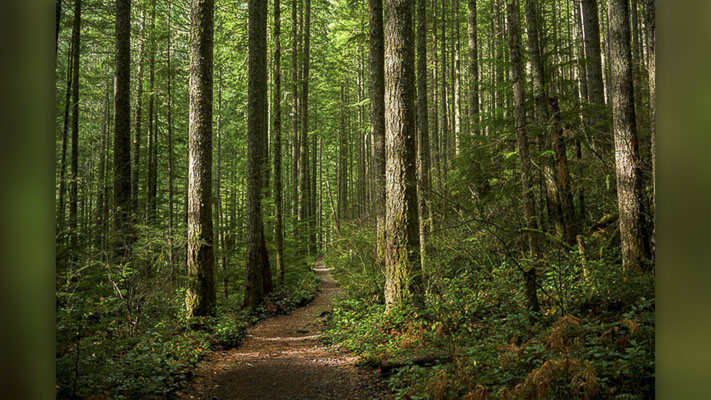
Pam Lewison of the Washington Policy Center believes that, from a policy perspective, the rub comes from an agency heading down a path that leads away from wildfire management
Pam Lewison
Washington Policy Center
Forest health, climate change, and a plan that got almost no input before being announced is at the heart of the “carbon project” announced by the Washington State Department of Natural Resources last week.

The project, developed by Finite Carbon, proposes to set aside 10,000 acres of forest in Western Washington, once set aside for marbled murrelet habitat and then cleared for logging, for carbon offsets that can be purchased by large companies in trade for their greenhouse gas emissions.
The act of setting aside 10,000 acres of forest as “protected” for corporate carbon offsets may contradict the goal responsibly thinning, logging, and managing our forests for wildfire prevention. The plan settles into the notion that logging and forest management are inherently “bad” and should be avoided. Earlier this fall, some cities in Western Washington recorded the worst air quality in the world courtesy of wildfires burning on the west side of the Cascades.
For some in Eastern Washington, the smoky days in Seattle and elsewhere gave Western Washingtonians a taste of what it is like to live on the other side of the wildfire coin. Persistent fires in Eastern Washington for several years running have created smoke-filled days and ongoing calls for forest management, the opening of more logging and grazing permits, and cooperation between local, state, and federal fire response agencies.
In the vast landscape of the 2.1 million acres of forest DNR manages, 10,000 acres seems small in comparison but it opens a door for similar projects and carbon purchases down the road.
Additionally, the proposed carbon program dismisses the impact it will have on public school funding and the other services timber sales provide to our state. According to DNR’s own financial disclosures, timber sales in 2021 generated nearly $69 million, to be disbursed to various beneficiaries including our public schools.
Trading forest management and public school funding for carbon offsets is a bad trade and even supporters of carbon offsets are dubious about its lasting benefits if they are not outlined in specific and permanent terms. If, for example, offsets are sold and then a forest is cut down some time later, the offsets are effectively erased. To be considered truly beneficial, offsets must contribute beyond the measures already taken to reduce emissions by a company.
From a policy perspective, the rub comes from an agency heading down a path that leads away from wildfire management that includes thinning, logging, and other fire preparedness measures and potentially taking away public-school funds without significant input from the legislature or the public.
If DNR wants to truly show itself as an agency dedicated to land stewardship, then it should pause the project, assess its positive and negative attributes, and allow Washingtonians to weigh-in on how they want their forests to be cared for. Unilateral actions made with little transparency lead to distrust of public agencies. It is important for the health of our forests and for the continued funding of our schools, that DNR put all its “carbon project” cards on the table.
Pam Lewison is the director of the Initiative for Agriculture at the Washington Policy Center.

Also read:
- Opinion: Tax day is painful enough without Washington adding its own
 Washington’s new 9.9% income tax mirrors federal pattern: start narrow, expand to hit everyone within years.
 - POLL: What do you believe is the biggest reason school districts are facing budget shortfalls?
 Districts across Washington warn of budget gaps as debate grows over rising costs versus inadequate state funding.
 - Opinion: The high cost of hiding – Why IBR’s delayed revenue study is a $15 billion warning sign
 IBR delays critical toll revenue analysis until June 2027, hiding financial details until after project approval.
 - Opinion: The high cost of hiding – Why IBR’s delayed revenue study is a $15 billion warning sign
 IBR delays critical toll revenue analysis until June 2027, hiding financial details until after project approval.
 - Opinion: Washington fails the test for affordability
 Mountain States Policy Center analysis reveals Washington ranks 5th most expensive state as residents migrate to Idaho and Texas.
