



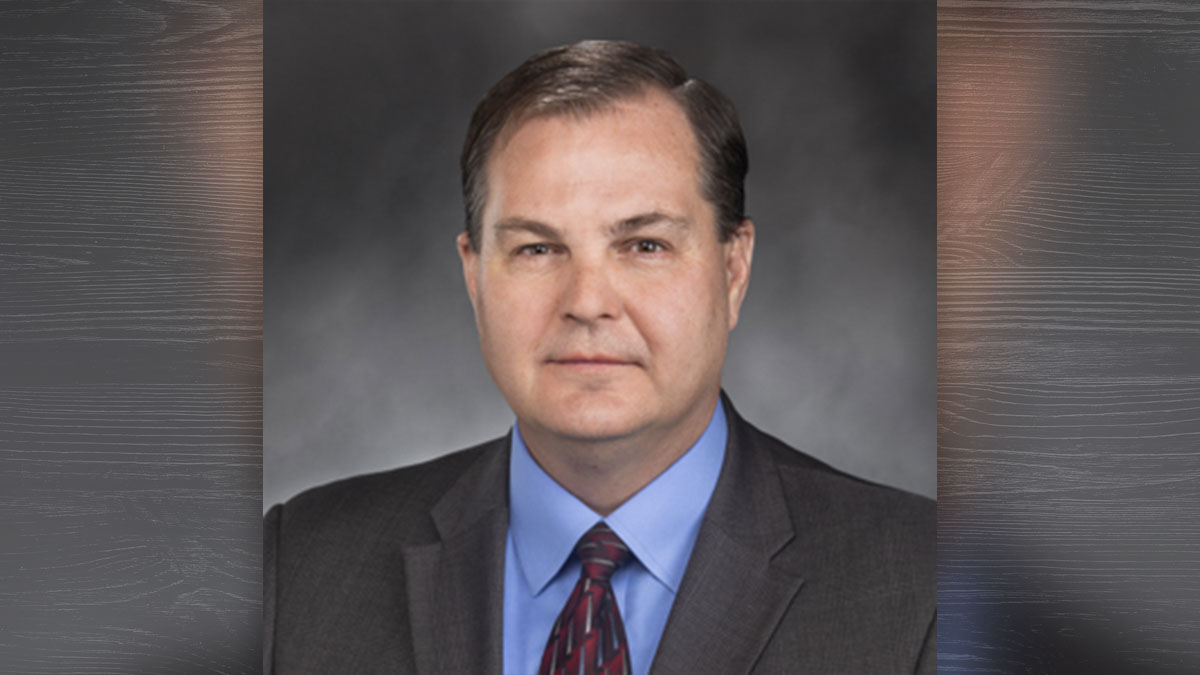
Sen. John Braun says the bill would erode local control and concentrate the power over criminal justice in Olympia — to the detriment of all 39 counties across Washington
Sen. John Braun
20th Legislative District
 See Grok’s analysis of this story
When voters elect a sheriff to lead the law-enforcement officers who protect their county, an unelected board that answers to the governor should not have the power to decertify that sheriff. Allowing a non-elected entity to remove an elected official undermines the will of the people — and democracy itself. It also turns sheriffs into pawns of partisan politics and the agenda of the majority party in Olympia.
This may seem like an obvious principle. Yet Democrats in Olympia are backing Senate Bill 5974, claiming it will “strengthen and modernize” the laws governing sheriffs and other law-enforcement officers. In reality, the bill would erode local control and concentrate the power over criminal justice in Olympia — to the detriment of all 39 counties across Washington.
Sheriffs are elected under processes defined by our state Constitution. They swear an oath to uphold not only that constitution, but — above all — the U.S. Constitution. They also swear to uphold the laws of our state, subject to the constraints of the constitutions.
The Democratic majority has already passed the so-called Keep Washington Working Act, which contains unconstitutional mandates aligned with their political agenda. SB 5974 represents the next step: empowering the state to remove sheriffs who recognize that their constitutional obligations count more than those dictates.
The bill received a hearing in the Senate Law and Justice Committee on January 15. Many sheriffs testified in opposition, raising serious concerns that we share — particularly about the negative effect on rural communities.
There are broader implications as well. The Spokane County Sheriff noted that SB 5974 would make sheriffs the only elected officials in Washington who could be removed or decertified by a non-elected board. Ask yourself: Why would Democrats care about a county sheriff differently than a county auditor, or a city mayor? Many in the law-enforcement community have described the bill as a targeted political attack.
More than 13,000 people signed in to oppose the bill at the committee level — an extraordinary level of engagement, especially on just the fourth day of the legislative session. Thank you to everyone who took part.
If you oppose this legislation, now is the time to act – before the committee can vote. Contact the chair and members of the Senate Law and& Justice Committee and demand they reject Senate Bill 5974.
Elected sheriffs should remain accountable to their voters — not to an unelected board with no connection to the communities they serve.
Sen. John Braun is a candidate for the House of Representatives in the Third Congressional District.

This independent analysis was created with Grok, an AI model from xAI. It is not written or edited by ClarkCountyToday.com and is provided to help readers evaluate the article’s sourcing and context.
Quick summary
In this opinion column, Sen. John Braun criticizes Senate Bill 5974, arguing it would weaken local control by giving an unelected state board the power to decertify elected sheriffs. He frames the proposal as undermining voter authority and shifting criminal‑justice decision‑making toward Olympia.
What Grok notices
- Centers on the claim that SB 5974 would allow an unelected board to remove (via decertification) sheriffs who were chosen by voters, contrasting board oversight with electoral accountability.
- Uses the constitutional and historical role of sheriffs as context, framing the bill as a structural change in how law‑enforcement leadership can be held accountable.
- References prior state policy conflicts (including the Keep Washington Working Act, as cited) to position the bill within broader tensions between state mandates and local enforcement discretion.
- Includes process details such as a Jan. 15 committee hearing and reports strong public engagement/opposition (over 13,000 sign‑ins, as described in the column).
- Points readers toward primary-source follow‑ups—reviewing the bill text and tracking committee actions—to verify how the proposed decertification authority would work in practice.
Questions worth asking
- How might giving a state board decertification authority over sheriffs affect rural counties’ ability to set and carry out local law‑enforcement priorities?
- What safeguards would be needed to keep any decertification process non‑partisan, transparent, and based on defined standards and evidence?
- How could the bill affect a sheriff’s willingness to challenge state mandates they believe conflict with constitutional duties or local directives?
- How do accountability and removal mechanisms for other elected officials compare with what SB 5974 proposes for sheriffs?
- What role should voter-driven tools—such as recall elections—play when constituents believe an elected sheriff is not performing appropriately?
Research this topic more
- Washington State Legislature – SB 5974 bill text, bill history, and current status
- Washington State Senate Law & Justice Committee – hearing information, materials, and recordings
- Washington Association of Sheriffs and Police Chiefs – statements and resources related to state oversight
- Washington State Constitution – text and provisions related to county offices
- Office of the Governor – criminal justice policy statements and updates

Also read:
- County seeks public comment on plans tied to CDBG and HOME funding
 Clark County proposes $2.4 million in federal funding for dental care, affordable housing, and sidewalk improvements.
 - Opinion: The path to real tax reform requires a spending limit
 Washington Policy Center director argues constitutional spending caps would force real budget tradeoffs instead of endless tax increases.
 - Court battle set to begin over WA’s new income tax
 Former AG Rob McKenna leads constitutional challenge against 9.9% tax on earnings above $1 million starting Thursday.
 - Vancouver mayor counters IBR’s proposal for the only light rail stop to be at the waterfront
 Vancouver’s mayor wants light rail extended beyond the waterfront to connect with C-TRAN buses at Library Square.
 - Opinion: ‘Both states know they have seriously flawed voter registration’
 Lars Larson argues Oregon and Washington are suing DOJ to avoid cleaning up fraudulent voter rolls before elections.
