



Mark Harmsworth says Washington and California must learn from each other or face continued decline
Mark Harmsworth
Washington Policy Center
As we approach the end of 2025, California’s staggering $21 billion unemployment insurance (UI) debt serves as a stark warning for states like Washington, where similar government mismanagement has burdened businesses and taxpayers. According to recent reporting from KCRA, California’s debt stems from a $20 billion federal loan taken in 2020 during the COVID-19 shutdowns. While every other state except New York repaid their loans using 2021 Biden administration stimulus funds, California lawmakers and Governor Newsom diverted those resources elsewhere, missing the repayment window.

The cash diversion triggered automatic payroll tax hikes on employers, jumping from $42 per employee a few years ago to $130 today, with further increases projected to $63 in 2027 plus $21 annually until the debt is paid off.
The state now pays $700 million in annual interest, exacerbating budget deficits amid a 5.9% unemployment rate.
This “hidden tax” discourages job growth and business expansion, as noted by business leaders who call it a deliberate choice to saddle employers with the bill.
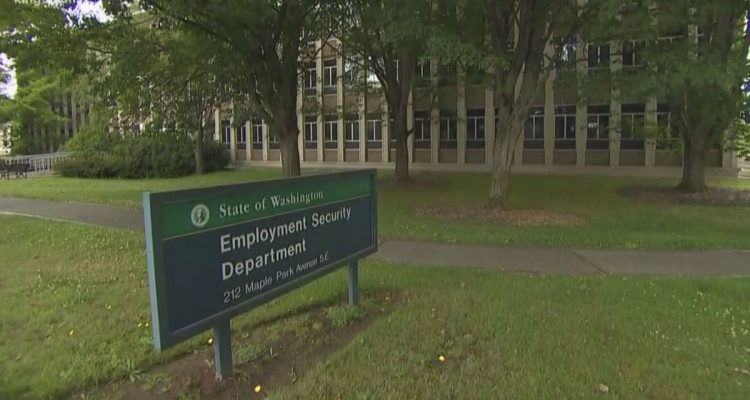
If this sounds familiar it should. Washington’s Employment Security Department (ESD) faced its own catastrophe during the pandemic, losing up to $1.1 billion to fraud and improper payments, including $647 million in confirmed misappropriations.
ESD’s vulnerabilities, from inadequate fraud detection to internal theft, such as a former employee stealing benefits for kickbacks, depleted the unemployment trust fund.
The fallout? Higher unemployment taxes on businesses to rebuild the fund, driving up costs and contributing to Washington’s stubbornly high 4.5% unemployment rate, worse than most states.
In both cases, government failures, prioritizing other spending over fund stability, have shifted the fiscal burden to private enterprise and ultimately consumers. Washington’s ESD commissioner resigned amid the chaos, yet transparency issues persist, with the department accused of hiding records.
The loss of 14,500 jobs in September will only put more pressure on the unemployment fund in Washington.
These debacles highlight the need for urgent reforms: stronger fraud protections and accountable leadership. Without change, states risk economic stagnation, pushing businesses to flee to more stable environments. Washington and California must learn from each other or face continued decline.
Mark Harmsworth is the director of the Small Business Center at the Washington Policy Center.
Also read:
- He Is Risen: An Easter Message from Clark County Today
 Families and congregations throughout Clark County observe Easter in unique ways, highlighting moments of renewal and togetherness for the community.
 - White House govt. Funding request for 2027 cuts $73 billion
 President Trump’s budget seeks to boost defense funding while cutting $73 billion from agencies like the EPA, NASA, and Agriculture, prompting sharp criticism from Democratic leaders.
 - Heywood asks WA Supreme Court to allow referendum effort on income tax
 Brian Heywood is petitioning the state Supreme Court after the Secretary of State rejected a referendum to repeal Washington’s new 9.9% tax on income over $1 million.
 - Opinion: Half the road, full stop – Understanding pedestrian right-of-way
 Doug Dahl explains how Washington’s law requires drivers to stop when a pedestrian is within one lane of their half of the road, not just when directly in front.
 - Clark County seeks volunteer for Law and Justice Council
 Applicants with experience in mental health services are encouraged to help guide Clark County’s coordination of local criminal justice and corrections planning.
 - VIDEO: Families at center of WA transgender sports debate face-to-face with OSPI
 Two Washington high school students and their parents met with Superintendent Chris Reykdal to discuss concerns about sports policies after one student faced an investigation for harassment.
 - As Washington lawmakers punt on school cellphone ban, some want more action
 At Robert Eagle Staff Middle School, all-day phone removal led to fewer conflicts and more student engagement, but some parents and lawmakers argue a ban should not be imposed statewide.
