



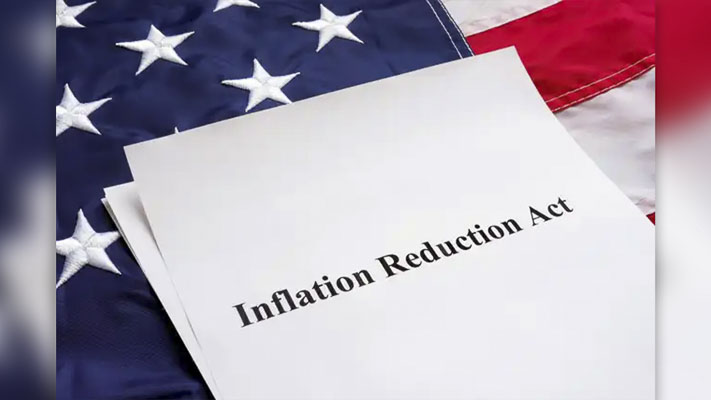
Dr. Roger Stark of the Washington Policy Center states ‘the Democrats had no mandate from the American public to pass this disaster’
Dr. Roger Stark
Washington Policy Center
After the Democrats delayed the August recess, the U.S. Senate passed the slimmed-down version of the huge “Build Back Better” tax and spend blow-out bill this past weekend. The vote was 51 to 50, with V.P. Harris casting the deciding vote. No Republican voted for the monstrosity. Tragically, this is exactly what happened when the Democrats passed Obamacare on Christmas Eve 2009 with no Republican votes.

This BBB-light legislation is now euphemistically called the Inflation Reduction Act. You can call a pig a dog, but the fact remains that the animal is still a pig. The Penn Wharton Budget Model predicts the impact of the law on inflation will be essentially zero. And any potential effect on inflation would be years away, providing no relief for Americans now experiencing the worst inflation in decades.
Funding for the legislation comes from basically two sources – new or unpaid taxes and drug savings in the Medicare program. There will be a new levy on one percent of company stock buybacks – i.e. a tax on capital. It’s naïve, or worse, to believe that the one percent won’t be increased in the future. In addition, there will be a new 15 percent minimum tax on larger corporations. As usual, that tax will be passed on to consumers and stockholders. The IRS will also be adding thousands of new agents to extract every last penny of taxes from individual taxpayers.
Taxes are bad enough, but the devastation caused by the new price controls in Medicare will adversely affect American’s health in general. Supporters claim that only a few drugs will be targeted. But this opens a colossally enormous door to further price controls on an unlimited number of life-extending and life-improving pharmaceuticals. Price controls will severely limit the amount of money available for research and development. It’s predicted that 135 fewer drugs will be developed over the next 20 years and that thousands of high-paying jobs will be lost in the drug industry.
The bill caps out-of-pocket drug expenses for Medicare recipients at $2,000 per year. This pushes Medicare closer to a true entitlement, rather than a medical “savings account.”
So where does the money go? The bulk of it will go to the government picking winners and losers in the green new deal arena. There will be tax credits for purchasing electric vehicles and for making homes more energy efficient, financial support for the development of wind and solar energy, and tax credits for companies that sequester carbon – but only if they use union employees. The reality is that as long as China and India continue to build coal burning plants and as long as third-world countries clamor for cheap energy, this bill is a feel-good, costly do-nothing piece of legislation.
And then, over $60 billion will go to a three year extension of the COVID-related Obamacare subsidies that were set to expire this year. These subsidies have mostly benefited wealthier families, who already have the financial capability to pursue other health insurance options. The real winner will be the health insurance industry that pockets these taxpayer-funded subsidies. Three years is an eternity in the life of a new entitlement and this timeline will permanently establish these subsidies.
The bill now moves on to the U.S. House, where it is virtually sure to pass.
The Democrats had no mandate from the American public to pass this disaster. The legislation is totally partisan, will do nothing to decrease inflation, will stifle the development of new drugs, will spend billions of dollars on green energy which will have virtually zero effect on climate change, will raise everyone’s cost of living, and ultimately will force more government intrusion into the lives of every American.
Dr. Roger Stark is a senior fellow for the Center for Health Care at the Washington Policy Center.

Also read:
- POLL: Do you agree with requiring board members to follow council direction?
 Disagreement among county councilors centers on whether C-TRAN board members should reflect the council’s collective wishes or act independently, highlighting ongoing concerns about public accountability.
 - Opinion: In plain sight – yielding to pedestrians
 Drivers often fail to see pedestrians due to inattentional blindness, which highlights the need for more focused awareness at intersections and stronger safety practices.
 - Opinion: The legislature has committed $2.4 billion to recurring pension increases since 2018
 Six legislative COLAs have raised public employer costs by $2.38 billion since 2018, driving up unfunded pension liabilities and increasing burdens on county and city budgets.
 - Opinion: ‘Just because they got away with it doesn’t mean they weren’t wrong’
 A Skamania County deputy’s report found violations of county rules and the Open Public Meetings Act, but no prosecutor acted on the findings.
 - Opinion: Small things grow great by concord
 Washington’s initiative process gives citizens direct power to challenge lawmakers. Failed restrictions and new measures on girls’ sports, parental rights, and citizenship prove the influence of grassroots action.
 wpDiscuz
