



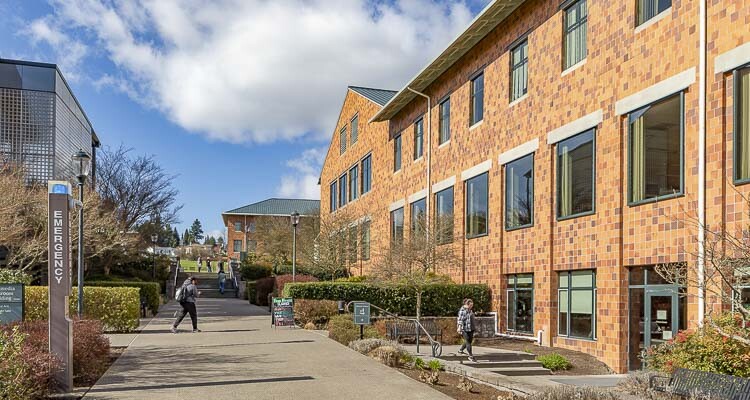
The workshop is a public service for all prospective and current college students, regardless of the college you choose to attend
VANCOUVER – Washington State University Vancouver will host four A – Z of Paying for College Workshops this fall. The workshop is a public service for all prospective and current college students, regardless of the college you choose to attend.
Prospective students and guardians will learn how to make college affordable with grants, loans, savings, scholarships and work. Find out which money is free, which needs to be paid back, and learn about important forms and deadlines. Presenters will provide strategies and answer commonly asked questions about applying for financial aid and scholarships, including the kinds of scholarships available.
The one-hour workshops will be held at 5:30 p.m. as follows:
- Sept. 26 on Zoom
- Oct. 25 in Dengerink Administration Building, Room 110 on campus
- Nov. 21 on Zoom
- Dec. 19 in Dengerink Administration Building, Room 129 on campus
The workshops are free and open to the public. Register at vancouver.wsu.edu/a-z. Free parking in Orange 2 lot for in-person workshops. WSU Vancouver is located at 14204 N.E. Salmon Creek Ave. in Vancouver, east of the 134th Street exit from either I-5 or I-205. Find a campus map at vancouver.wsu.edu/map. Visit vancouver.wsu.edu/events to get the Zoom link for online workshops.
About WSU Vancouver
WSU Vancouver is located at 14204 N.E. Salmon Creek Ave. in Vancouver, east of the 134th Street exit from either I-5 or I-205, or via C-TRAN bus service. Find a campus map at vancouver.wsu.edu/map. Parking is available at meters and in the Blue Daily Pay lot for $4 a day, $2 after 5 p.m. and free after 7 p.m. and on weekends.
As one of six campuses of the WSU system, WSU Vancouver offers big-school resources in a small-school environment. The university provides affordable, high-quality baccalaureate- and graduate-level education to benefit the people and communities it serves. As the only four-year research university in Southwest Washington, WSU Vancouver helps drive economic growth through relationships with local businesses and industries, schools and nonprofit organizations.
WSU Vancouver is located on the homelands of the Cowlitz Indian Tribe and Peoples of the Lower Columbia Valley. We acknowledge their presence here. WSU Vancouver expresses its respect towards these original and current caretakers of the region. We pledge that these relationships will be built on mutual trust and respect.
Information provided by WSU Vancouver Communications.
Also read:
- Former WA Supreme Court justice joins legal effort against income tax
 Phil Talmadge and Rob McKenna have joined forces with the Citizens Action Defense Fund to oppose Washington’s new tax on high-income earners, raising legal and constitutional questions.
 - Makeover in store for Congress with flood of lawmakers headed for the exits
 A wave of exits from Congress—over 65 lawmakers—will usher in unfamiliar faces and decrease veteran expertise, shifting the political landscape in Washington.
 - Opinion: Sheriffs fight back
 Four county sheriffs are suing to block a new law giving a governor-appointed board power to decertify and remove sheriffs, bypassing voter oversight in Washington.
 - Obituary for Lucille ‘Erma’ Christenson Madore – April 22,1924-March 13, 2026
 Known for her love of music and family, Lucille ‘Erma’ Christenson Madore lived through nearly 102 years and leaves a large, grateful legacy in Vancouver.
 - Fiscal fallout: $375 million bond debt indirectly funding operating budget
 Shifting $375 million from a loan fund impacts local infrastructure as Washington state covers operating costs with bond debt, prompting concern among officials and advocacy groups.
 - Lawsuit aims to block new eligibility requirements for WA sheriffs
 Four sheriffs are suing over a state law that sets new eligibility rules, arguing it undermines voter authority by allowing removal for certification issues.
 - Opinion: The growing gap between public voice and political power
 Todd Myers describes how large-scale protest and sign-ins often fail to sway state leaders, and argues authentic influence is most likely found through local action.
