



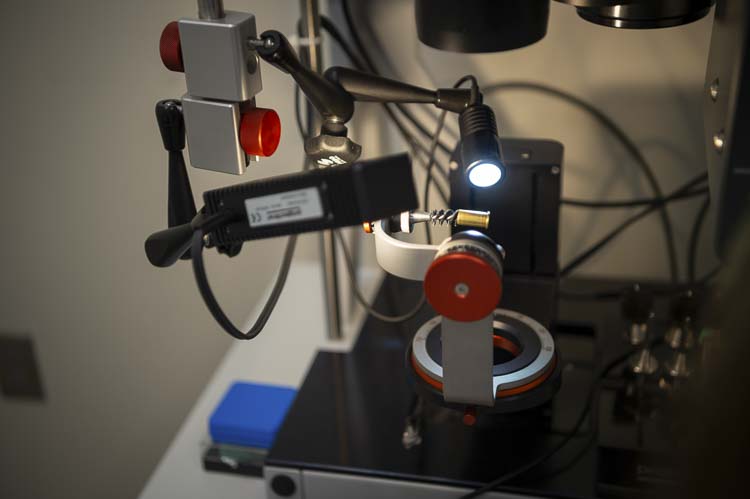
Four of the agency’s six labs (Vancouver, Tacoma, Seattle, and Spokane) offer firearm forensics services where scientists examine both firearms and ammunition components in criminal investigations
OLYMPIA – The Washington State Patrol (WSP) Crime Laboratory Division (CLD) provides high-quality forensic science services for all criminal justice partner agencies within the state of Washington. Four of the agency’s six labs (Vancouver, Tacoma, Seattle, and Spokane) offer firearm forensics services where scientists examine both firearms and ammunition components in criminal investigations. The demand for those types of examinations has grown over the years and is straining the labs’ capacity, creating unacceptable backlogs and delays.
As has been the case in other forensics backlog challenges successfully addressed in the past several years, the projected demand for the services continues to rise, and WSP must increase its capacity not only to accommodate the increased demand but also to address the backlogged cases.
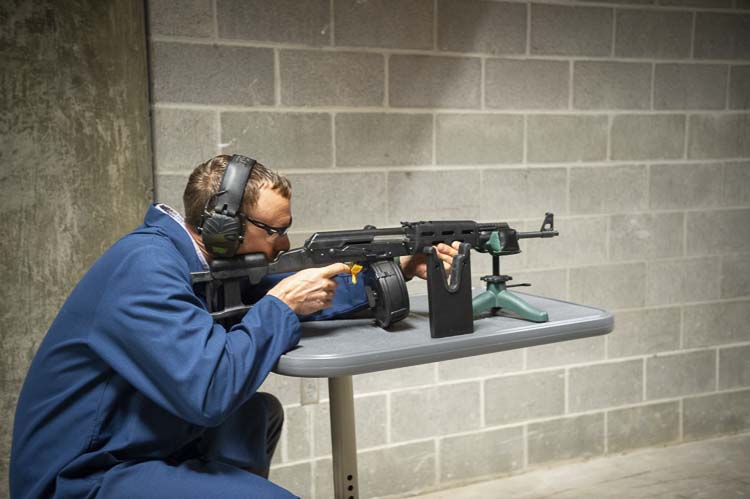
While rates of submission and case completion have been consistently increasing, they can vary significantly depending on the type and complexity of case submissions; however, some trend lines are evident. Over the past four years, WSP has received an average of 628 requests for firearms testing each year. The average completion rate for the last four years has been 418 requests per year, and as of July 1, 2025, the backlog of firearms cases was 955 requests. The current wait time for firearms cases is 379 days.
“The bottom line is that the number of cases where firearms play a part in criminal activity has grown, and we must restructure and grow our forensics capacity. Accordingly, I have ordered the hiring of additional scientists in hopes of doubling our testing capacity, reducing the backlog, and keeping abreast with the rising needs,” said WSP Chief John R. Batiste. “Preparing a new firearms scientist takes a minimum of two years of highly specialized training to meet the high standards necessary for successful criminal investigations. So, this is a process, not an event. But we are getting closer to meeting our needs every day.”
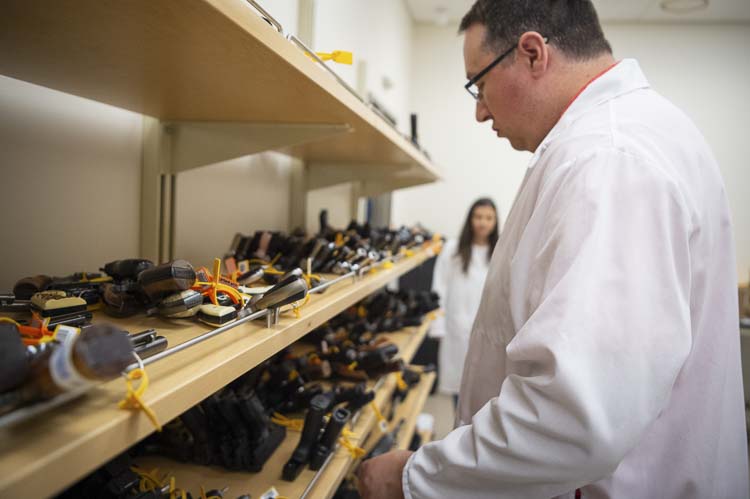
In response to the chief’s directive, over the past two years, CLD has added eight new Forensic Firearm Scientists through a restructuring effort. Four of the eight trainees have completed the rigorous training program and have started examining evidence in firearms cases. Two more trainees are on track to complete their final competency tests, moot court, and final assessment by mid-to-late August. The remaining two trainees are on track to complete their training program by the end of this calendar year. Once all training is complete, the new forensic scientists will gain experience with more complex casework and effectively double the unit’s capacity in one year.
“Even though they come to us with incredible skills and scientific preparation when hired, training so many new scientists in such a highly specific discipline all at once has its challenges,” said Division Commander Gene Lawrence.
“While CLD of course continues to prioritize officer-involved cases, court, and other rush requests, the restructuring and growth meant pulling resources away from some casework which could actually add short-term to the backlog,” he added. “But the short-term cost of reduced casework capacity to enable training will result in rapid capacity growth as trainees complete their training and become full contributors to the process.”
Lawrence estimates that if current trends and conditions are maintained, the backlog should peak at around 1,054 this summer, but expects to see a 10% reduction by January 2026. “Once all the new scientists are full contributors, overall testing capacity will be at least double current rates and should then exceed current demand, allowing for a steady decline of the backlog. We expect to reduce the backlog by 35% by July 2026 and reach the 60% backlog reduction benchmark by January 2027. Our eventual objective is to be able to turn firearms cases around in 120 days or less consistently, and we are hopeful to reach that goal by January of 2028,” said Commander Lawrence.
“In this, and all criminal investigative matters, the needs continue to grow, and so our capacity must continue to increase as well. I appreciate the fine work of our Crime Lab Division in an ever-more demanding work environment,” concluded Chief Batiste.
Information provided by Washington State Patrol.
Also read:
- White House govt. Funding request for 2027 cuts $73 billion
 President Trump’s budget seeks to boost defense funding while cutting $73 billion from agencies like the EPA, NASA, and Agriculture, prompting sharp criticism from Democratic leaders.
 - Heywood asks WA Supreme Court to allow referendum effort on income tax
 Brian Heywood is petitioning the state Supreme Court after the Secretary of State rejected a referendum to repeal Washington’s new 9.9% tax on income over $1 million.
 - Opinion: Half the road, full stop – Understanding pedestrian right-of-way
 Doug Dahl explains how Washington’s law requires drivers to stop when a pedestrian is within one lane of their half of the road, not just when directly in front.
 - Clark County seeks volunteer for Law and Justice Council
 Applicants with experience in mental health services are encouraged to help guide Clark County’s coordination of local criminal justice and corrections planning.
 - VIDEO: Families at center of WA transgender sports debate face-to-face with OSPI
 Two Washington high school students and their parents met with Superintendent Chris Reykdal to discuss concerns about sports policies after one student faced an investigation for harassment.
 - As Washington lawmakers punt on school cellphone ban, some want more action
 At Robert Eagle Staff Middle School, all-day phone removal led to fewer conflicts and more student engagement, but some parents and lawmakers argue a ban should not be imposed statewide.
 - Opinion: The state’s RFK-proofing bill comes with a cost
 Mandates like HB 2242 can lead to higher premiums as insurance companies absorb costs for new preventive services, affecting affordability statewide.
