



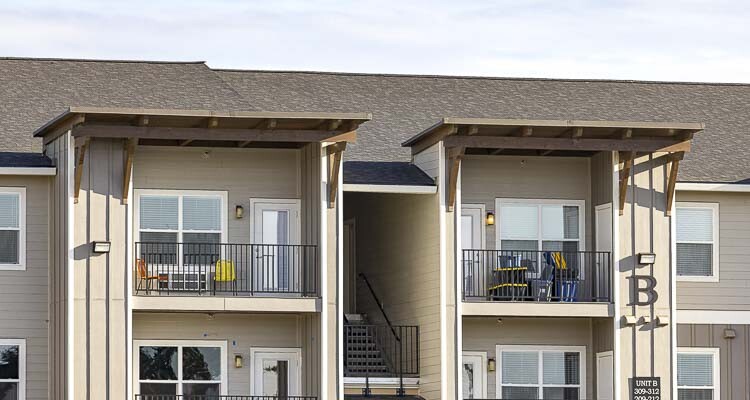
While most cities and counties have opted not to add additional regulations, some local governments have enacted much stricter restrictions on landlords
TJ Martinell
The Center Square Washington
With Washington state currently ranked sixth in the nation for highest monthly rent rates, state legislators are looking at local ordinances cities and counties have enacted to potentially implement, or avoid, at the state level.
Currently, the state maintains certain minimum requirements for tenant protections, such as requiring landlords to provide 60 days notice of a rent increase, that those increases cannot occur during the terms of an existing rental agreement, and allowing tenants to make monthly installment payments for deposits and last month’s rent.
Recently, the Legislature added other mandates on landlords, including:
- Providing written documentation of any money they keep from a security deposit.
- Returning security deposit to renter within 30 days after moving out.
- Restricting reasons to not renew leases to certain scenarios
While most cities and counties have opted not to add additional regulations, some local governments have enacted much stricter restrictions on landlords. The city of Seattle requires landlords to give a rental unit to the first qualified applicant to apply, while also allowing tenants to add roommates who are not required to sign a lease; the roommate can only be screened and removed by the landlord if they are not family members, though the city broadly defines what constitutes “immediate family.” The city also prohibits landlords from denying a lease to an applicant due to criminal history.
Oskar Rey is a legal consultant for the Municipal Research and Services Center. He told the House Housing Committee at Thursday’s meeting that Seattle “is, and has been, I think, kind of on the forefront of adopting additional tenant protections that may not be followed in other parts of the state.”
Another major Washington city to enact additional rental regulation is Tacoma, which allows tenants to pay deposits, fees, and last month’s rent in three monthly installments if the lease is three months or more. The city council recently updated its Rental Housing Code that puts mandates on landlords that include:
- Prohibiting evictions of families with students during the school year, or in or between the months of November-April.
- Financial assistance to relocate a tenant if the rent increase is over a certain amount and the tenant chooses not to renew.
- Prohibiting rent increases if the landlord is in violation of tenant protection laws related to health and safety.
- A cap on fee amounts.
However, Rey noted to the Housing Committee that the state constitution’s protection of legal contracts ultimately restricts the extent to which government can regulate lease agreements.
“We’re talking about an area where there is a contractual relationship between the landlord and the tenant and I think there might be certain types of local provisions that could run afoul of that,” he said. “The ability to regulate in this area is based on a local government’s police power. A local government would need to be able to establish a public health, safety or welfare basis for their regulations and show that it’s not a violation of the contracts clause, that it’s a reasonable regulation in light of the existing contractual relationships that might be out there.”
Tacoma voters will be able to affirm or reject the update to the city’s Rental Housing Code Nov. 7 via Initiative 1.
This report was first published by The Center Square Washington.
Also read:
- VIDEO: WA diesel hits record $6.53, crushing truckers and school budgets
 With diesel nearing $6.53 per gallon in Washington, trucking businesses and school districts now confront sharply higher fuel expenses affecting budgets and workers.
 - WA’s status solidifies as one of the most expensive places in US
 A new study shows Washington outpaces most states on cost of living, with metrics revealing a sharp rise in daily expenses and major metro areas ranking among the nation’s most expensive.
 - Opinion: Someone explain the Democrat Party to me please
 Lars Larson criticizes Democrat politicians for shutdown threats, Homeland Security funding refusals, and positions on election laws, housing, and gun rights.
 - CCSO to conduct search related to 1971 disappearance of Jamie Grissim
 Clark County Sheriff’s Office is coordinating a targeted search in Dole Valley, aiming to recover the remains of Jamie Rochelle Grissim, missing since 1971.
 - Business Profile: Columbia River volleyball coach teaches The Elite Competitor
 Bre Smedley co-founded The Elite Competitor to help young athletes handle the mental demands of sports by offering support, resources, and ongoing training for players, parents, and coaches.
 - POLL: Do you agree with requiring board members to follow council direction?
 Disagreement among county councilors centers on whether C-TRAN board members should reflect the council’s collective wishes or act independently, highlighting ongoing concerns about public accountability.
 - High-value WA home listings increase by 65% after income tax passage
 After lawmakers approved an income tax targeting millionaires, listings for homes priced at $2 million or more jumped 65 percent compared to last year, with experts urging caution about interpreting the spike.
