



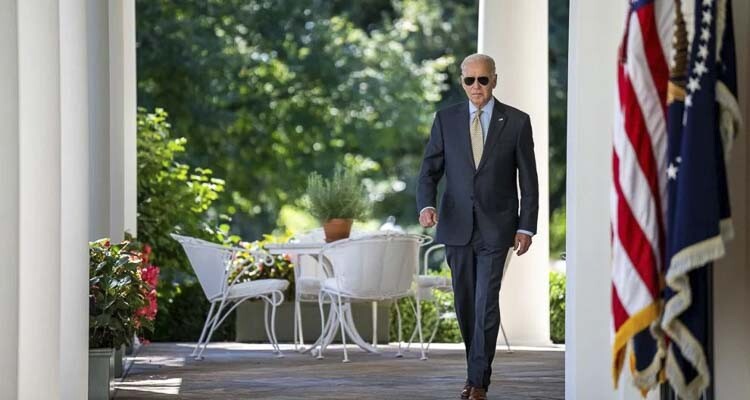
Hubs will be built in 16 states, including Washington and Oregon
Christen Smith
The Center Square
The Biden administration cut a $7 billion check on Friday to launch its vision for a hydrogen-fueled future.
The money augments $40 billion in private investment to build seven hydrogen hubs across the nation that will decarbonize transportation and industrial manufacturing, slashing 25 million metric tons of carbon dioxide emissions each year.
The amount “roughly” equates to removing 5.5 million gasoline-powered vehicles from the road, or just under 2% of the estimated 286 million operational cars in the United States.
After calling climate change “the only existential threat to humanity” during a news conference in Philadelphia, President Joe Biden touted federal infrastructure spending as the key to reigning in greenhouse gas emissions and transitioning away from fossil fuel reliance.
“Today’s announcement is all part of a bigger vision to do just that,” he said.
The hubs expand across seven regions and 16 states, including Pennsylvania, Ohio, West Virginia, New Jersey, Delaware, California, Texas, Minnesota, North Dakota, South Dakota, Illinois, Indiana, Michigan, Washington, Oregon, and Montana.
Together, the network of pipelines, storage facilities and refueling stations will use natural gas to produce energy and capture the resulting carbon emissions underground, creating 3 million metric tons of hydrogen annually – or about 30% of the federal government’s “clean hydrogen” goal for 2030.
“I found that when the government invests in the needs of the American people, guess what? The private sector jumps on real quick,” Biden said.
Hydrogen can be produced in three ways – referred to as gray, blue or green. Gray hydrogen is produced with natural gas and steam; blue is produced the same way, but its carbon gets captured and stored underground; and green is produced with renewable energy, such as wind or nuclear.
Critics say the greenhouse gas footprint of blue hydrogen outweighs any benefit over burning natural gas, while green – although promising – is too expensive and technical to produce at scale.
Others warn that relying on federal subsidies may waste taxpayer money, especially since the promised benefits of carbon capture, in particular, haven’t panned out.
Despite this, the administration said two-thirds of the projects will work with green hydrogen, in some capacity, and has publicized a four-year timeline to complete construction on the hubs.
This report was first published by The Center Square.
Also read:
- VIDEO: Rejected – WA SOS will not process referendum to repeal income tax law
 State officials stopped Let’s Go Washington’s referendum to overturn the new tax, citing constitutional limits. Legal and political battles, including a Supreme Court challenge, are expected next.
 - Washington’s studded tire deadline is March 31
 Drivers must remove studded tires by March 31 or face a $137 fine, with WSDOT urging early action due to busy service centers and no planned deadline extension.
 - Community in Action: Police cruisers ‘crammed’ with snacks to benefit local students
 Nearly 8,500 snacks filled police cruisers at Fred Meyer as the community rallied to stock high school pantries and build new relationships.
 - Southwest Washington lawmakers to hold a series of town hall meetings throughout the 17th Legislative District
 Sen. Paul Harris, Rep. Kevin Waters, and Rep. David Stuebe will answer questions and discuss the state’s expanded operating budget and newly passed income tax at five April town halls.
 - Can your wellness routine be harming your teeth?
 Dental enamel can’t regenerate once damaged, but steps like using a straw, rinsing with water, and choosing fluoride toothpaste can help protect your teeth from acidic beverages.
 - Vancouver Police investigate attempted murder
 A 29-year-old man suffered critical injuries in a stabbing incident on NE 12th Street, with the alleged assailant Jason Johnson now facing multiple felony charges after release from medical care.
 - Project 42: It is an income tax, not a millionaire’s tax
 Project 42 co-founder Dann Mead Smith urged Clark County residents to organize against the new income tax law, emphasizing it can be expanded to reach more than just millionaires.
